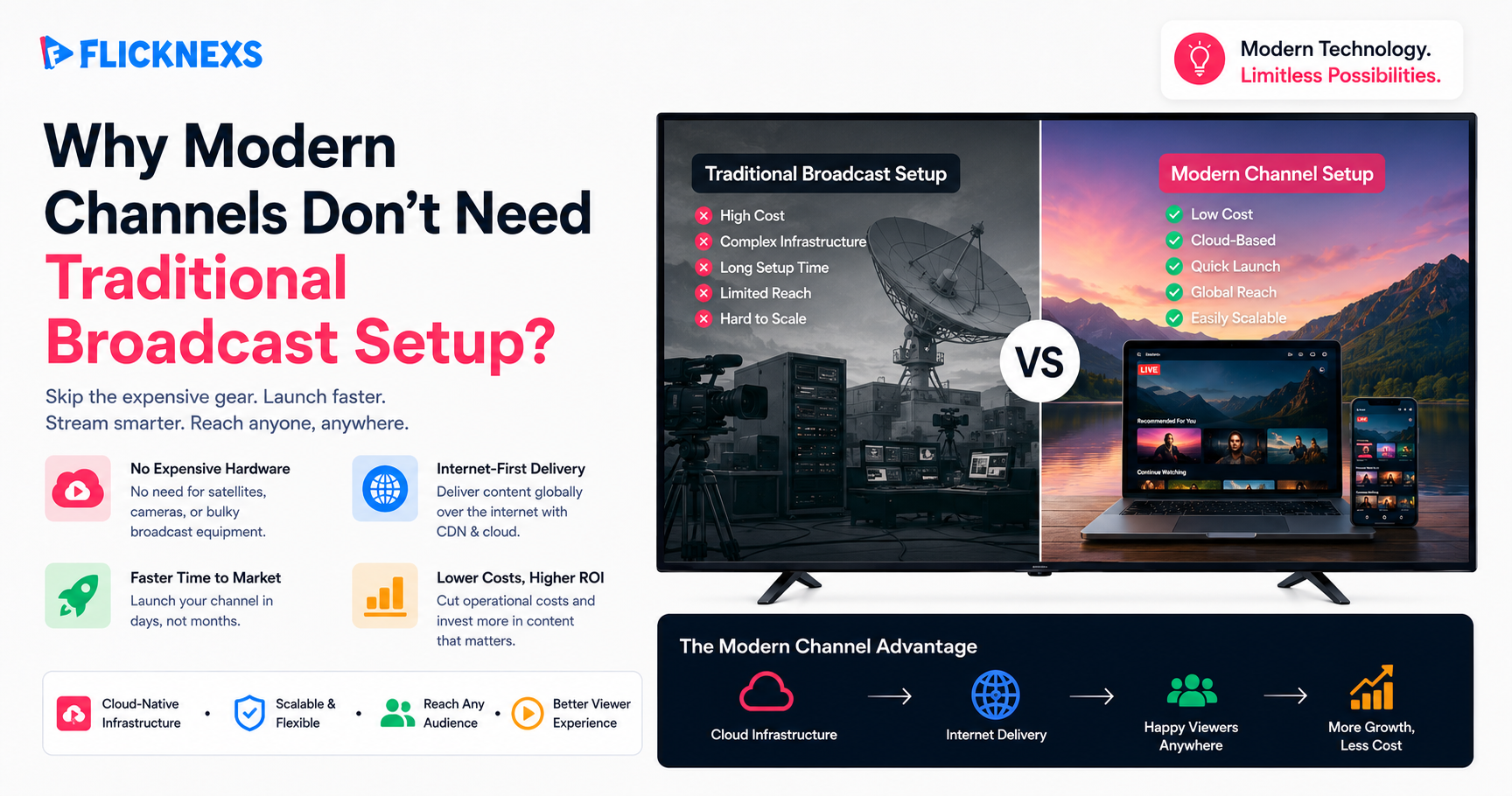
With the advent of the Internet, the need to use satellite transponders, playout trucks and headend hardware has disappeared for digital-first television channels. When digital-first TV distribution began using encoders, cloud-based playout and content delivery networks to distribute programming (instead of leased uplinks and large racks of physical equipment), the cost of launching a channel and the speed at which a channel can be launched has changed significantly for broadcasters and content owners. We have assisted operators with this transition and found that the gap between the old world of traditional broadcasting and the new world of digital-first broadcasting is far greater than any team anticipated.
Key takeaways
- In other words, while the delivery mechanism for digital-first television channels is different, the fundamental building blocks that define a television channel (schedule, branding and a 24/7 stream) have not changed – the only difference is the delivery method (from satellite and cable to open Internet).
- You drop the heaviest costs. With no more transponder leases, headend racks and playout trucks; the capital required to launch a channel is significantly less than in the past and therefore channels can launch significantly faster than before.
- Consumers today use a variety of devices (including mobile phones, smart TVs, laptops and tablets) and they expect Internet-based delivery of content. As such, digital-first television distribution systems have become the obvious default option for most channels.
- FAST and OTT linear are growing. There are many more monetization opportunities for content owners with free advertising-supported channels and app-based linear channels.
- You still need real infrastructure. Encoding, cloud playout, HLS packaging, and a CDN replace the old hardware stack rather than removing it entirely.
What a digital-first TV channel actually replaces
TV was traditionally delivered through the use of limited and expensive physical capabilities. If you wanted to put a channel on satellite you would lease a transponder and then build a headend with encoders, multiplexers, etc. to transmit the television programming to viewers. Live events typically required the use of OB (Outside Broadcast) trucks. Each piece carried a long contract and a high fixed cost, which is why running a channel used to be the preserve of well-funded networks.
Digital-first television channels continue to provide viewers with the things they care about. Viewers want a scheduled program, consistent branding, and continuous delivery. For those two things, the delivery system has changed from transmitting a signal to a satellite (dish) to publishing an Internet stream that connected devices (PCs/Laptop TVs) can request. The logic of programming remains the same, however, the method of delivery is now much less expensive, is defined by software, and can more easily be changed.
This change is exactly why the lines between “broadcaster” and “streaming service” have become so blurry. If you already have an OTT service with a delivery capability for 2026 and you want to add a linear channel to your existing library of content, it is a matter of scheduling and playout rather than a new capital project.
Why multi-device viewing forces digital-first distribution
The audience decided this before the industry did. During the commute, viewing occurs on a mobile device, often a smart TV at home at night or on a laptop or tablet while on the go. All screens obtain their content through the internet; none receive a direct satellite feed. The only method for a channel to reach each of the screens is by providing a digital version, as that is the only method that can be utilized by those devices.
Traditional broadcasts can be sent to a TV in your living room through a set-top box; however, traditional broadcasting cannot by itself ever follow a viewer to his/her phone or tablet without some form of internet transfer additional to that which was previously delivered via traditional broadcasting. Once you add that layer anyway, much of the satellite chain becomes redundant. Starting digital-first removes the duplication: one stream, adapted on the fly, serves every device.
If you are weighing delivery models, our explainer on OTT versus IPTV covers how managed and open-internet delivery differ in practice, which matters when you decide how much control you want over the network path.
FAST channels and OTT linear: where the growth is
Two formats explain why so many content owners are launching channels now. Free ad-supported streaming TV, or FAST, gives viewers a lean-back, channel-style experience at no cost, funded by advertising. OTT linear channels do something similar inside a subscription or branded app, offering a scheduled feed alongside on-demand titles. Both let you monetize a back catalogue that might otherwise sit idle.
How a digital-first TV channel fits the FAST model
FAST is a natural home for a digital-first TV channel because the economics only work when distribution is cheap. You build a themed channel, attach ad breaks, and place it on connected-TV platforms and your own app. Our practical guide to FAST channels walks through the format in detail, and the companion piece on how FAST channels make money through ads covers the revenue side, including ad insertion and fill rates.
OTT linear, by contrast, suits operators who already have subscribers and want to add appointment-style viewing. A scheduled channel keeps people in the app between binge sessions and gives editorial teams a way to surface older titles. Both formats lean on the same underlying delivery stack, so building for one keeps the other within reach.
The cost and agility difference
The clearest argument for going digital-first is what you stop paying for. Transponder leases run on multi-year terms and bill whether or not your channel performs. Headend hardware needs space, power, cooling, and maintenance staff. Cloud-based delivery turns most of that into a variable cost that scales with your actual audience, which lowers the risk of launching something new.
Agility is the second advantage. Changing a satellite line-up means coordination and lead time; changing a cloud playout schedule can be a few clicks. You can launch a pop-up channel for a sports season, test a niche genre, and retire it without stranded hardware. That flexibility is hard to overstate for content owners experimenting with formats.
| Factor | Traditional broadcast | Digital-first TV channel |
|---|---|---|
| Core delivery | Satellite transponder, cable headend | Internet stream over a CDN |
| Upfront cost | High; long-term leases and hardware | Low; mostly cloud and software |
| Cost model | Fixed, regardless of audience | Variable, scales with viewers |
| Devices reached | TV via set-top box | Phone, smart TV, laptop, tablet |
| Time to launch | Weeks to months | Days to weeks |
| Schedule changes | Coordinated, slow | Software-driven, fast |
What you do need instead of broadcast hardware
Going digital-first is not a free pass; it replaces one stack with another, leaner one. The components are software and cloud services rather than racks and leases, but each still does real work and deserves attention during planning.
Encoding and ingest
Source content, whether a live feed or a scheduled file, has to be encoded into streamable formats and ingested into your system. This is where quality and bitrate ladders are set, and where live inputs are normalized before they reach the playout layer.
Cloud playout and delivery
Cloud playout assembles your schedule, inserts ad breaks and channel branding, and produces the continuous linear feed. From there, HLS packaging splits the stream into adaptive segments so each device gets a quality it can handle, and a CDN distributes those segments close to viewers for smooth playback. Our overview of what HLS streaming is explains the adaptive delivery part, and live TV streaming software covers the playout tooling that ties it together. If you want the channel to sit inside a site you already run, playout integration into an existing website shows how the feed can be embedded directly.
For teams that would rather not assemble every piece themselves, a managed approach shortens the build. Reviewing white-label OTT platform providers is a sensible first step, since a single platform can cover encoding, playout, packaging, and delivery under one roof.
Frequently Asked Questions
Written by the Flicknexs team, who build and run streaming and channel infrastructure for broadcasters and content owners. If you are planning a channel, start with our guide on how to start an OTT platform in 2026 and map out your distribution before you commit to any hardware.
Ready to build?
If you’re planning your next Playout / Broadcast project, Flicknexs handles the video infrastructure end-to-end — so you can ship in weeks, not months.
- explore broadcast streaming
- explore Flicknexs plans
More on broadcast streaming
Continue exploring more on this topic across the Flicknexs blog.
- The definitive guide: Best Guide for RTMP Streaming in 2023
- Mastering Broadcast Streaming Software: A Comprehensive Guide for Content Creators
- OBS Streaming Software – The Ultimate Guide to Broadcasting Like a Pro
- Broadcasting Software: The Comprehensive Guide to Choosing and Using the Best Tools for Your Needs
Ready to build?
If you’re planning your next Playout / Broadcast project, Flicknexs handles the video infrastructure end-to-end — so you can ship in weeks, not months.
- explore broadcast streaming
- explore Flicknexs plans
More on broadcast streaming
Continue exploring more on this topic across the Flicknexs blog.
- The definitive guide: Best Guide for RTMP Streaming in 2023
- Mastering Broadcast Streaming Software: A Comprehensive Guide for Content Creators
- OBS Streaming Software – The Ultimate Guide to Broadcasting Like a Pro
- Broadcasting Software: The Comprehensive Guide to Choosing and Using the Best Tools for Your Needs
Ready to build?
If you’re planning your next Playout / Broadcast project, Flicknexs handles the video infrastructure end-to-end — so you can ship in weeks, not months.
- explore broadcast streaming
- explore Flicknexs plans
More on broadcast streaming
Continue exploring more on this topic across the Flicknexs blog.
- The definitive guide: Best Guide for RTMP Streaming in 2023
- Mastering Broadcast Streaming Software: A Comprehensive Guide for Content Creators
- OBS Streaming Software – The Ultimate Guide to Broadcasting Like a Pro
- Broadcasting Software: The Comprehensive Guide to Choosing and Using the Best Tools for Your Needs
Ready to build?
If you’re planning your next Playout / Broadcast project, Flicknexs handles the video infrastructure end-to-end — so you can ship in weeks, not months.
- explore broadcast streaming
- explore Flicknexs plans
More on broadcast streaming
Continue exploring more on this topic across the Flicknexs blog.
- The definitive guide: Best Guide for RTMP Streaming in 2023
- Mastering Broadcast Streaming Software: A Comprehensive Guide for Content Creators
- OBS Streaming Software – The Ultimate Guide to Broadcasting Like a Pro
- Broadcasting Software: The Comprehensive Guide to Choosing and Using the Best Tools for Your Needs
Ready to build?
If you’re planning your next Playout / Broadcast project, Flicknexs handles the video infrastructure end-to-end — so you can ship in weeks, not months.
- explore broadcast streaming
- explore Flicknexs plans
More on broadcast streaming
Continue exploring more on this topic across the Flicknexs blog.
- The definitive guide: Best Guide for RTMP Streaming in 2023
- Mastering Broadcast Streaming Software: A Comprehensive Guide for Content Creators
- OBS Streaming Software – The Ultimate Guide to Broadcasting Like a Pro
- Broadcasting Software: The Comprehensive Guide to Choosing and Using the Best Tools for Your Needs
Ready to build?
If you’re planning your next Playout / Broadcast project, Flicknexs handles the video infrastructure end-to-end — so you can ship in weeks, not months.
- explore broadcast streaming
- explore Flicknexs plans
More on broadcast streaming
Continue exploring more on this topic across the Flicknexs blog.
- The definitive guide: Best Guide for RTMP Streaming in 2023
- Mastering Broadcast Streaming Software: A Comprehensive Guide for Content Creators
- OBS Streaming Software – The Ultimate Guide to Broadcasting Like a Pro
- Broadcasting Software: The Comprehensive Guide to Choosing and Using the Best Tools for Your Needs
Ready to build?
If you’re planning your next Playout / Broadcast project, Flicknexs handles the video infrastructure end-to-end — so you can ship in weeks, not months.
- explore broadcast streaming
- explore Flicknexs plans
More on broadcast streaming
Continue exploring more on this topic across the Flicknexs blog.
- The definitive guide: Best Guide for RTMP Streaming in 2023
- Mastering Broadcast Streaming Software: A Comprehensive Guide for Content Creators
- OBS Streaming Software – The Ultimate Guide to Broadcasting Like a Pro
- Broadcasting Software: The Comprehensive Guide to Choosing and Using the Best Tools for Your Needs
Ready to build?
If you’re planning your next Playout / Broadcast project, Flicknexs handles the video infrastructure end-to-end — so you can ship in weeks, not months.
- explore broadcast streaming
- explore Flicknexs plans
More on broadcast streaming
Continue exploring more on this topic across the Flicknexs blog.
- The definitive guide: Best Guide for RTMP Streaming in 2023
- Mastering Broadcast Streaming Software: A Comprehensive Guide for Content Creators
- OBS Streaming Software – The Ultimate Guide to Broadcasting Like a Pro
- Broadcasting Software: The Comprehensive Guide to Choosing and Using the Best Tools for Your Needs
Ready to build?
If you’re planning your next Playout / Broadcast project, Flicknexs handles the video infrastructure end-to-end — so you can ship in weeks, not months.
- explore broadcast streaming
- explore Flicknexs plans
More on broadcast streaming
Continue exploring more on this topic across the Flicknexs blog.
- The definitive guide: Best Guide for RTMP Streaming in 2023
- Mastering Broadcast Streaming Software: A Comprehensive Guide for Content Creators
- OBS Streaming Software – The Ultimate Guide to Broadcasting Like a Pro
- Broadcasting Software: The Comprehensive Guide to Choosing and Using the Best Tools for Your Needs
Ready to build?
If you’re planning your next Playout / Broadcast project, Flicknexs handles the video infrastructure end-to-end — so you can ship in weeks, not months.
- explore broadcast streaming
- explore Flicknexs plans
More on broadcast streaming
Continue exploring more on this topic across the Flicknexs blog.
- The definitive guide: Best Guide for RTMP Streaming in 2023
- Mastering Broadcast Streaming Software: A Comprehensive Guide for Content Creators
- OBS Streaming Software – The Ultimate Guide to Broadcasting Like a Pro
- Broadcasting Software: The Comprehensive Guide to Choosing and Using the Best Tools for Your Needs
Ready to build?
If you’re planning your next Playout / Broadcast project, Flicknexs handles the video infrastructure end-to-end — so you can ship in weeks, not months.
- explore broadcast streaming
- explore Flicknexs plans
More on broadcast streaming
Continue exploring more on this topic across the Flicknexs blog.
- The definitive guide: Best Guide for RTMP Streaming in 2023
- Mastering Broadcast Streaming Software: A Comprehensive Guide for Content Creators
- OBS Streaming Software – The Ultimate Guide to Broadcasting Like a Pro
- Broadcasting Software: The Comprehensive Guide to Choosing and Using the Best Tools for Your Needs
Ready to build?
If you’re planning your next Playout / Broadcast project, Flicknexs handles the video infrastructure end-to-end — so you can ship in weeks, not months.
- explore broadcast streaming
- explore Flicknexs plans
More on broadcast streaming
Continue exploring more on this topic across the Flicknexs blog.
- The definitive guide: Best Guide for RTMP Streaming in 2023
- Mastering Broadcast Streaming Software: A Comprehensive Guide for Content Creators
- OBS Streaming Software – The Ultimate Guide to Broadcasting Like a Pro
- Broadcasting Software: The Comprehensive Guide to Choosing and Using the Best Tools for Your Needs
Ready to build?
If you’re planning your next Playout / Broadcast project, Flicknexs handles the video infrastructure end-to-end — so you can ship in weeks, not months.
- explore broadcast streaming
- explore Flicknexs plans
More on broadcast streaming
Continue exploring more on this topic across the Flicknexs blog.
- The definitive guide: Best Guide for RTMP Streaming in 2023
- Mastering Broadcast Streaming Software: A Comprehensive Guide for Content Creators
- OBS Streaming Software – The Ultimate Guide to Broadcasting Like a Pro
- Broadcasting Software: The Comprehensive Guide to Choosing and Using the Best Tools for Your Needs
Ready to build?
If you’re planning your next Playout / Broadcast project, Flicknexs handles the video infrastructure end-to-end — so you can ship in weeks, not months.
- explore broadcast streaming
- explore Flicknexs plans
More on broadcast streaming
Continue exploring more on this topic across the Flicknexs blog.
- The definitive guide: Best Guide for RTMP Streaming in 2023
- Mastering Broadcast Streaming Software: A Comprehensive Guide for Content Creators
- OBS Streaming Software – The Ultimate Guide to Broadcasting Like a Pro
- Broadcasting Software: The Comprehensive Guide to Choosing and Using the Best Tools for Your Needs
Ready to build?
If you’re planning your next Playout / Broadcast project, Flicknexs handles the video infrastructure end-to-end — so you can ship in weeks, not months.
- explore broadcast streaming
- explore Flicknexs plans
More on broadcast streaming
Continue exploring more on this topic across the Flicknexs blog.
- The definitive guide: Best Guide for RTMP Streaming in 2023
- Mastering Broadcast Streaming Software: A Comprehensive Guide for Content Creators
- OBS Streaming Software – The Ultimate Guide to Broadcasting Like a Pro
- Broadcasting Software: The Comprehensive Guide to Choosing and Using the Best Tools for Your Needs
Ready to build?
If you’re planning your next Playout / Broadcast project, Flicknexs handles the video infrastructure end-to-end — so you can ship in weeks, not months.
- explore broadcast streaming
- explore Flicknexs plans
More on broadcast streaming
Continue exploring more on this topic across the Flicknexs blog.
- The definitive guide: Best Guide for RTMP Streaming in 2023
- Mastering Broadcast Streaming Software: A Comprehensive Guide for Content Creators
- OBS Streaming Software – The Ultimate Guide to Broadcasting Like a Pro
- Broadcasting Software: The Comprehensive Guide to Choosing and Using the Best Tools for Your Needs
Ready to build?
If you’re planning your next Playout / Broadcast project, Flicknexs handles the video infrastructure end-to-end — so you can ship in weeks, not months.
- explore broadcast streaming
- explore Flicknexs plans
More on broadcast streaming
Continue exploring more on this topic across the Flicknexs blog.
- The definitive guide: Best Guide for RTMP Streaming in 2023
- Mastering Broadcast Streaming Software: A Comprehensive Guide for Content Creators
- OBS Streaming Software – The Ultimate Guide to Broadcasting Like a Pro
- Broadcasting Software: The Comprehensive Guide to Choosing and Using the Best Tools for Your Needs
Ready to build?
If you’re planning your next Playout / Broadcast project, Flicknexs handles the video infrastructure end-to-end — so you can ship in weeks, not months.
- explore broadcast streaming
- explore Flicknexs plans
More on broadcast streaming
Continue exploring more on this topic across the Flicknexs blog.
- The definitive guide: Best Guide for RTMP Streaming in 2023
- Mastering Broadcast Streaming Software: A Comprehensive Guide for Content Creators
- OBS Streaming Software – The Ultimate Guide to Broadcasting Like a Pro
- Broadcasting Software: The Comprehensive Guide to Choosing and Using the Best Tools for Your Needs
Ready to build?
If you’re planning your next Playout / Broadcast project, Flicknexs handles the video infrastructure end-to-end — so you can ship in weeks, not months.
- explore broadcast streaming
- explore Flicknexs plans
More on broadcast streaming
Continue exploring more on this topic across the Flicknexs blog.
- The definitive guide: Best Guide for RTMP Streaming in 2023
- Mastering Broadcast Streaming Software: A Comprehensive Guide for Content Creators
- OBS Streaming Software – The Ultimate Guide to Broadcasting Like a Pro
- Broadcasting Software: The Comprehensive Guide to Choosing and Using the Best Tools for Your Needs
Ready to build?
If you’re planning your next Playout / Broadcast project, Flicknexs handles the video infrastructure end-to-end — so you can ship in weeks, not months.
- explore broadcast streaming
- explore Flicknexs plans
More on broadcast streaming
Continue exploring more on this topic across the Flicknexs blog.
- The definitive guide: Best Guide for RTMP Streaming in 2023
- Mastering Broadcast Streaming Software: A Comprehensive Guide for Content Creators
- OBS Streaming Software – The Ultimate Guide to Broadcasting Like a Pro
- Broadcasting Software: The Comprehensive Guide to Choosing and Using the Best Tools for Your Needs
Ready to build?
If you’re planning your next Playout / Broadcast project, Flicknexs handles the video infrastructure end-to-end — so you can ship in weeks, not months.
- explore broadcast streaming
- explore Flicknexs plans
More on broadcast streaming
Continue exploring more on this topic across the Flicknexs blog.
- The definitive guide: Best Guide for RTMP Streaming in 2023
- Mastering Broadcast Streaming Software: A Comprehensive Guide for Content Creators
- OBS Streaming Software – The Ultimate Guide to Broadcasting Like a Pro
- Broadcasting Software: The Comprehensive Guide to Choosing and Using the Best Tools for Your Needs
Ready to build?
If you’re planning your next Playout / Broadcast project, Flicknexs handles the video infrastructure end-to-end — so you can ship in weeks, not months.
- explore broadcast streaming
- explore Flicknexs plans
More on broadcast streaming
Continue exploring more on this topic across the Flicknexs blog.
- The definitive guide: Best Guide for RTMP Streaming in 2023
- Mastering Broadcast Streaming Software: A Comprehensive Guide for Content Creators
- OBS Streaming Software – The Ultimate Guide to Broadcasting Like a Pro
- Broadcasting Software: The Comprehensive Guide to Choosing and Using the Best Tools for Your Needs
Ready to build?
If you’re planning your next Playout / Broadcast project, Flicknexs handles the video infrastructure end-to-end — so you can ship in weeks, not months.
- explore broadcast streaming
- explore Flicknexs plans
More on broadcast streaming
Continue exploring more on this topic across the Flicknexs blog.
- The definitive guide: Best Guide for RTMP Streaming in 2023
- Mastering Broadcast Streaming Software: A Comprehensive Guide for Content Creators
- OBS Streaming Software – The Ultimate Guide to Broadcasting Like a Pro
- Broadcasting Software: The Comprehensive Guide to Choosing and Using the Best Tools for Your Needs
Ready to build?
If you’re planning your next Playout / Broadcast project, Flicknexs handles the video infrastructure end-to-end — so you can ship in weeks, not months.
- explore broadcast streaming
- explore Flicknexs plans
More on broadcast streaming
Continue exploring more on this topic across the Flicknexs blog.
- The definitive guide: Best Guide for RTMP Streaming in 2023
- Mastering Broadcast Streaming Software: A Comprehensive Guide for Content Creators
- OBS Streaming Software – The Ultimate Guide to Broadcasting Like a Pro
- Broadcasting Software: The Comprehensive Guide to Choosing and Using the Best Tools for Your Needs
Ready to build?
If you’re planning your next Playout / Broadcast project, Flicknexs handles the video infrastructure end-to-end — so you can ship in weeks, not months.
- explore broadcast streaming
- explore Flicknexs plans
More on broadcast streaming
Continue exploring more on this topic across the Flicknexs blog.
- The definitive guide: Best Guide for RTMP Streaming in 2023
- Mastering Broadcast Streaming Software: A Comprehensive Guide for Content Creators
- OBS Streaming Software – The Ultimate Guide to Broadcasting Like a Pro
- Broadcasting Software: The Comprehensive Guide to Choosing and Using the Best Tools for Your Needs
Ready to build?
If you’re planning your next Playout / Broadcast project, Flicknexs handles the video infrastructure end-to-end — so you can ship in weeks, not months.
- explore broadcast streaming
- explore Flicknexs plans
More on broadcast streaming
Continue exploring more on this topic across the Flicknexs blog.
- The definitive guide: Best Guide for RTMP Streaming in 2023
- Mastering Broadcast Streaming Software: A Comprehensive Guide for Content Creators
- OBS Streaming Software – The Ultimate Guide to Broadcasting Like a Pro
- Broadcasting Software: The Comprehensive Guide to Choosing and Using the Best Tools for Your Needs
Ready to build?
If you’re planning your next Playout / Broadcast project, Flicknexs handles the video infrastructure end-to-end — so you can ship in weeks, not months.
- explore broadcast streaming
- explore Flicknexs plans
More on broadcast streaming
Continue exploring more on this topic across the Flicknexs blog.
- The definitive guide: Best Guide for RTMP Streaming in 2023
- Mastering Broadcast Streaming Software: A Comprehensive Guide for Content Creators
- OBS Streaming Software – The Ultimate Guide to Broadcasting Like a Pro
- Broadcasting Software: The Comprehensive Guide to Choosing and Using the Best Tools for Your Needs
Ready to build?
If you’re planning your next Playout / Broadcast project, Flicknexs handles the video infrastructure end-to-end — so you can ship in weeks, not months.
- explore broadcast streaming
- explore Flicknexs plans
More on broadcast streaming
Continue exploring more on this topic across the Flicknexs blog.
- The definitive guide: Best Guide for RTMP Streaming in 2023
- Mastering Broadcast Streaming Software: A Comprehensive Guide for Content Creators
- OBS Streaming Software – The Ultimate Guide to Broadcasting Like a Pro
- Broadcasting Software: The Comprehensive Guide to Choosing and Using the Best Tools for Your Needs
Ready to build?
If you’re planning your next Playout / Broadcast project, Flicknexs handles the video infrastructure end-to-end — so you can ship in weeks, not months.
- explore broadcast streaming
- explore Flicknexs plans
More on broadcast streaming
Continue exploring more on this topic across the Flicknexs blog.
- The definitive guide: Best Guide for RTMP Streaming in 2023
- Mastering Broadcast Streaming Software: A Comprehensive Guide for Content Creators
- OBS Streaming Software – The Ultimate Guide to Broadcasting Like a Pro
- Broadcasting Software: The Comprehensive Guide to Choosing and Using the Best Tools for Your Needs
Ready to build?
If you’re planning your next Playout / Broadcast project, Flicknexs handles the video infrastructure end-to-end — so you can ship in weeks, not months.
- explore broadcast streaming
- explore Flicknexs plans
More on broadcast streaming
Continue exploring more on this topic across the Flicknexs blog.
- The definitive guide: Best Guide for RTMP Streaming in 2023
- Mastering Broadcast Streaming Software: A Comprehensive Guide for Content Creators
- OBS Streaming Software – The Ultimate Guide to Broadcasting Like a Pro
- Broadcasting Software: The Comprehensive Guide to Choosing and Using the Best Tools for Your Needs
Ready to build?
If you’re planning your next Playout / Broadcast project, Flicknexs handles the video infrastructure end-to-end — so you can ship in weeks, not months.
- explore broadcast streaming
- explore Flicknexs plans
More on broadcast streaming
Continue exploring more on this topic across the Flicknexs blog.
- The definitive guide: Best Guide for RTMP Streaming in 2023
- Mastering Broadcast Streaming Software: A Comprehensive Guide for Content Creators
- OBS Streaming Software – The Ultimate Guide to Broadcasting Like a Pro
- Broadcasting Software: The Comprehensive Guide to Choosing and Using the Best Tools for Your Needs
Ready to build?
If you’re planning your next Playout / Broadcast project, Flicknexs handles the video infrastructure end-to-end — so you can ship in weeks, not months.
- explore broadcast streaming
- explore Flicknexs plans
More on broadcast streaming
Continue exploring more on this topic across the Flicknexs blog.
- The definitive guide: Best Guide for RTMP Streaming in 2023
- Mastering Broadcast Streaming Software: A Comprehensive Guide for Content Creators
- OBS Streaming Software – The Ultimate Guide to Broadcasting Like a Pro
- Broadcasting Software: The Comprehensive Guide to Choosing and Using the Best Tools for Your Needs
Ready to build?
If you’re planning your next Playout / Broadcast project, Flicknexs handles the video infrastructure end-to-end — so you can ship in weeks, not months.
- explore broadcast streaming
- explore Flicknexs plans
More on broadcast streaming
Continue exploring more on this topic across the Flicknexs blog.
- The definitive guide: Best Guide for RTMP Streaming in 2023
- Mastering Broadcast Streaming Software: A Comprehensive Guide for Content Creators
- OBS Streaming Software – The Ultimate Guide to Broadcasting Like a Pro
- Broadcasting Software: The Comprehensive Guide to Choosing and Using the Best Tools for Your Needs
Ready to build?
If you’re planning your next Playout / Broadcast project, Flicknexs handles the video infrastructure end-to-end — so you can ship in weeks, not months.
- explore broadcast streaming
- explore Flicknexs plans
More on broadcast streaming
Continue exploring more on this topic across the Flicknexs blog.
- The definitive guide: Best Guide for RTMP Streaming in 2023
- Mastering Broadcast Streaming Software: A Comprehensive Guide for Content Creators
- OBS Streaming Software – The Ultimate Guide to Broadcasting Like a Pro
- Broadcasting Software: The Comprehensive Guide to Choosing and Using the Best Tools for Your Needs
Ready to build?
If you’re planning your next Playout / Broadcast project, Flicknexs handles the video infrastructure end-to-end — so you can ship in weeks, not months.
- explore broadcast streaming
- explore Flicknexs plans
More on broadcast streaming
Continue exploring more on this topic across the Flicknexs blog.
- The definitive guide: Best Guide for RTMP Streaming in 2023
- Mastering Broadcast Streaming Software: A Comprehensive Guide for Content Creators
- OBS Streaming Software – The Ultimate Guide to Broadcasting Like a Pro
- Broadcasting Software: The Comprehensive Guide to Choosing and Using the Best Tools for Your Needs
Ready to build?
If you’re planning your next Playout / Broadcast project, Flicknexs handles the video infrastructure end-to-end — so you can ship in weeks, not months.
- explore broadcast streaming
- explore Flicknexs plans
More on broadcast streaming
Continue exploring more on this topic across the Flicknexs blog.
- The definitive guide: Best Guide for RTMP Streaming in 2023
- Mastering Broadcast Streaming Software: A Comprehensive Guide for Content Creators
- OBS Streaming Software – The Ultimate Guide to Broadcasting Like a Pro
- Broadcasting Software: The Comprehensive Guide to Choosing and Using the Best Tools for Your Needs
Ready to build?
If you’re planning your next Playout / Broadcast project, Flicknexs handles the video infrastructure end-to-end — so you can ship in weeks, not months.
- explore broadcast streaming
- explore Flicknexs plans
More on broadcast streaming
Continue exploring more on this topic across the Flicknexs blog.
- The definitive guide: Best Guide for RTMP Streaming in 2023
- Mastering Broadcast Streaming Software: A Comprehensive Guide for Content Creators
- OBS Streaming Software – The Ultimate Guide to Broadcasting Like a Pro
- Broadcasting Software: The Comprehensive Guide to Choosing and Using the Best Tools for Your Needs
Ready to build?
If you’re planning your next Playout / Broadcast project, Flicknexs handles the video infrastructure end-to-end — so you can ship in weeks, not months.
- explore broadcast streaming
- explore Flicknexs plans
More on broadcast streaming
Continue exploring more on this topic across the Flicknexs blog.
- The definitive guide: Best Guide for RTMP Streaming in 2023
- Mastering Broadcast Streaming Software: A Comprehensive Guide for Content Creators
- OBS Streaming Software – The Ultimate Guide to Broadcasting Like a Pro
- Broadcasting Software: The Comprehensive Guide to Choosing and Using the Best Tools for Your Needs
Ready to build?
If you’re planning your next Playout / Broadcast project, Flicknexs handles the video infrastructure end-to-end — so you can ship in weeks, not months.
- explore broadcast streaming
- explore Flicknexs plans
More on broadcast streaming
Continue exploring more on this topic across the Flicknexs blog.
- The definitive guide: Best Guide for RTMP Streaming in 2023
- Mastering Broadcast Streaming Software: A Comprehensive Guide for Content Creators
- OBS Streaming Software – The Ultimate Guide to Broadcasting Like a Pro
- Broadcasting Software: The Comprehensive Guide to Choosing and Using the Best Tools for Your Needs
Ready to build?
If you’re planning your next Playout / Broadcast project, Flicknexs handles the video infrastructure end-to-end — so you can ship in weeks, not months.
- explore broadcast streaming
- explore Flicknexs plans
More on broadcast streaming
Continue exploring more on this topic across the Flicknexs blog.
- The definitive guide: Best Guide for RTMP Streaming in 2023
- Mastering Broadcast Streaming Software: A Comprehensive Guide for Content Creators
- OBS Streaming Software – The Ultimate Guide to Broadcasting Like a Pro
- Broadcasting Software: The Comprehensive Guide to Choosing and Using the Best Tools for Your Needs
Ready to build?
If you’re planning your next Playout / Broadcast project, Flicknexs handles the video infrastructure end-to-end — so you can ship in weeks, not months.
More on broadcast streaming
Continue exploring more on this topic across the Flicknexs blog.
- The definitive guide: Best Guide for RTMP Streaming in 2023
- Mastering Broadcast Streaming Software: A Comprehensive Guide for Content Creators
- OBS Streaming Software – The Ultimate Guide to Broadcasting Like a Pro
- Broadcasting Software: The Comprehensive Guide to Choosing and Using the Best Tools for Your Needs