
Exploring Video on Demand
and OTT Platforms
-
Video Hosting vs YouTube for Business: Rent the Audience or Own the Experience? (2027)
Quick answer: Use YouTube when a video’s job is to be discovered by people who don’t know you yet. Use professional video hosting when the video is part of what customers pay for, must sit behind a login, or plays inside your own website or app. Most growing businesses use both: YouTube for reach, their…
-

Private Video Hosting: How to Stop Business Videos From Leaking
Quick answer: Private video hosting checks every viewer’s permission before a video plays, instead of letting anyone with a link watch. It combines login and entitlements, expiring signed URLs, domain and geo rules, and DRM (digital rights management) for high-value content. Flicknexs provides private video hosting with per-title access rules, signed playback URLs, country-level geo-fencing…
-
Fox Roku Acquisition: What It Means for OTT Apps, Ad Revenue and Your 2027 TV Launch
Quick answer Quick answer: The Fox Roku acquisition is an announced, not yet closed, deal. Fox agreed on June 15, 2026, to buy Roku at about $22 billion in enterprise value, with closing expected in the first half of 2027 (Fox Corporation; Shacknews). No change to Roku’s app certification, inventory split or revenue share has…
-
Live TV App License in India: Does TRAI’s ALTD Plan Apply to You?
Quick answer: You need a live TV app license in India only if your app aggregates and streams scheduled TV channels. On 26 October 2026, TRAI recommended that apps distributing linear channels over the internet, including FAST services, get central government authorization. Pure video-on-demand apps, broadcaster apps carrying only their own channels, and social media…
-
Diaspora OTT Playbook: What JioHotstar’s Relaunch Really Teaches
If you are planning a diaspora OTT platform, the most useful case study of 2026 is not a startup. It is JioHotstar’s relaunch in the UK, Canada and Singapore, and what changed after it. This guide is for content owners, regional broadcasters and founders who want to stream Indian, South Asian or other regional-language content…
-
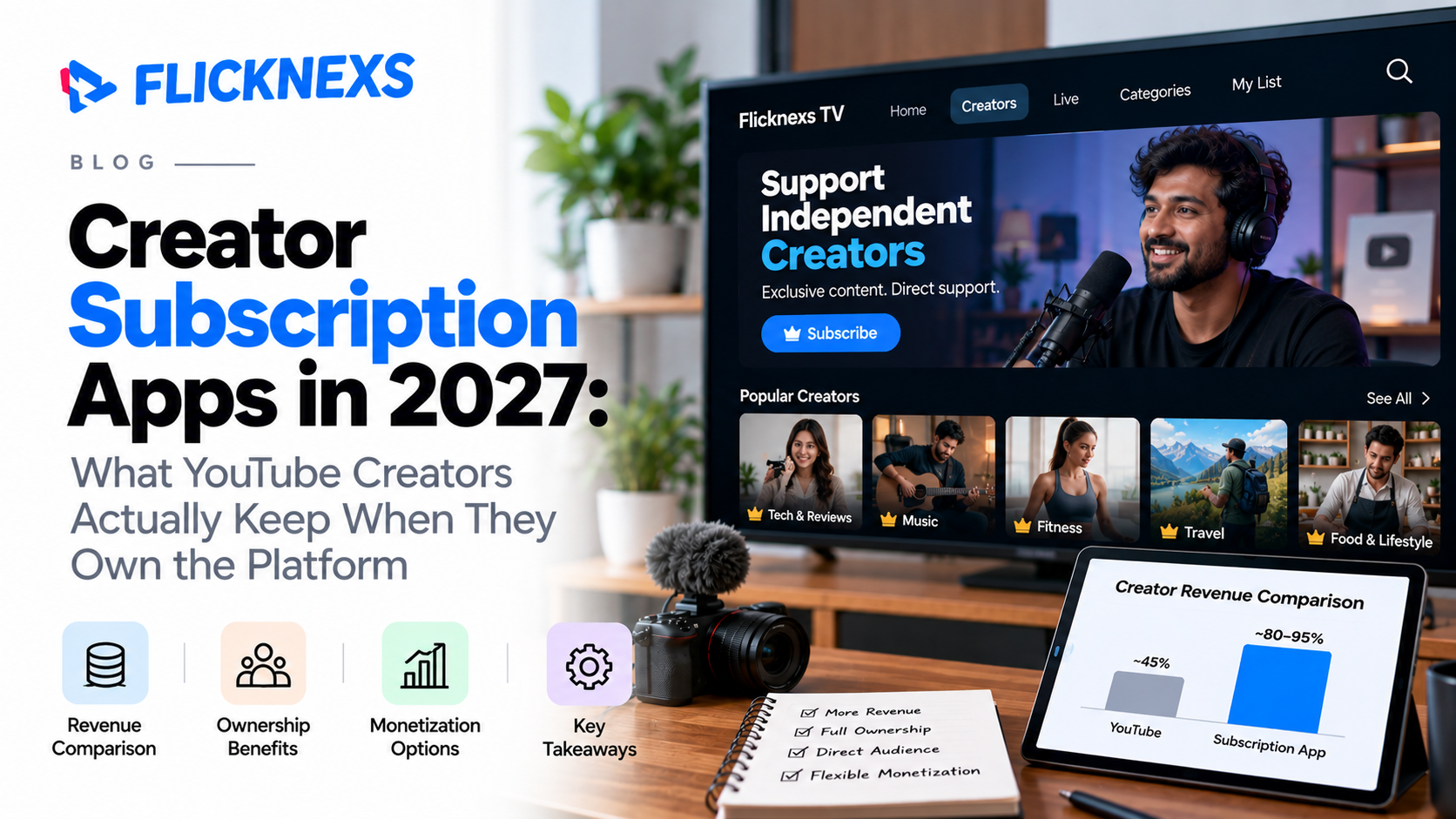
Creator Subscription Apps in 2027: What YouTube Creators Actually Keep When They Own the Platform
Quick answer: A creator subscription app is a branded video service where fans pay the creator directly for premium videos, early access or a full library. In 2026 a creator with a loyal audience has three routes to recurring video income: license shows to a streamer such as Netflix, Disney+ or Tubi, sell YouTube channel…
-
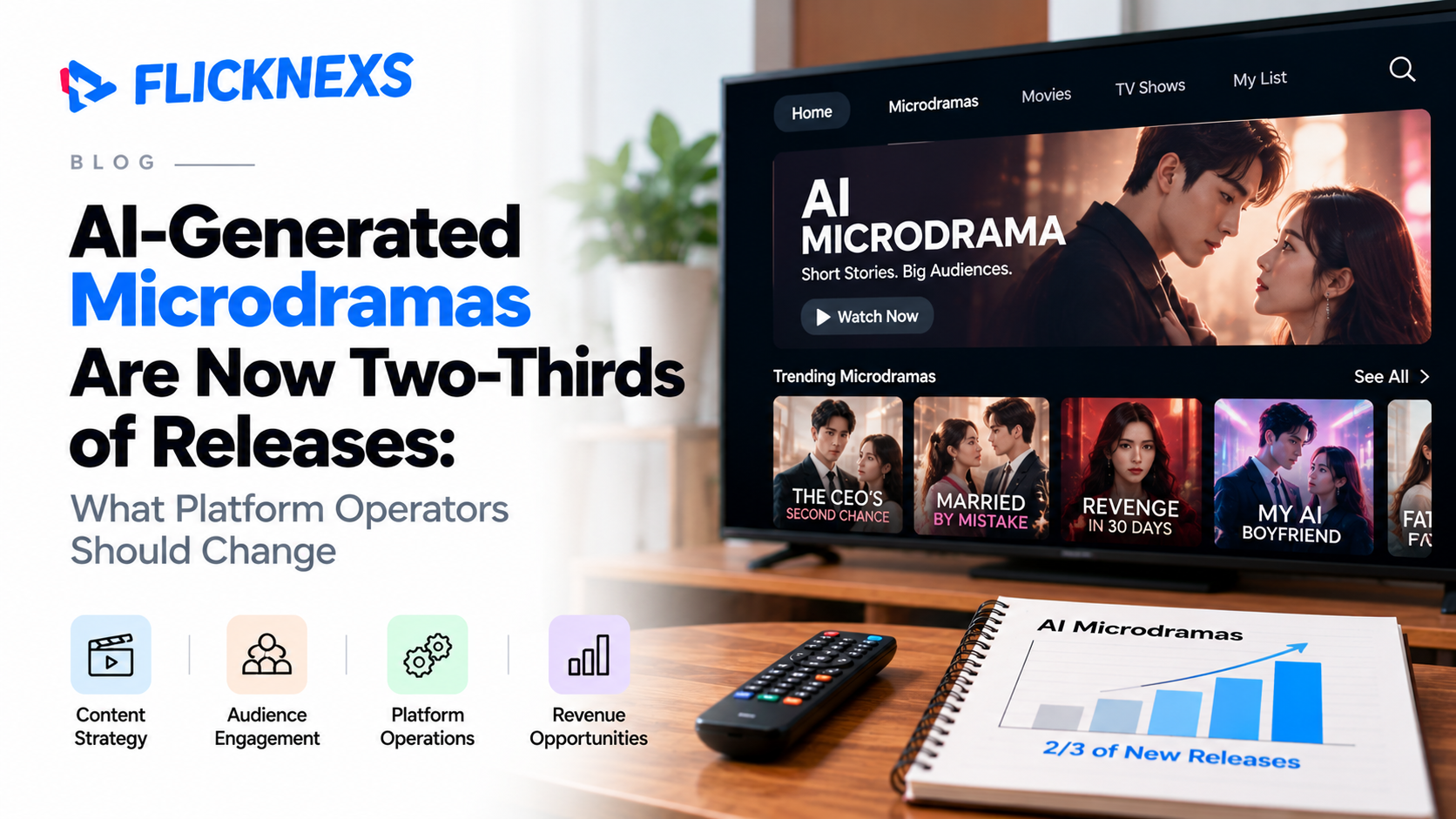
AI-Generated Microdramas Are Now Two-Thirds of Releases: What Platform Operators Should Change
Quick answer: AI-generated microdramas went from 3% of new vertical-drama releases outside China in Q1 2026 to roughly two-thirds in Q3, according to Owl & Co data reported by The Hollywood Reporter, and the first data on paying viewers shows they convert at almost the same rate as live-action shows (TheWrap on Holywater’s AI vs…
-

DACH OTT Platform Launch Guide 2026: The Germany, Austria and Switzerland Rules Most Launch Checklists Miss
Launching a DACH OTT platform is no longer a question of whether German-speaking viewers will stream. They already do: VAUNET forecasts that streaming will account for 52% of Germany’s audio and audiovisual media revenue in 2026 (VAUNET autumn 2026 forecast). The harder question is what a new service has to get right in Germany, Austria…
-
Linear to Streaming Migration: What BBC Three Already Taught Broadcasters
Quick answerA linear to streaming migration moves a TV channel’s audience from a broadcast schedule to internet delivery (on-demand, live streams, or a streamed linear channel). The BBC’s own history shows the risk: when BBC Three went online-only in 2016, it lost most of its young audience and returned to TV in 2022. The safe…
-
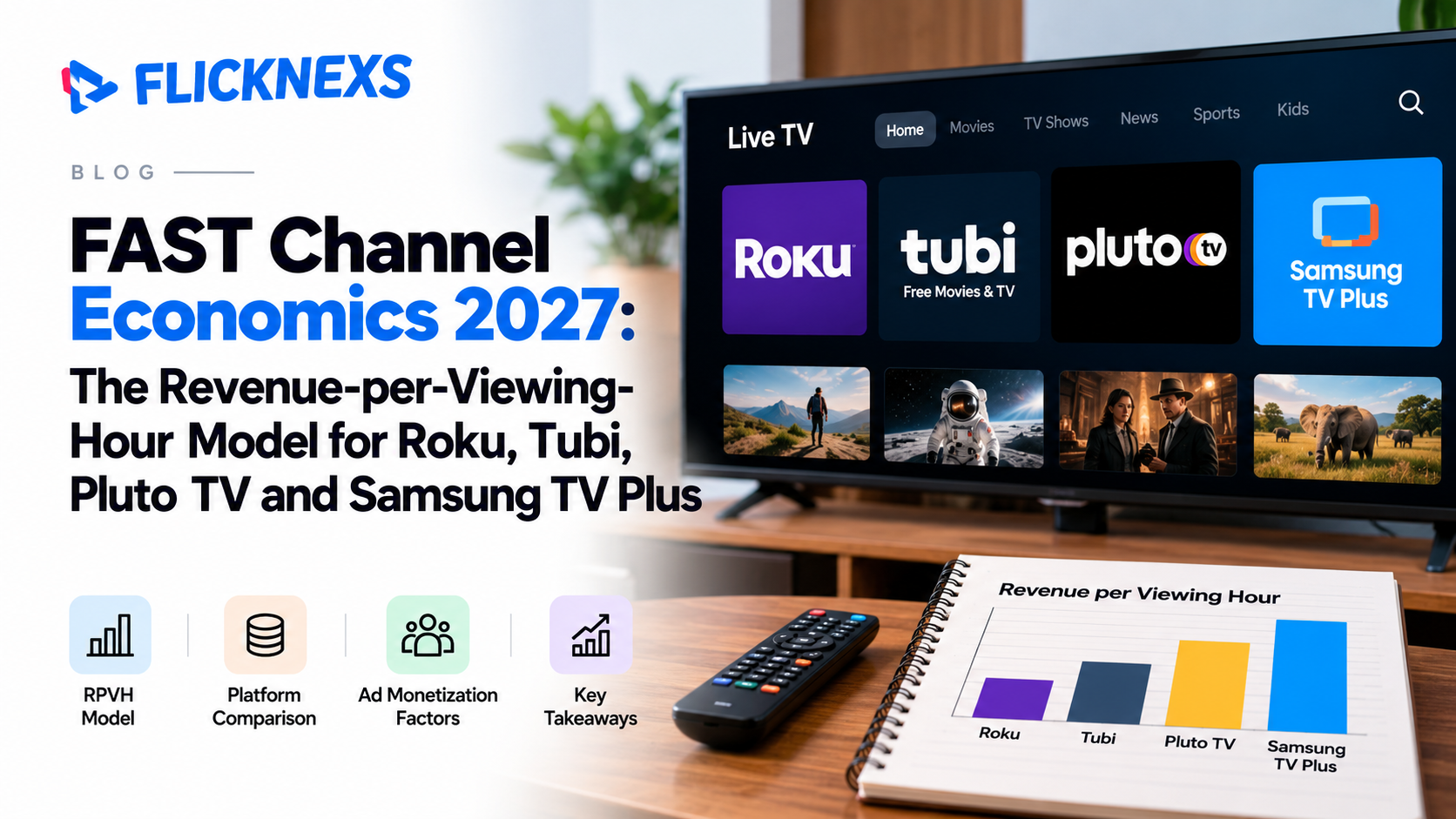
FAST Channel Economics 2027: The Revenue-per-Viewing-Hour Model for Roku, Tubi, Pluto TV and Samsung TV Plus
Quick answer: FAST channel economics come down to one number: how much you keep per hour someone watches. Multiply ad slots per hour by fill rate, effective CPM and your share of the inventory, and you get revenue per viewing hour (RPVH). Divide your monthly costs by RPVH and you know how many viewing hours…