
Quick Answer
To create a vertical video micro-drama app, focus on user-friendly design, high-quality content, and robust streaming capabilities. Prioritize mobile optimization, intuitive navigation and engaging storytelling. Partner with creators, ensure reliable hosting, and integrate social sharing features to boost user engagement and retention.
You’ve seen the numbers. ReelShort(Vertical Video) crossed $100 million in revenue. DramaBox has millions of daily active users. Micro dramas are everywhere right now and someone is clearly making serious money from them.
So you’ve started asking the obvious question: can I build one of these platforms?
And then the doubts arrive fast.
What does it actually cost? Where do I get content? What technology do I need? What if I spend six months building something and nobody watches it?
This guide exists to answer those questions honestly. Not with startup hype. Not with vendor promises. With the real information you need before you commit a single dollar to this idea.
What Is a Micro Drama Platform?
A micro drama platform is a streaming app built around short, episodic videos designed specifically for mobile viewers. Most episodes are filmed in a vertical format and last between one and three minutes, making them easy to watch anytime, anywhere.
What makes micro dramas different is the storytelling style. Every episode moves quickly, delivers strong emotions and usually ends with a cliffhanger that encourages viewers to watch the next chapter. Instead of relying on ads alone, many platforms generate revenue by allowing users to unlock additional episodes through in-app purchases.
It’s important to understand that a micro drama platform is not the same as a YouTube channel or a TikTok account. While all three involve video content, micro drama apps operate as independent entertainment businesses with their own content strategy, monetization model and technology infrastructure.
Many first-time founders make the mistake of treating micro dramas like traditional short-form social media videos. In reality, they are closer to a mobile-first streaming service designed to maximize viewer engagement and retention through serialized storytelling.
Understanding this difference from the start can save you time, money, and costly mistakes when building your platform.
Why Micro Dramas Are So Addictive
If you’re building a micro drama platform, understanding viewer psychology isn’t optional it’s one of the most important parts of your content strategy.
The success of micro dramas largely comes from two powerful psychological triggers that keep audiences engaged and coming back for more.
1. The Power of the Cliffhanger
Almost every successful micro drama episode ends at a moment of peak tension.
Maybe a character is about to uncover a shocking secret. Maybe a betrayal is about to be exposed. Maybe a major confrontation is seconds away from happening.
When viewers don’t get the answer immediately, their brains naturally want closure. This creates a strong urge to watch the next episode.
This isn’t unique to micro dramas. It’s the same storytelling technique used in bestselling novels, TV series and blockbuster films. The difference is that micro dramas compress the entire cycle into episodes that are often less than three minutes long.
2. Emotional Investment Builds Over Time
The more episodes someone watches, the more emotionally connected they become to the story and its characters.
At that point, leaving the series feels difficult because viewers have already invested their time, attention and emotions into the journey. They want to see how the story ends.
This is why even an average series can retain viewers if it successfully builds emotional attachment early on.
What This Means for Platform Owners
The first episode of every series has one job: make viewers care.
It should introduce a compelling character, present a meaningful conflict, and create a question that viewers want answered in the next episode.
If Episode 1 fails to create emotional investment, no monetization strategy, advertising campaign or growth hack will fix the problem.
Before launching any series, ask yourself a simple question:
“After watching the first episode, would a complete stranger genuinely want to know what happens next?”
If the answer is no, the story isn’t ready yet.
Why the Micro Drama Market Is Growing

The micro drama industry is expanding at an incredible pace. According to industry research, global micro drama revenues are expected to reach $14 billion by the end of 2026.
At first glance, that number makes the opportunity look obvious. A fast-growing market often attracts entrepreneurs, investors and content creators looking for the next big thing.
However, growth also attracts competition.
As more companies enter the space, the opportunity becomes harder to capture. The days of launching a basic platform and expecting rapid growth are quickly disappearing.
The platforms generating significant revenue today are not succeeding simply because they entered the market early. They are succeeding because they have mastered two critical areas at the same time:
- Creating content that keeps viewers emotionally engaged.
- Building a monetization system that generates revenue without driving users away.
Both are equally important.
If your technology is excellent but your content fails to capture attention, users will leave and never return.
On the other hand, if your content attracts a large audience but your monetization strategy is poorly designed, you may struggle to turn that attention into a sustainable business.
The most successful micro drama platforms understand that content and monetization are not separate challenges—they are two parts of the same growth engine.
This guide will show you how to balance both, helping you avoid the common mistakes that cause many new platforms to fail before they gain traction.
Content First or Platform First? The Decision That Can Make or Break Your Launch
One of the biggest mistakes new founders make is focusing on the platform before thinking seriously about the content.
The reality is simple: content comes first.
Before you invest time and money into building a micro drama platform, you should have clear answers to three critical questions:
- What genre or niche are you targeting?
- Where will your content come from?
- How much content will be available on launch day?
You don’t necessarily need every episode produced before development begins, but you do need a realistic content strategy.
Many first-time platform owners assume a small content library is enough to get started. Unfortunately, micro drama audiences consume content much faster than traditional streaming audiences.
A viewer can easily finish an entire series in a single sitting. If they reach the end of your library and find nothing new to watch, they will likely leave—and many won’t return.
That’s why content volume matters from day one.
As a general rule, aim to launch with at least 40 to 60 episodes spread across two or three complete series. This gives users enough content to explore while providing a foundation for future releases.
Just as important, have a consistent release schedule in place. New episodes give viewers a reason to come back and help build long-term engagement.
Think of your initial content library as the minimum requirement for launch—not the ultimate goal. The platforms that succeed are the ones that treat content as an ongoing product, not a one-time project.
Before you build your platform, make sure you have something worth watching on it.
Should You Start With Content or Technology When Building a Micro Drama Platform?
One of the first decisions every new platform owner faces is deceptively simple: do I build the platform first or sort out the content first?
The honest answer is content always comes first.
Technology without content is an empty app. You can have the most polished streaming platform in the market but if there is nothing compelling to watch on it, users will leave within minutes and never return.
Before you spend a single dollar on development, get clear answers to three questions. What genre or niche are you building for? Where is the content coming from? How many episodes will be ready on launch day?
You do not need every episode produced before you start building. But you do need a committed content roadmap before you commit to a platform.
This matters more in micro drama than in any other streaming format. Viewers can burn through an entire series in one sitting. A library of ten episodes will not hold anyone for more than an afternoon. The general rule is a minimum of 40 to 60 episodes across two or three complete series before you open your platform to the public.
On the content sourcing question, you have two routes. You can produce original content yourself which gives you exclusivity and a distinct platform identity but takes more time and budget. Or you can license existing micro drama content from producers who have already made it, which gets you to launch faster but means the same content may appear on competing platforms.
Most new platforms that succeed start by licensing content to build their initial library then invest in one original series that becomes the signature of their platform. That original series does not need to be expensive. It needs to be distinctive enough that viewers associate it with you and only you.
Once you have a clear content plan in place, then you build the platform around it. Not the other way around.
Here is the practical roadmap that follows from that decision.
Step 1: Define a Specific Niche
One of the biggest mistakes new founders make is trying to appeal to everyone.
Do not target micro drama viewers in general. Instead focus on a specific genre, language or audience segment. For example romance dramas for young adults, regional language content, workplace and startup stories or family and relationship dramas.
The more focused your niche is initially, the easier it becomes to attract a loyal audience and build momentum.
Step 2: Validate Your Content Before Producing a Full Series
Before investing thousands of dollars into production, test your concept.
Create short 30-second clips that reflect the style, tone and storytelling approach you plan to use. Share them on social platforms and pay close attention to engagement.
Ask yourself: are people watching until the end? Are they sharing the content? Are they asking for more?
If viewers are not responding, it is better to refine the concept now than discover the problem after production is complete.
Step 3: Secure Your Content Library
Content is the foundation of your platform.
Whether you are producing original series or licensing existing content, you should have a clear content roadmap before launch. A good starting point is 60 to 80 episodes spread across multiple series. This gives new users enough content to explore and reduces the risk of them leaving after a single session.
Step 4: Choose the Right Technology
Once your content strategy is clear, it is time to select your platform technology.
Focus on the features that directly affect growth and revenue. Non-negotiables are vertical video support, in-app coin or credit systems, secure payment integration, real-time analytics and user retention tools.
Fancy features can wait. Prioritize the systems that support your business model from day one.
Step 5: Build Your Monetization Model
Do not wait until after launch to think about revenue.
Decide in advance how much users will pay for coins or credits, the cost of unlocking episodes, whether you will offer subscriptions and how many episodes will be free before users encounter a paywall.
A well-designed monetization strategy should generate revenue without disrupting the viewing experience.
Step 6: Run a Beta Test
Before opening your platform to the public, invite a small group of real users to test it.
Aim for around 100 to 200 people who match your target audience. Watch how they use the platform and identify where they get stuck.
Pay special attention to where viewers stop watching, which episodes perform best, points of confusion in the user journey and feedback about pricing and content quality.
Small improvements at this stage can have a huge impact after launch.
Step 7: Launch With Content, Not Features
Many founders make the mistake of promoting their platform instead of promoting the stories on their platform.
People do not download apps because they love features. They download apps because they want to experience compelling content.
Your first marketing campaign should focus on a dramatic trailer, a viral scene, a cliffhanger moment or a creator behind-the-scenes story. Lead with the content and let the platform support it quietly in the background.
Step 8: Measure the Metrics That Matter
After launch, avoid drowning in analytics dashboards filled with vanity metrics.
Focus on the three numbers that directly reflect user engagement and business health.
Episode Completion Rate — how many viewers finish each episode?
Revenue Per Active User — how much revenue does each active user generate per week?
Retention Rate — how many users return after 7 days and 30 days?
These three metrics will tell you whether your content is engaging, your monetization is converting and your platform is building long-term user loyalty.monetization is working, and your platform is creating long-term user loyalty.
How to Generate Revenue From Your Micro Drama Platform
Most first-time platform owners think about revenue as something they will figure out after they have an audience. That is one of the most expensive mistakes you can make.
Your monetization model should be live from the moment your first real user signs in.
The Coin Model
The most effective revenue model for new micro drama platforms is the coin or token system. Users purchase a bundle of virtual credits inside the app and spend those credits to unlock individual episodes.
The psychology behind this model is well documented. Virtual currency decouples the purchase decision from the spend decision. A user who would hesitate to pay for a monthly subscription will routinely spend two to three times that amount buying coin packs to unlock the next episode of a series they are emotionally invested in.
ReelShort built its way past $100 million in revenue almost entirely on this model. New platforms with limited content libraries benefit the most from it because it generates strong revenue per engaged user without requiring the deep content catalogue that a subscription model demands.
The Subscription Model
Subscription works best when your platform has a consistently growing library and a loyal returning audience. Users pay a flat monthly fee for unlimited access.
The risk for new platforms is straightforward. Micro drama viewers consume content fast. A committed viewer can finish your entire library in a week. If there is nothing new to watch, the subscription feels like poor value and cancellations follow quickly.
Subscription is not a bad model. It is simply a model that rewards platforms with content depth and operational maturity. For most new operators it works better as a premium tier added later rather than the primary revenue engine at launch.
Start earning before you hit 10,000 users
The freemium approach works well in the early stage. Make the first episode of every series free. Require coins to continue from episode two onwards. By that point viewers have enough emotional investment in the story that a meaningful percentage will pay to keep going.
Early adopters are your most motivated users. They found you before you were well known. Giving them a free platform trains them to expect everything for free and reversing that expectation later is extremely difficult.
Build the paywall in from day one, keep the entry point generous and let the content do the work of converting free viewers into paying ones.
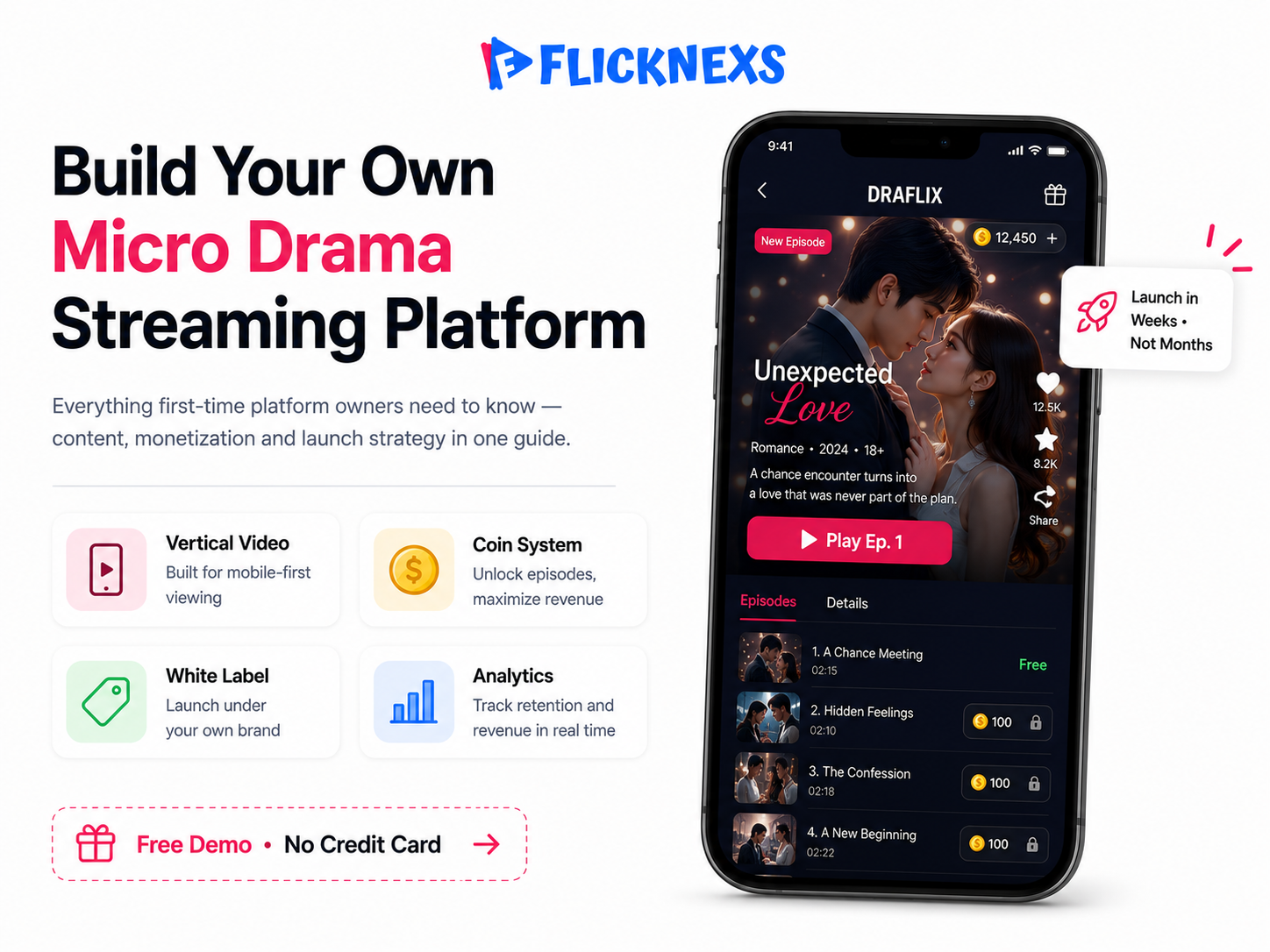
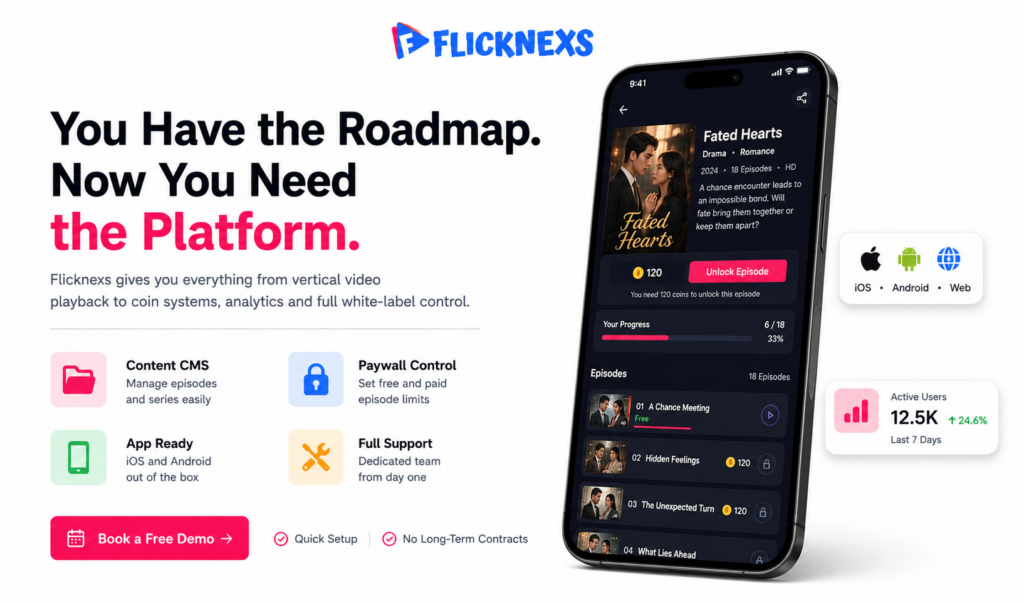
Explore Flicknexs micro-drama streaming app solution to build a branded platform for vertical episodic content.
Conclusion
The opportunity in the micro drama industry is undeniable.
Audience demand continues to grow, investment in short-form entertainment is increasing and the market is creating new opportunities for content creators, media companies and entrepreneurs alike.
However, success in this space is not determined by who launches first. It’s determined by who makes the right decisions before launch.
The platforms that thrive over the next few years will be the ones that build around a clear niche, secure compelling content, create sustainable monetization models, and choose technology that can scale as their audience grows.
By now, you should have a realistic understanding of what it takes to launch a micro drama platform—from content planning and production to infrastructure, user acquisition, and long-term growth.
More importantly, you should understand where many new platform owners make costly mistakes and how to avoid them.
That knowledge is valuable because launching a platform is not just a technical project it’s a business decision.
If you’re exploring the idea of building your own micro drama platform, the next step is to evaluate potential technology partners carefully. Request a live demo, test the platform on real devices, review the monetization tools and ask detailed questions about scalability, support, analytics and customization.
A good technology partner should be able to demonstrate how their platform works in real-world conditions not just in a sales presentation.
If the platform meets your requirements, you’ll have a strong foundation for buildingyour business. If it doesn’t, you’ll avoid making one of the most expensive mistakes a new platform owner can make: committing to the wrong technology before understanding what your business truly needs.
The market opportunity is real. The challenge is real too.
The founders who succeed will be the ones who approach both with equal clarity.
FAQ
How much does it cost to build a micro drama app?
The cost depends on how you build it. A custom-built platform from scratch runs $80,000 to $250,000 and takes six to twelve months. A white-label solution like Flicknexs brings that down to $5,000 to $30,000 with launch possible in weeks not months. Factor in content, CDN costs and payment processing on top of whichever route you choose.
How do I get my first viewers without spending on paid ads?
Post 30-second clips of your most dramatic moments on TikTok, Instagram Reels and YouTube Shorts. Target niche communities on Reddit and Facebook that match your content genre. Partner with micro-influencers in your specific niche. Offer your first complete series free to convert viewers into paying users on the second series.
Do I need to produce original content or can I license it?
Both work. Licensing gets you to launch faster with lower upfront cost. Original production gives you exclusive content that no competing platform can offer. Most successful new platforms license content to build library depth and produce one original series to build identity around.
Can I run a micro drama platform without a technical background?
Yes, if you choose the right platform provider. A good white-label OTT solution handles hosting, encoding, payment integration and app maintenance on your behalf. What you cannot outsource is content strategy, audience understanding and the business decisions around monetization and growth.
How many episodes do I need before I launch?
A minimum of 40 to 60 episodes across two to three complete series. Anything less and viewers will exhaust your entire library in one session and leave with no reason to return. Your content depth at launch is more important than your platform design
Ready to build?
If you’re planning your next Microdrama project, Flicknexs handles the video infrastructure end-to-end — so you can ship in weeks, not months.
More microdrama resources
Continue exploring more on this topic across the Flicknexs blog.
- Read the pillar guide: What is Micro Drama? The Future of Short-Form Drama
- How To Build A Short Drama App Like DramaBox In 2026
- Micro Drama OTT Platform Provider in USA: Features, Monetization and Growth Strategies
- Micro-Drama vs Traditional OTT: What’s Different and Why It’s Exploding
- How to Build a DramaBox-Style Micro-Drama App in 2026