
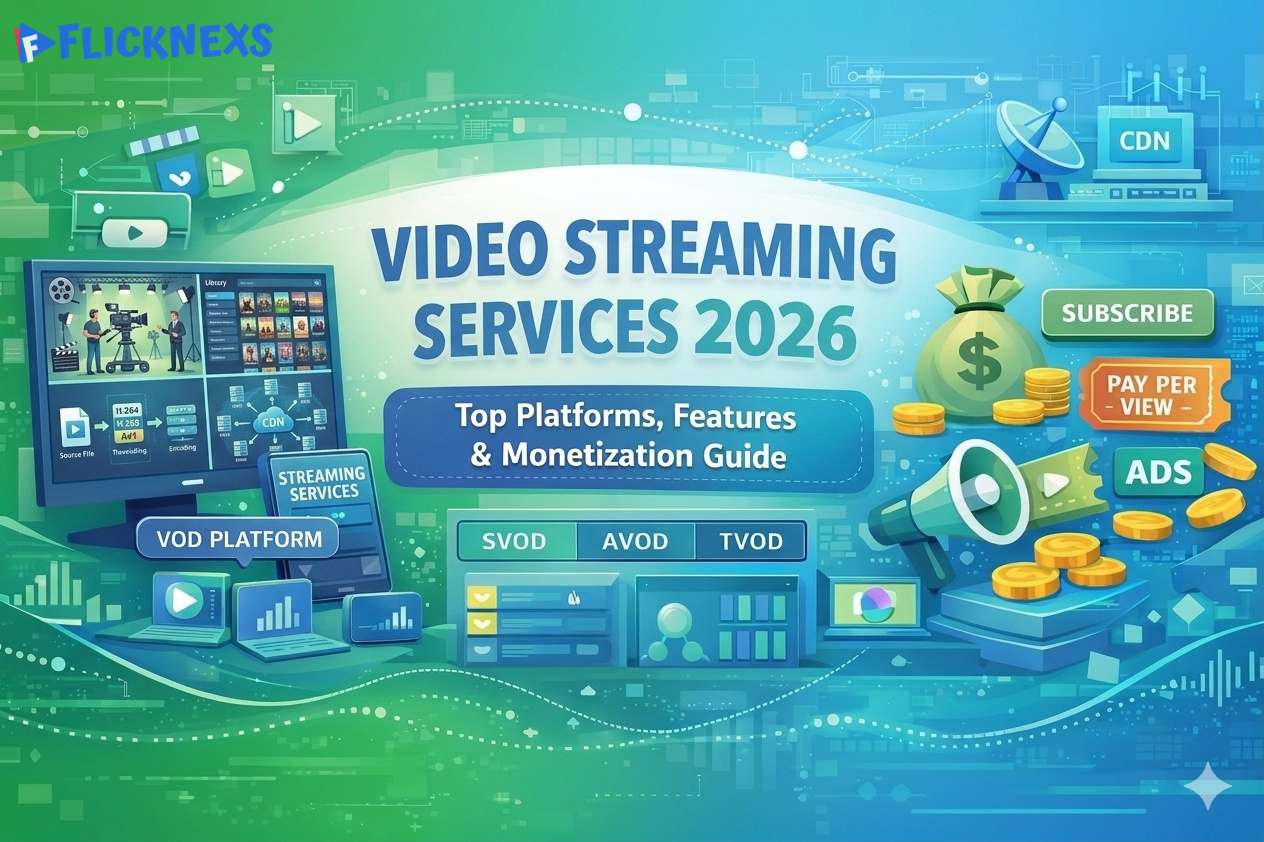
Video streaming services have completely transformed how businesses and creators distribute video content online. Today, companies rely on professional streaming platforms to host, manage and deliver video content to audiences across multiple devices. With high-speed internet and smart devices, these platforms have become essential infrastructure for media companies, educators, enterprises and event organizers delivering content at scale.
From launching OTT platforms and subscription video services to hosting live webinars and virtual conferences, modern video delivery platforms allow organizations to deliver high-quality video experiences anytime, anywhere.
This guide covers everything about video streaming services in 2026, including streaming technology, platform types, key features, leading services, monetization strategies, real-world use cases, supported devices, benefits and limitations and revenue opportunities with our platform.
What Are Video Streaming Services?
It is a technology platform that allows businesses and creators to host, manage and deliver video content over the internet without requiring full downloads. These platforms provide the infrastructure needed to stream video on demand (VOD) or live broadcasts across multiple devices.
Instead of building their own video delivery infrastructure, organizations use video streaming platform providers to handle video encoding, storage, CDN delivery, security, analytics and monetization.
Modern streaming platforms support a wide variety of content including movies, TV shows, live events, webinars, online courses, corporate training, fitness classes and religious services. Businesses and creators can reach both US and global audiences, track engagement through analytics and monetize content through SVOD, AVOD, TVOD or hybrid models.
How Video Streaming Works
Video streaming works by compressing video files, distributing them through Content Delivery Networks (CDNs) and delivering content via streaming protocols to ensure smooth playback across devices.
- Video Encoding: Videos are compressed into formats like H.264, H.265, or VP9.
- Content Delivery Networks (CDNs): These geographically distributed servers reduce latency across the US.
- Streaming Protocols: HLS, MPEG-DASH and RTMP support both live and on-demand content.
- Adaptive Bitrate Streaming: Automatically adjusts video quality based on internet speed for uninterrupted playback.
- Buffering: Preloaded segments ensure smooth playback.
- Device Playback: Works across smartphones, tablets, smart TVs, streaming sticks, consoles and desktops.
By 2026, around 91% of U.S. households will have fixed broadband access capable of supporting HD streaming and about 38–40% of households regularly stream content in 4K UHD, driven by faster fiber and high-speed cable connections.
Types of Video Streaming Services
It generally falls into three main models:
- Subscription Video on Demand (SVOD): Unlimited access for a monthly or annual fee. Examples include Netflix, Hulu, Disney+ and Peacock.
- Ad-Supported Video on Demand (AVOD): Free content supported by ads, with US leaders like YouTube, Pluto TV and Tubi.
- Transactional Video on Demand (TVOD): Pay-per-view for individual shows or movies, e.g., Apple TV, Google Play Movies, Vudu.
Hybrid models combining SVOD and AVOD are gaining popularity among US creators, offering flexibility and broader monetization opportunities.
Key Features of Modern Video Streaming Platforms
Modern streaming platforms offer features that improve viewer experience and monetization:
- Live Streaming & VOD: On-demand access plus real-time broadcasts.
- Multi-Device Support: Accessible on smartphones, tablets, smart TVs and consoles.
- CDN Delivery: Smooth playback across all US regions.
- Adaptive Bitrate Streaming: Seamless viewing on variable internet speeds.
- DRM Security: Protects content from piracy and copyright infringement.
- Video Analytics: Track user engagement and content performance.
- Monetization Options: Support for SVOD, AVOD, TVOD or hybrid models.
Best Video Streaming Services in 2026
| Platform | Best For | Key Features | Pricing |
| Flicknexs | OTT businesses | SVOD, AVOD, TVOD monetization, live streaming, multi-device apps, analytics | Starts $299/month |
| Webnexs | OTT startups | VOD & live streaming, adaptive bitrate streaming, OTT app development | Contact for pricing |
| Vimeo OTT | Creators & media brands | OTT monetization tools, marketing integrations, video hosting | Starts $7–$75/month |
| Wowza | Developers | Low-latency streaming, APIs, live streaming infrastructure | Starts $49/month |
| Brightcove | Enterprise streaming | OTT platform tools, analytics, monetization features | Custom pricing |
| Dacast | Broadcasters | Global CDN delivery, pay-per-view streaming, live & VOD | Starts $39/month |
| StreamingVideoProvider | Monetization-focused streaming | Global CDN, video analytics, OTT monetization | Contact for pricing |
| Muvi | OTT businesses | No-code OTT platform, multi-screen apps, monetization tools | Starts $399/month |
| Kaltura | Enterprises & education | Video management, live streaming, virtual events | Custom pricing |
Video Streaming Monetization Models
Creators and businesses can monetize content in multiple ways:
- SVOD: Recurring subscription revenue.
- AVOD: Income from ads served to free viewers.
- TVOD: Pay-per-view for premium content.
- Hybrid Models: Combine revenue streams for flexibility.
In the US, AVOD CPM rates range from $12–$18, while SVOD ARPU averages $8–$15/month.
Video Streaming Use Cases
Streaming services are widely used across industries:
- Media Companies: OTT platforms, digital-first content, US originals.
- Education: Online courses, virtual classrooms, corporate learning.
- Corporate Training: Employee onboarding, live webinars.
- Sports Broadcasting: NFL, NBA, live games, highlights.
- Virtual Events: Webinars, conferences, expos.
- Fitness & Wellness: Live and recorded classes.
- Religious Streaming: US church services, community outreach.
Devices That Support Streaming
Streaming works seamlessly across:
- Smart TVs: Samsung, LG, Vizio.
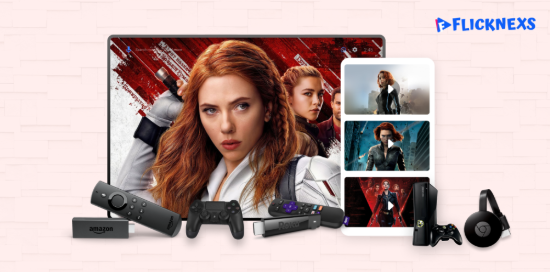
- Streaming Sticks & Boxes: Roku, Fire TV, Chromecast.
- Gaming Consoles: PlayStation, Xbox.
- Mobile Devices & Tablets: iOS, Android apps.
- Desktops & Laptops: Browser-based playback.
Advantages and Disadvantages of Video Streaming
Advantages:
- Convenience: Watch anywhere, anytime.
- Flexibility: Multi-device playback.
- Cost-effective: Subscriptions often cheaper than cable; AVOD options free.
- Variety: US originals, international content, live sports, niche categories.
Disadvantages:
- Internet dependency: Requires broadband for HD/4K.
- Regional restrictions: Some content limited by geography.
- Subscription fatigue: Multiple platforms → higher costs.
- Ad interruptions: AVOD platforms include ads, potentially impacting UX.
How to Choose the Best Streaming Service
When choosing a platform, consider:
- Content library and genres.
- Pricing plans and monetization models.
- HD/4K streaming availability.
- Device compatibility and user experience.
- Personalized recommendations and intuitive interface.
How to Earn from Video Streaming Services
Creators can earn via subscriptions, ads, pay-per-view, donations, sponsorships and hybrid models.
- Build your audience gradually using consistent content and US-focused social promotion.
- Optimize titles, descriptions and thumbnails for Google and YouTube US search.
- Track CPM trends and engagement metrics via analytics dashboards.
- Expand to multiple platforms to maximize reach and revenue.
How You Can Earn with Flicknexs
Flicknexs helps creators monetize with ads, subscriptions, pay-per-view and sponsorships. Features include:
- Advanced content discovery algorithms for US audience targeting.
- SEO-friendly metadata to improve search visibility.
- Dynamic Ad Insertion (DAI) to improve CPM consistency.
- Memberships, subscriptions and pay-per-view options.
- Integrated sponsorship and affiliate tools.
- DRM and copyright alerts to protect revenue.
- Multi-platform distribution with customizable branding for loyal subscribers.
Conclusion
Video streaming continues to reshape how content is consumed in the US and globally. By understanding platform features, monetization models and technical workflows, creators and businesses can maximize engagement, reach and revenue.
Create your own platform with Flicknexs and start earning!



Leave a Reply