
Quick answer
A video monetization platform helps businesses turn video content into revenue through subscriptions, advertising, pay-per-view, rentals, purchases, and other monetization models. A complete solution can also provide the infrastructure needed to host videos online, publish content through an online video platform solution, manage media with video content management, and measure viewer behavior using enterprise video analytics. Choosing the right platform depends on the content model, audience, monetization strategy, security requirements, supported devices, and scalability needs.
Platforms like YouTube, Vimeo, Flicknexs, and Webnexs support AVOD, SVOD, and TVOD models for creators and businesses worldwide. For creators and businesses looking for an efficient video management solution, consider utilizing a video CMS platform like Video CMS.
As of April 2026, video continues to dominate global internet traffic, accounting for the majority of overall online data consumption, with monetization platforms enabling creators to earn billions through ads, subscriptions, and pay-per-view models. The rise of online video consumption has led to an increased demand for efficient and scalable solutions on online video platform.
Platforms like YouTube, Vimeo, Flicknexs, and Webnexs support AVOD, SVOD, and TVOD models for creators and businesses worldwide.
With continued strong growth in video advertising spend and rising global online viewership trends, the creator economy is expanding faster than ever, making it an ideal time to turn content into income.
Whether you’re an established creator or just starting out, the right platform can significantly maximize your revenue opportunities.
This guide lists the top 10 video monetization platforms in 2026, compares their features, and explains how creators can generate revenue via AVOD, SVOD, TVOD, and membership models.
Flicknexs builds white-label OTT and video monetization software that lets businesses launch branded streaming platforms with AVOD, SVOD, and TVOD support built in.
What is Video Monetization?
Video monetization generated over $75 billion globally in 2024 and is estimated to reach approximately $93–100 billion in 2026, driven by strong growth in AVOD (ad-supported video), SVOD (subscription video), and hybrid monetization models as creators, platforms, and brands expand digital video revenue streams.
Video monetization is the process of earning revenue from video content. This can include ads, subscriptions, pay-per-view, memberships, or crowdfunding.
The global video monetization market is estimated to reach around $85–90 billion in 2026, growing at a steady 15–17% CAGR, driven by rising OTT adoption, creator economy expansion, and increased use of AI-powered monetization models.
What are Video Monetization Platforms?
Video monetization platforms are online tools that enable content creators to earn revenue from their video content through advertising, subscriptions, pay-per-view, and live streaming. In 2026, the global video monetization platform ecosystem is estimated to be worth around $9.2–10+ billion, reflecting strong growth driven by the expanding creator economy, OTT adoption, and AI-powered monetization tools.
Popular platforms include YouTube, Vimeo OTT, Patreon, Flicknexs, and Webnexs, each offering unique monetization options for creators of all sizes.
How do video monetization platforms generate revenue in 2026?
Video monetization platforms generate billions in revenue globally each year. In 2026, creators can earn through advertising, subscriptions, pay-per-view, and membership models, enabling multiple income streams while scaling their audience.
Advertising-Based Video on Demand (AVOD)
Description:
- Platforms display ads during videos (pre-roll, mid-roll, post-roll).
- Revenue depends on impressions, clicks, and engagement rates.
- Ideal for creators with large audiences.
Subscription Video on Demand (SVOD)
Description:
- Users pay a recurring fee (monthly/annual) to access content.
- Provides predictable revenue for creators and platforms.
- Popular for educational content and premium shows.
Transactional Video on Demand (TVOD )
Description:
- Viewers pay per content piece (movie, episode, event).
- Suitable for one-time releases or premium content.
- Platforms keep a share, the rest goes to the creator.
Why Video Monetization is Important in 2026
Why is Video Content Increasingly Significant for Revenue in 2026?
In 2026, video content continues to account for approximately 82–85% of global internet traffic, making it the dominant online medium. The sustained surge in video consumption across websites, mobile apps, and OTT platforms has further strengthened video monetization as a multi-billion-dollar global industry.
For creators and businesses, acting on this shift early gives you an edge. Platforms that support AVOD, SVOD, TVOD, or hybrid models allow content owners to generate consistent revenue, reach global audiences, and diversify income streams. Choosing the right video monetization platform ensures maximum engagement and profitability in this rapidly growing market.
It is estimated that by 2026, video will account for approximately 82–84% of all internet traffic globally, reinforcing its position as the dominant form of online content consumption.
Key Benefits of Video Monetization in 2026
1. How Video Monetization Creates Regular Revenue for Creators?
Video monetization allows you to earn money while viewers watch your content, providing a scalable and reliable income source.
As of 2026, stable OTT platforms typically generate $1,000 to $360,000+ per month depending on subscriber base and monetization model.
2. Reaching a Global Audience Through Video Platforms?
By distributing content across regions and using tools like subtitles, your videos can reach audiences worldwide.
Videos with subtitles receive up to 2–4× higher engagement and significantly greater international reach, with studies showing around 50–300% increases in global audience growth
3. Diversifying Income Streams With Video Monetization?
Platforms support multiple revenue models—AVOD, SVOD, TVOD, and crowdfunding—so you can generate income through your preferred channels and reduce business risk.
In 2026, creators with diversified revenue streams across brand deals, subscriptions, and digital products earn 4–7x higher median income than those relying on a single monetization channel.
4. How Data Analytics Improves Video Performance and Revenue?
Video platforms provide analytics to help you extract insights, optimize content, and boost engagement, turning data into actionable decisions.
In 2026, data-driven and AI-enabled creators are significantly more likely to see strong income growth, with industry surveys indicating that roughly 50–55% of creators report measurable revenue growth year-over-year
5. Building a Sustainable Video Business With Monetization?
Using the right platform and a strategic plan, creators can establish a long-term, sustainable video business with recurring revenue and growth potential.
By April 2026, top-performing creators who effectively monetize platforms through ad-driven strategies and diversified revenue streams can earn 4–7× higher revenue than average creators, with overall creator earnings continuing to rise sharply as ad spend and brand investment in the creator economy surpass $37B+ annually and grow at double-digit rates.
How Video Monetization Works in 2026
Video monetization involves uploading content, selecting a revenue model, distributing videos, tracking analytics, and collecting payments. Key metrics like watch time, engagement, and revenue reports help creators optimize earnings.
What is the Step-by-Step Video Monetization Process?
- Upload Your Video Content: Post your videos to a trusted video monetization platform.
- Choose a Monetization Model: Select your preferred approach, such as:
- AVOD: Ad-Based Video on Demand
- SVOD: Subscription Video on Demand
- TVOD: Transactional or Premium Video on Demand
- Hybrid models combining multiple streams
- Distribute Your Content: Share your videos via your website, apps, or third-party platforms to reach a wider audience.
- Track Analytics: Monitor performance metrics like views, watch time, and engagement. Use this data to optimize revenue.
- Collect Payments: Use integrated payment gateways to receive income from subscriptions, transactions, or ad revenue.
| Step | Action | Purpose |
|---|---|---|
| 1 | Upload video | Make content available on the platform |
| 2 | Select monetization model | Decide revenue strategy |
| 3 | Distribute content | Reach wider audience |
| 4 | Track analytics | Optimize revenue |
| 5 | Collect payments | Receive income securely |
Which Analytics and Metrics Matter for Video Monetization?
To maximize earnings in 2026, creators must understand viewer behavior. Platforms provide analytics tools to monitor key metrics, including:
| Metric | Why It Matters |
|---|---|
| Watch Time | Measures engagement; longer views → higher ad revenue |
| Engagement Rate | Shows how viewers interact with content (likes, shares, comments) |
| Viewer Demographics | Helps target content and ads effectively |
| Revenue Reports | Tracks earnings per model and overall profitability |
Top Video Monetization Models in 2026
In 2026, AVOD (Ad-Based Video on Demand) accounts for approximately 38–42% of total video revenue, SVOD (Subscription Video on Demand) contributes around 33–36%, TVOD/PVOD (Transactional & Premium Video on Demand) makes up roughly 10–14%, while Hybrid models (combining subscription + ads + transactional revenue) account for about 12–16%, reflecting the industry-wide shift toward multi-revenue monetization strategies in 2026.
What is AVOD and how does it generate revenue?
- AVOD allows users to watch videos for free while platforms generate revenue through advertisements. Brands pay to display ads, earning creators revenue per view or click.
- Key Features / Benefits:
- Free access for viewers → higher audience reach
- Monetization per ad impression or click
- Works well for large-scale content distribution
What is SVOD and why do creators choose it?
- SVOD is a subscription-based model where users pay recurring fees for premium content. Creators earn predictable, recurring revenue, and platforms often provide analytics to optimize retention.
- Key Features / Benefits:
- Predictable monthly or yearly income
- Offers premium or ad-free content
- Works for niche audiences and high-value content
How does TVOD work for creators?
- TVOD allows users to pay per video or event, while PVOD provides early access to premium content at a higher price. Creators earn revenue per transaction, making it ideal for exclusive or limited releases.”
- Key Features / Benefits:
- Monetize exclusive content on-demand
- High revenue per transaction for premium videos
- Suitable for movies, live events, or special releases
What is hybrid video monetization and how does it work?
- Hybrid models combine two or more monetization strategies, like AVOD + SVOD or TVOD + AVOD, allowing creators to diversify revenue streams. This approach maximizes earnings while catering to different audience segments.”
- Key Features / Benefits:
- Multiple revenue streams in one platform
- Flexibility to offer free and premium content simultaneously
- Ideal for creators targeting both mass audiences and paying subscribers
Comparison of Top 10 Video Monetization Platforms
| Platform | Monetization Models | Best For | Key Features | Pros | Cons |
|---|---|---|---|---|---|
| Flicknexs | AVOD, SVOD, TVOD | Businesses of all sizes | Library management, region-based pricing, multi-currency, ads, live streaming, PPV, subtitles | Multiple revenue options, intuitive UI | Limited 3rd-party integrations, some customization restrictions |
| Webnexs VOD | SVOD, Sponsored, Paid Videos | OTT brands, enterprises | DRM, scalable streaming, custom VOD apps, branded websites & apps | Strong customer support, customizable | Steep learning curve, limited free features |
| Vimeo OTT | SVOD | Independent creators | Custom OTT apps, analytics, branded streaming | Easy to set up, secure, CRM/email integration | Not for large-scale streaming, costly |
| Wistia | Lead-gen & marketing focus (not full AVOD/SVOD) | Businesses & marketers | Video hosting, lead generation tools, customizable player, analytics | Great for marketing, strong CRM/email integrations | Not for entertainment streaming, expensive |
| Brightcove | AVOD, SVOD | Enterprises & broadcasters | Cloud hosting, enterprise security, advanced analytics | Scalable, excellent video delivery | Expensive, complex pricing |
| Kaltura | AVOD, SVOD, Live, Interactive | Enterprises, Education | Open-source, customizable, interactive tools, live/on-demand | High flexibility, strong dev community | High learning curve, pricing complexity |
| JW Player | AVOD (ads) | Publishers, ad-focused creators | Advanced player, ad monetization, fast loading, analytics | Great for ads, lightweight & fast | Limited SVOD/TVOD, basic customization |
| Uscreen | SVOD | Creators, educators | SVOD, course selling, community tools | Easy setup, strong community-building | Expensive for small creators, limited live streaming |
| Dacast | AVOD, SVOD, PPV | Live event streaming | PPV, live streaming, cloud delivery | Strong for live events, simple setup | Limited features, fewer integrations |
| Muvi | AVOD, SVOD, TVOD | Enterprises, large-scale OTT | End-to-end OTT, multi-device, fully configurable | Enterprise-ready, complete OTT solution | Expensive, complex for beginners |
Top Video Monetization Platforms in 2026
In 2026, these 10 video monetization platforms offer creators a range of revenue options including ads, subscriptions, pay-per-view, and crowdfunding. Each platform is analyzed for features, pros, and cons to help you choose the best fit.
1. Flicknexs
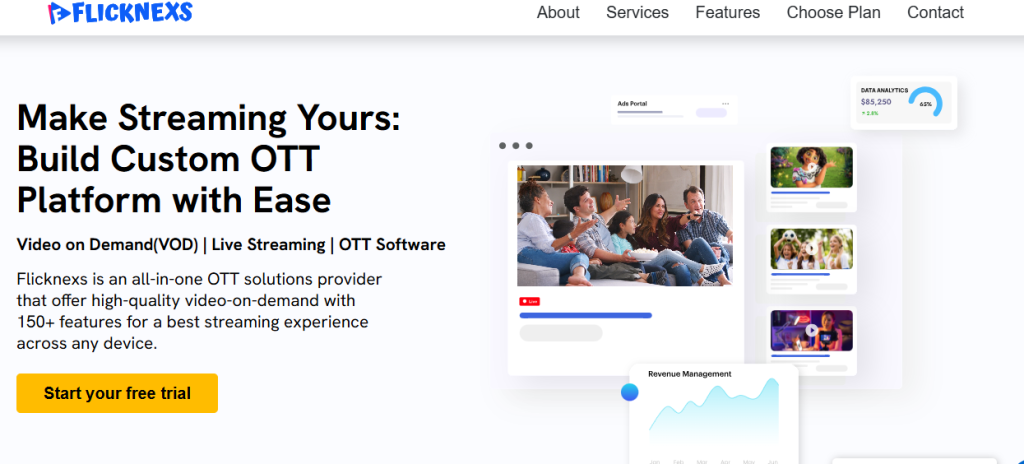
Flicknexs is a full-service over-the-top media platform that not only offers electronic transactions of monetization through avenues such as AVOD, SVOD, and TVOD, it also is an enterprise-level solution for corporates to build and manage their video content with customizable branding and money-making strategies.
Features:
- Library Management for easy content organization
- Filter Options for Categories and Episodes for better navigation
- Region-Based Pricing for localized market conditions
- Multi-Currency Support for global transactions
- Language Translation for diverse audiences
- Time Slot Ads for targeted advertising
- Advertisements for additional revenue
- Live Streaming for real-time events
- Partners for extended data offerings
- Multi-Profile Support for individual user settings
- Subtitles for the inclusive in multiple languages
- Subscription and Pay-Per-View for alternative monetization
- Comments for user engagement
- Transcoding for videos playable on any device
- Time Zone-Based Video Scheduling for the adapted distribution of the contents
Pros:
- Diverse ways to earn money
- The user interface is very intuitive
- Appropriate for all sizes of businesses
Cons:
- Not many choices for third-party application integrations
- There are some restrictions on the customization for the less experienced user
2. Webnexs VOD
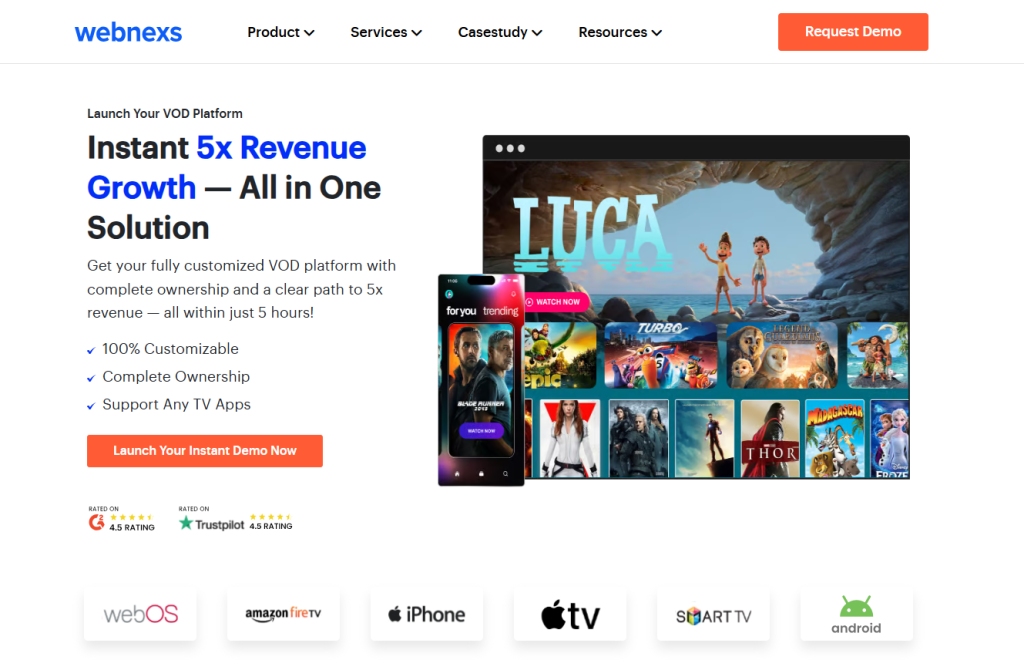
Webnexs VOD is a web-based platform designed to let users build their video-on-demand services from the infrastructure to the front end.
It supports various features that cater to any type of content and distribution need.
The server-based platform is also highly customizable, so users can leverage their branding images while deriving profits from sponsored and paid videos.
Features:
- Custom VOD platform
- DRM – security is committed to safeguarding content
- Streaming solutions – potentially turning into scalable ones
- Monetization based on a paid subscription service
Pros:
- OTT platforms with well-known brands are in for a feast
- As if websites and applications are pieces that can blend with at the same time
- Strong customer support
Cons:
- Beginners will face difficulty learning the ins and outs of the software
- Still, the number of free features is quite limited, and the best ones are not free
3. Vimeo OTT
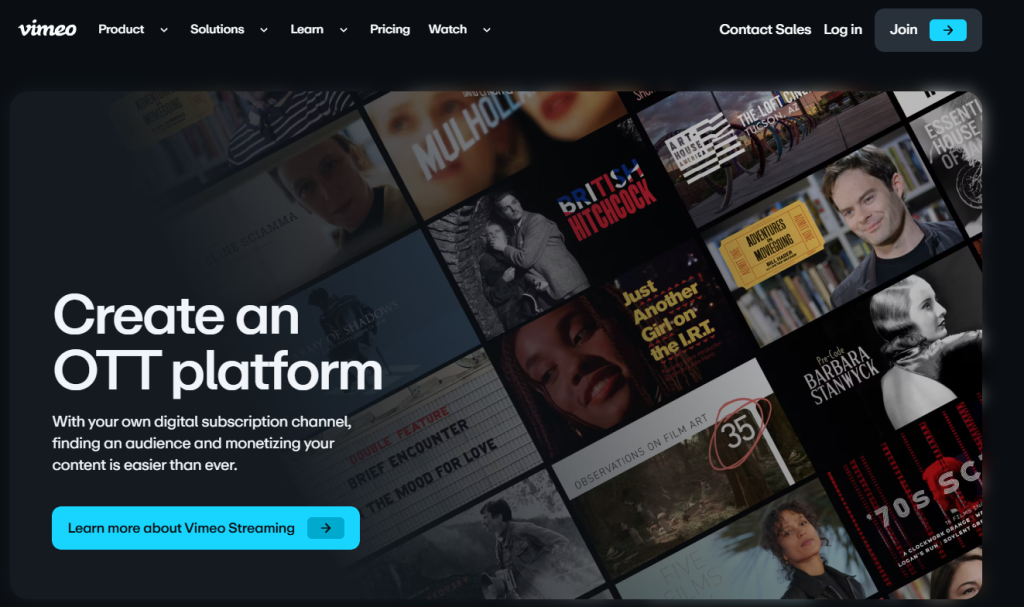
Vimeo OTT, on the whole, targets a customer base who would like to create streaming video apps as per a subscription-based model. Independent content makers, among others, can launch their own brands on this platform.
Features:
- Subscription-based monetization
- Custom-branded OTT apps
- Advanced analytics for video performance
Pros:
- Installation is quite easy to carry out and the security of the platform is guaranteed
- Integrates well with email marketing and CRMs
- Great for creating branded video experiences
Cons:
- Not suited for large-scale streaming or entertainment content
- More expensive compared to other video hosting platforms
4. Wistia
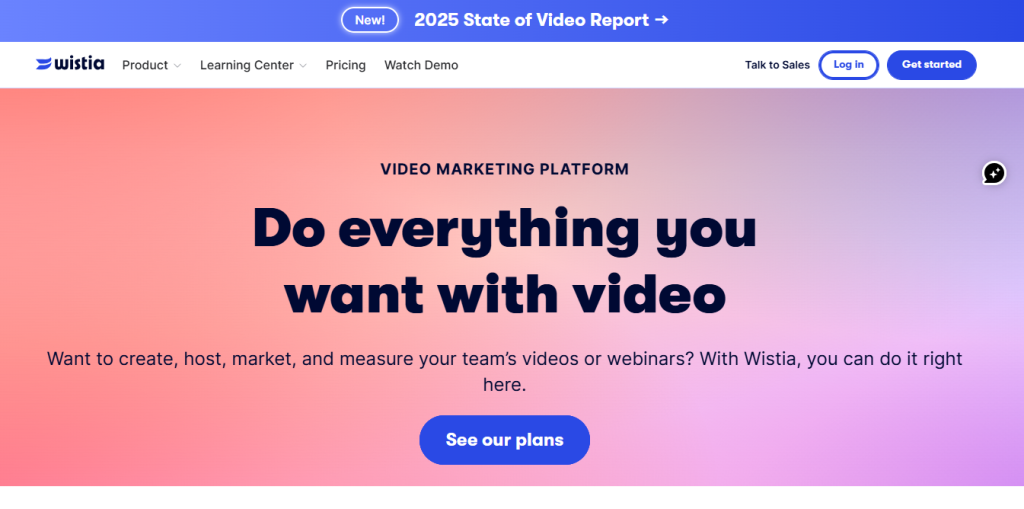
With Wistia, many companies are provided not only with a video hosting solution, they also get the necessary business tools for successful video marketing. The feature list includes powerful analytics, lead generation tools, and players that are customizable to allow users to use it in the best way to increase engagement.
Features:
- Video hosting with lead generation tools
- Customizable video player
- Detailed video analytics
Pros:
- Great for video marketing and business-related content
- Works nicely with email marketing and CRMs
- Best for making brand-tailored video experiences
Cons:
- It’s not suitable for mass streams or content from the entertainment industry
- In comparison to other platforms, it is more expensive
5. Brightcove
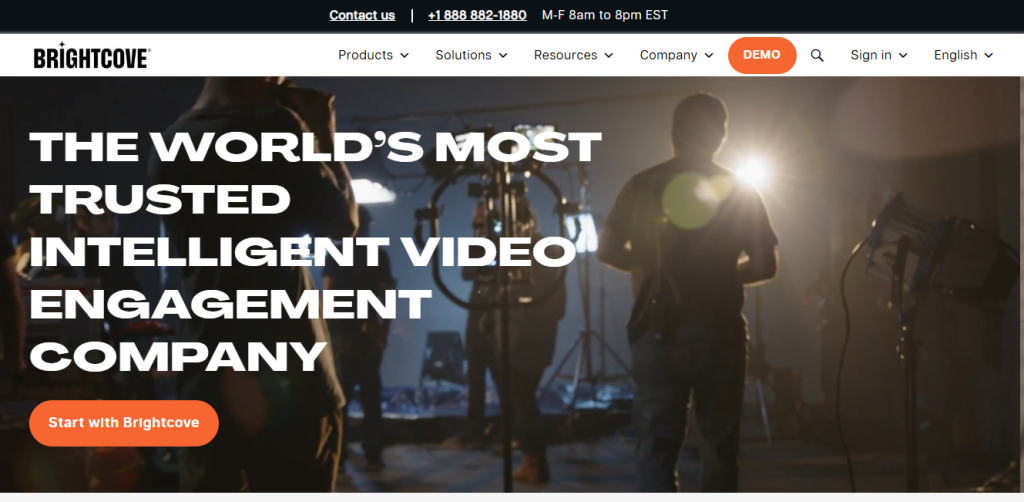
Brightcove is a first-grade video storage and monetization platform. It is perfect for companies that acquire high-volume video content. It provides them with the ability to operate it on the cloud, it has a reliable, secure storage system, and offers excellent monitoring tools for broadcasters.
Features:
- Cloud-based video hosting
- Advanced monetization options (SVOD, AVOD)
- Enterprise-level security features
- Comprehensive analytics dashboard
Pros:
- Ideal for large organizations and broadcasters
- Scalable with enterprise-level features
- Excellent video delivery performance
Cons:
- Expensive for small content creators
- Complex pricing structure
6. Kaltura
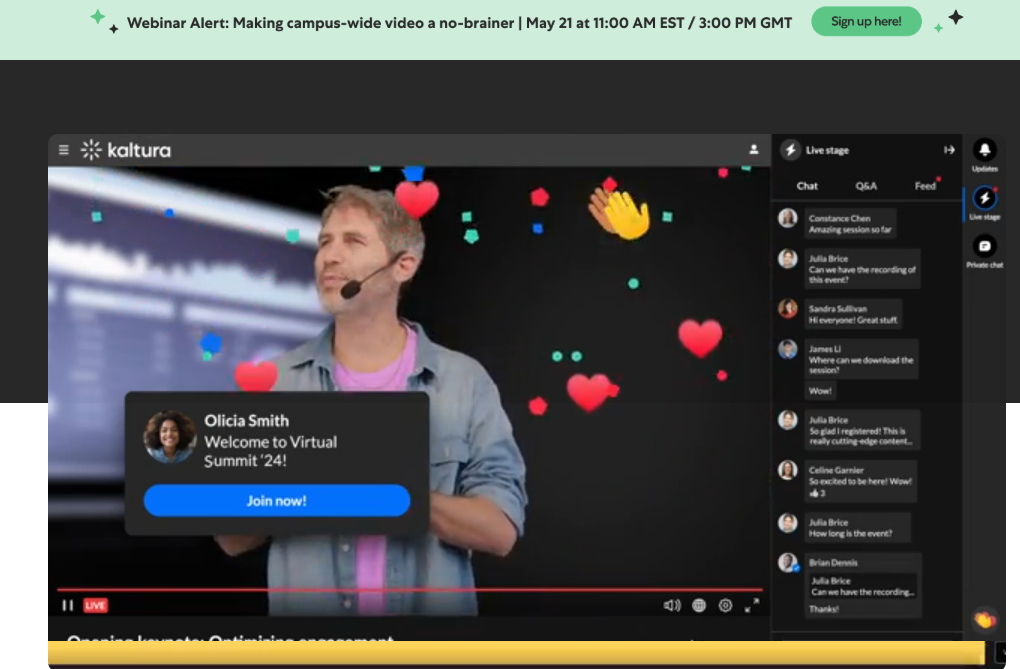
Kaltura is a video platform that is open-source and allows people to create and distribute videos. It is highly customizable, and it offers several tools for monetization, namely, live streaming, on-demand video, and interactive video that are contributed by users.
Features:
- Open-source video platform
- Interactive video tools for user engagement
- Supports live streaming and on-demand content
- Highly customizable solutions
Pros:
- Flexibility to build customized video applications
- Strong community and developer support
- Great for enterprises and the education sector
Cons:
- Complex setup and high learning curve
- Pricing can be overwhelming for smaller businesses
7. JW Player
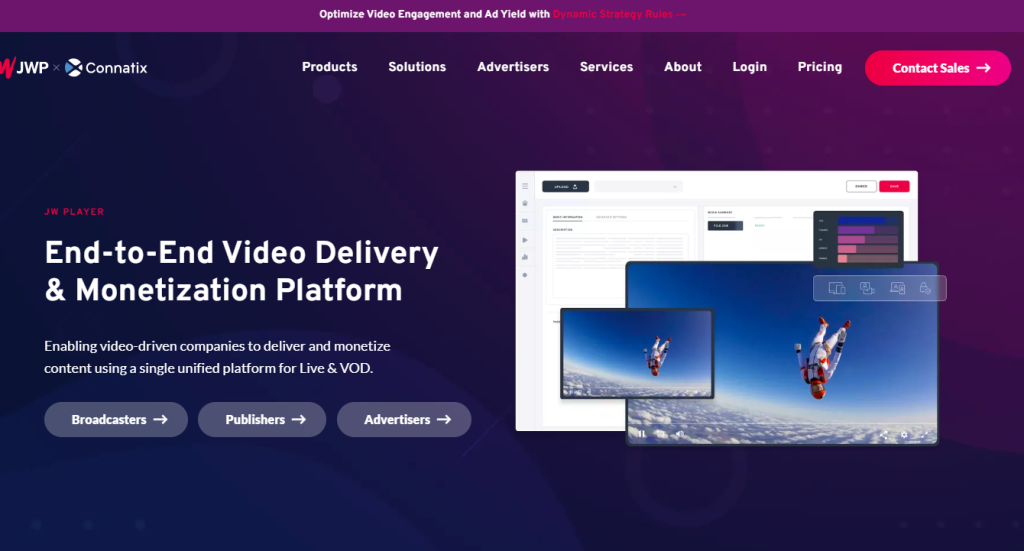
JW Player is a video player that is made and specializes in delivering high-standard video products and efficient ad revenue generation solutions. The website enjoys a video loading speed of 10.5 seconds, which is TiVo/Fast Digital Recording.
Features
- Advanced video player technology
- Ad monetization options
- Detailed video and analytics
Pros:
- Great for ad-based video monetization (AVOD)
- Fast video loading times
- Lightweight player for easy integration
Cons:
- Limited features for subscription and transactional monetization
- Basic customization options for video players
8. Uscreen
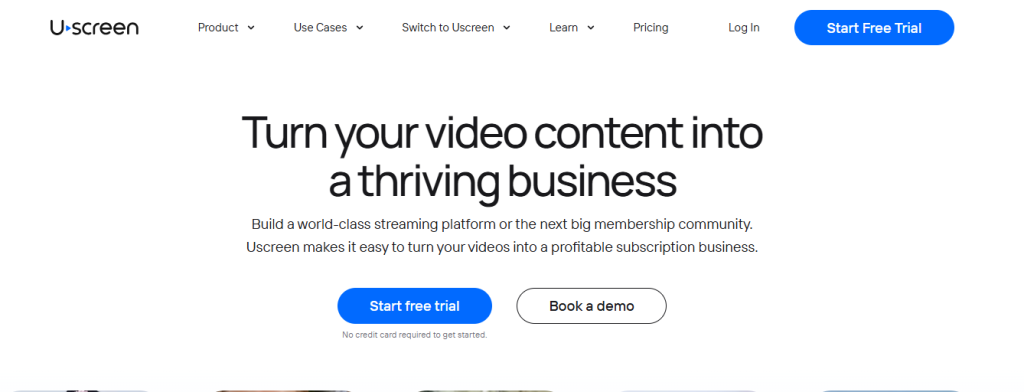
Uscreen is an SVOD and e-learning platform that enables video creators to build their own SVOD and online course platforms.
Features:
- Subscription-based monetization (SVOD)
- Community-building tools for creators
- Integration for selling courses or digital products
Pros:
- Easy for the user’s platform, fitting for the creators and educators
- Great customer support
- Particularly nice for the people’s brand and at the same time for creating a community
Cons:
- It has high costs for promoting smaller creators’ work.
- Does not offer many live streaming features.
9. Dacast
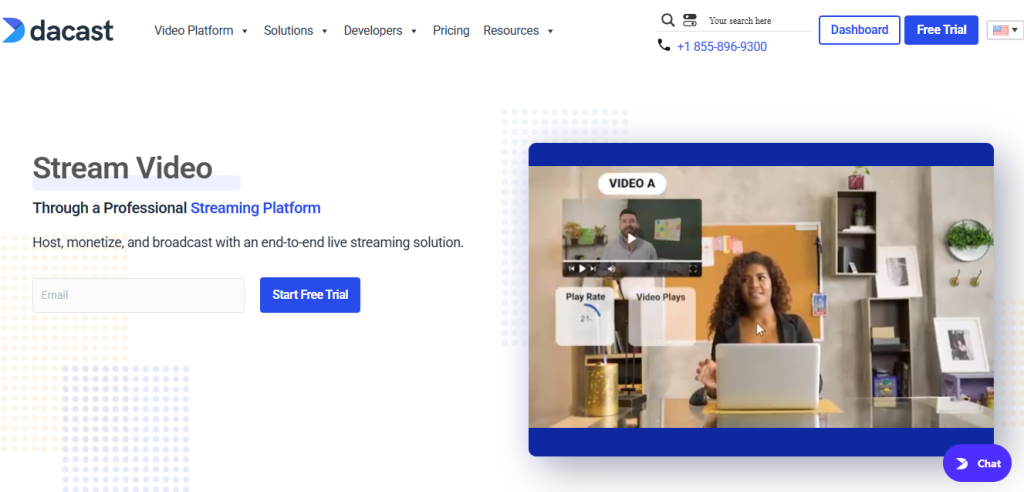
Dacast is a platform that is engaged in video streaming and monetization. It is mainly intended to be a tool for pay-per-view, subscription, and ad-based video monetization. A situation where it is most suitable is live streaming events and large corporations.
Features:
- Pay-per-view (PPV), subscription (SVOD), and ad-based monetization (AVOD)
- Live streaming capabilities
- Cloud-based video delivery
Pros:
- This is one of the best platforms for the live streaming of events
- Multiple monetization models have been made available
- It is as simple as that! platform
Cons:
- Very basic in what you can do with it
- It cannot be integrated with many third-party services
10. Muvi
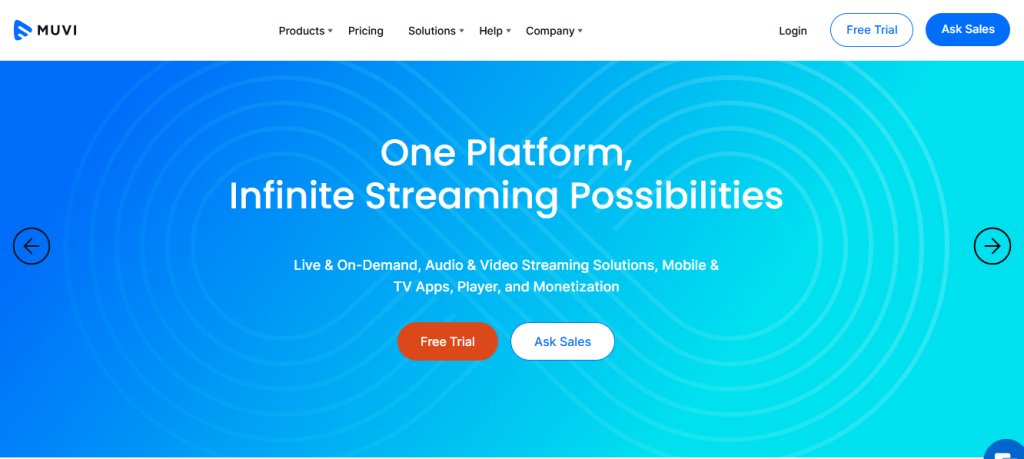
Muvi is an end-to-end, multi-functional OTT platform with all the tools to build your own video-on-demand service. Not just that, the platform supports all the widely used and popular monetization models
Features:
- Complete OTT solution
- Covers various monetization models (SVOD, AVOD, TVOD)
- Configurable
Pros:
- Enterprise-ready, suitable for large-scale businesses
- Multi-device support for streaming
- Complete video-on-demand solution
Cons:
- Expensive for smaller businesses or creators
- It can be complex for beginners
How to Select the Best Monetization Model for Your Videos in 2026
Choosing the right monetization model can significantly impact your revenue. In 2026, creators can earn via AVOD (ads), SVOD (subscriptions), TVOD (pay-per-view), or hybrid models. Selecting the model depends on your content type, audience size, and business goals.
Factors to Consider
- Audience Size & Engagement:
- Larger audiences benefit from AVOD and SVOD.
- Smaller or niche audiences may prefer membership or crowdfunding.
- Content Type & Length:
- Short-form videos → AVOD (ads)
- Long-form courses or series → SVOD (subscription)
- Revenue Goals:
- Immediate revenue → TVOD or PVOD
- Recurring revenue → SVOD or membership models
- Regional Preferences:
- Some regions prefer subscription-based platforms; others respond better to ads.
- Platform Features:
- Check if the platform supports analytics, payment gateways, and content protection.
- Include internal links to each platform: Flicknexs, Webnexs VOD, Vimeo OTT, etc.
How to Match Your Content Type with a Monetization Strategy
Live Streaming: AVOD + Donation / Membership combos
Educational Content: SVOD or Membership
Entertainment / Series / Short Clips: AVOD or TVOD
Exclusive or Premium Content: PVOD or Crowdfunding
Most successful creators, nearly three-quarters (around 70–75%), prioritize monetization systems and platform-level features, considering them essential for consistent revenue growth.
Tips to Maximize Revenue with Video Monetization in 2026
1. Optimize Content for Better Earnings
SEO for Video Titles and Descriptions
- Use targeted keywords that match your audience’s search intent.
- Design eye-catching thumbnails to boost click-through rates.
- Write power-packed intros that hook viewers in the first 10–15 seconds.
Focus on Retention and Watch Time
- Create videos that encourage viewers to watch longer, increasing total watch time.
- Higher retention signals platforms to recommend your content, attracting paid subscribers.
2. Combine Multiple Monetization Streams
Combine SVOD, AVOD, and TVOD
- Subscription Video on Demand (SVOD): Users pay a monthly/yearly fee.
- Ad-Based Video on Demand (AVOD): Revenue comes from ads displayed during content.
- Transactional Video on Demand (TVOD): Users pay per video or premium content.
Hybrid Monetization Model
- Mix two or more models to diversify income sources.
- Most platforms support multiple monetization strategies, increasing profit potential.
Rich Media Suggestions:
- Table comparing revenue potential for SVOD, AVOD, TVOD, and membership:
| Monetization Model | Revenue Source | Best For |
|---|---|---|
| SVOD | Subscription fees | Loyal viewers |
| AVOD | Ads | Large audience |
| TVOD | Pay-per-view | Premium content |
The Future of Video Monetization: Trends and Insights for 2026
- AI-driven personalization will improve ad targeting and viewer engagement.
- Blockchain-based content protection and NFT ownership models are gaining traction.
- Mobile-first monetization strategies will dominate global consumption.
- Hybrid monetization platforms combining AVOD, SVOD, and TVOD will grow.
- Global audiences will demand multilingual content and regional customization.
What are the Emerging Video Monetization Trends in 2026?
Powered Personalization
- Platforms will use AI to deliver targeted ads and recommend content, increasing revenue per viewer.
- AI will refine recommendations by analyzing viewing history, interests and engagement patterns to deliver highly relevant content for each individual user, improving retention and monetization.
Blockchain-Based Content Protection
- Content creators can protect IP and prevent piracy using blockchain.
- Enables secure royalty tracking and transparent revenue sharing.
NFT-Driven Video Ownership Models
- Creators can sell limited edition or premium video content as NFTs.
- Increases direct revenue and fan engagement.
Mobile-First Monetization Strategies
- Short-form content, mobile ads, and microtransactions will drive global video revenue.
- Especially impactful in regions like Southeast Asia and India.
What Predictions Can We Expect for Video Monetization in 2026?
Growth of Hybrid Monetization Platforms
- Combining AVOD, SVOD, TVOD allows creators to maximize earnings across multiple streams.
Rise of Creator-Owned Video Apps & Websites
- Independent apps enable direct subscription and membership revenue, bypassing intermediaries.
More Free Platforms for Beginners
- Entry-level platforms like Flicknexs and YouTube Shorts allow creators to start monetizing quickly.
Expansion to Global Audiences & Multilingual Content
- Platforms will localize content with subtitles, dubbing, and regional ad targeting to reach new markets.
Conclusion
Video monetization continues to grow rapidly, offering creators multiple ways to earn revenue online. By 2026, video content is expected to generate over $110 billion globally in monetization-driven revenue streams, fueled by the rapid expansion of AVOD, SVOD, TVOD, FAST channels, and hybrid OTT models. The creator economy and streaming platforms continue to accelerate growth, with advertising and subscription-based video models becoming the primary revenue drivers across digital ecosystems.
Key Takeaways:
- Diverse Revenue Streams: Leveraging multiple models ensures consistent income.
- Platform Selection Matters: Top platforms provide analytics, scalability, and global reach.
- Stay Updated: Monitor trends like AI-driven ad targeting and NFT ownership models to stay competitive.
Ready to start monetizing your videos? Explore Flicknexs today, subscribe to our newsletter for the latest tips, or read our guide on choosing the right monetization model to take your video business to the next level.
This guide is shared with our newsletter subscribers and across Flicknexs’ social channels — subscribe below to get monetization breakdowns like this first.
Ready to monetize your videos? Launch a VOD platform with Flicknexs →
Frequently Asked Questions
Ready to build?
If you’re planning your next Monetization project, Flicknexs handles the video infrastructure end-to-end — so you can ship in weeks, not months.
- start earning from video
- see pricing and plans
More on video monetization
Continue exploring more on this topic across the Flicknexs blog.


Comments
8 responses to “Top 10 Video Monetization Platforms to Boost Revenue in 2026”
Wow, this article provides a comprehensive overview of video monetization platforms! I appreciate how it breaks down the key features and benefits of various platforms. It’s definitely helpful for content creators like myself who are looking to monetize their videos.
Great article! I’ve been considering monetizing my videos, so this guide came at the perfect time. It’s helpful to have an overview of different video monetization platforms and their features. I’ll definitely be checking out some of the options mentioned here.
Wow, this article really opened my eyes to the world of video monetization platforms! I had no idea there were so many options available. It’s great to see that content creators now have multiple avenues to monetize their videos and generate revenue.
Great article! I’ve been considering monetizing my videos, so this information is really helpful. I had no idea there were so many video monetization platforms out there. It’s good to have options and explore what works best for my content. I’m definitely going to check out some of the platforms mentioned here.
Wow, this article provided such valuable insights into video monetization platforms! As a content creator, I’m always looking for ways to generate income from my videos, and this article really helped me understand the options available.
I never knew there were so many video monetization platforms available until I read this blog – thanks for the insights!
After reading the blog, I’m excited to explore these video monetization platforms for my content creation journey!
After reading your blog, it’s clear how this video monetization platform could revolutionize content creators’ earnings.