
Quick Answer: Looking for the best OTT platform software in 2026? The right OTT software can help you launch a branded streaming service without building video hosting, content management, monetization, apps, security and analytics from scratch.
We compared 10 OTT platform providers based on features, monetization options, device support, customization, scalability, ease of launch and suitability for different streaming businesses.
Whether you are a media company, broadcaster, creator, educator, sports organization or startup, this guide will help you compare the leading OTT software platforms and choose the one that fits your business.
By the Flicknexs Team. Flicknexs builds white-label OTT platforms for media companies, creators and broadcasters, and this comparison reflects the features and monetization models we see businesses actually evaluate before choosing a provider.
What Is the Best OTT Platform Software?
There is no single OTT platform that is best for every business. The right choice depends on your content, audience, monetization strategy, technical resources and growth plans.
For businesses that want to launch a fully branded streaming service with VOD, live streaming, multiple monetization models and apps across web, mobile and connected TV, Flicknexs is one of the strongest options to consider.
Other platforms may be better suited to specific needs. Brightcove is geared toward enterprise video and media organizations, Kaltura offers extensive customization, Muvi focuses on an all-in-one OTT experience, Dacast is strong for live streaming and Uscreen and Vimeo OTT are popular options for creator and subscription-focused businesses.
The best OTT platform is ultimately the one that gives you the features you need without creating unnecessary technical or operational complexity.
Best OTT Platform Software in 2026: Quick Comparison
| OTT Platform | Best For | Monetization | Apps & Devices | Platform Type |
| Flicknexs | Branded OTT businesses and media companies | SVOD, AVOD, TVOD, PPV, Hybrid | Web, iOS Android, Smart TV, Roku, Fire TV, Apple TV and more | White-label OTT |
| Muvi | All-in-one OTT businesses | SVOD, AVOD, TVOD | Web, mobile and connected TV | SaaS |
| Brightcove | Enterprise media and broadcasters | Advertising and subscription models | Web, mobile and connected TV | Enterprise video platform |
| Kaltura | Highly customized enterprise deployments | Flexible | Multi-device | API/framework platform |
| JW Player | Publishers and ad-supported video | Advertising and other models | Web and connected devices | Video platform |
| Zype | API-driven OTT businesses | Subscription, advertising and transactional | Multi-device | API-first |
| VPlayed | Businesses seeking flexible OTT deployment | SVOD, AVOD, TVOD, PPV | Multi-device | OTT platform |
| Dacast | Live streaming and events | Subscription, PPV and advertising | Web and mobile | Video streaming platform |
| Vimeo OTT | Creators and subscription video | Subscription and transactional | Web, mobile and TV | SaaS |
| Uscreen | Membership and creator businesses | Subscription and transactional | Web, mobile and TV | SaaS |
How We Compared the Best OTT Platform Software
A feature list alone does not tell you whether an OTT platform is right for your business.
We recommend evaluating OTT software across these areas:
1. Video management
The platform should make it easy to upload organize, publish and manage VOD and live content.
2. Monetization
Look for support for the revenue model you actually plan to use, including subscriptions, advertising, rentals, purchases, pay-per-view or combinations of these.
3. App and device support
A modern OTT service may need to reach viewers on websites, smartphones, tablets, Smart TVs, streaming devices and connected TV platforms.
4. Content protection
Premium video businesses need security features such as DRM, access controls, authentication and secure content delivery.
5. Branding and customization
If you are building a streaming business, your viewers should experience your brand rather than a generic third-party service.
6. Analytics
Analytics should help you understand viewing behavior, engagement, subscriber activity, content performance and revenue.
7. Scalability
The platform should be able to support increasing content libraries, viewers, devices and monetization requirements.
8. Ease of deployment
A platform that requires a large engineering team may not be the best option for a business that wants to launch quickly.
9. Total cost of ownership
Consider more than the software subscription. Factor in app development, infrastructure, storage, bandwidth, integrations, payment processing, maintenance and support.
1. Flicknexs
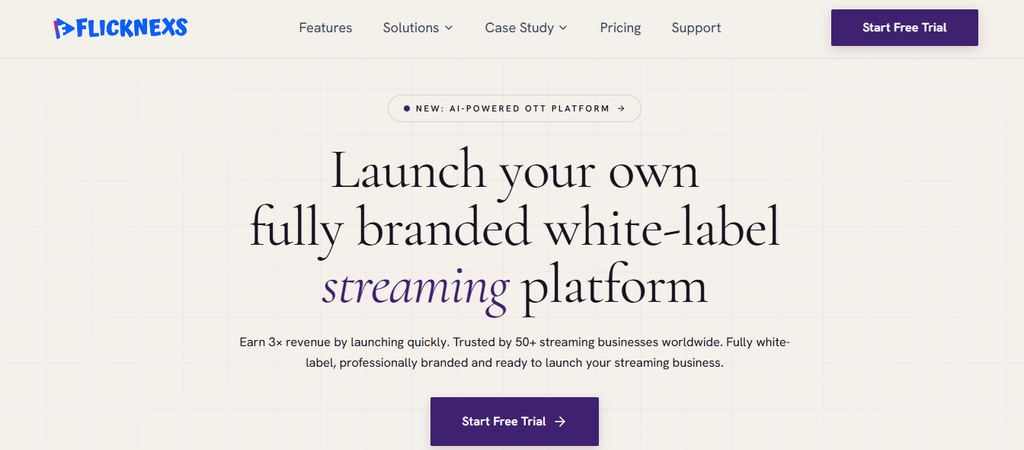
Best for: Businesses launching a branded OTT streaming service
Flicknexs is a white-label OTT platform designed for businesses that want to launch their own streaming service without building the entire OTT technology stack from scratch.
The platform combines video management, live streaming, monetization, DRM, analytics, content delivery and multi-platform apps in one OTT ecosystem.
Key features
- Video-on-demand streaming
- Live streaming
- HD and 4K video delivery
- Adaptive bitrate streaming
- DRM content protection
- Global CDN
- SVOD
- AVOD
- TVOD and PPV
- Hybrid monetization
- Analytics and reporting
- White-label branding
- Custom domain
- Web applications
- iOS and Android apps
- Apple TV
- Android TV
- Samsung Tizen
- LG webOS
- Roku
- Fire TV
- Chromecast and AirPlay support
- Partner and content management tools
Flicknexs currently promotes native apps across 12+ platforms and positions its solution as a fully branded streaming platform with no third-party branding.
Monetization options
Flicknexs supports multiple OTT business models, including:
SVOD: Charge viewers recurring subscription fees.
AVOD: Generate revenue through advertising.
TVOD/PPV: Charge viewers for individual content or events.
Hybrid: Combine subscriptions, advertising and transactional purchases.
This flexibility is useful if your business model may evolve as your audience grows.
Best for
Flicknexs is a good fit for:
- Media companies
- Content creators
- Broadcasters
- Regional streaming services
- Sports businesses
- Educational platforms
- Religious organizations
- Entertainment businesses
- OTT startups
- Businesses moving from custom development to a managed OTT platform
Pros
- Fully branded OTT experience
- Multiple monetization models
- Multi-device distribution
- VOD and live streaming
- Built-in content protection
- Analytics
- No-code/low-code operational approach
- Suitable for businesses that want to own their streaming brand
Things to consider
Enterprise requirements, integrations, app configurations and other advanced services may affect the final implementation and pricing.
Verdict
Flicknexs is one of the strongest options for businesses that want a branded OTT platform with flexible monetization and multi-device distribution without taking on the complexity of building the entire infrastructure themselves.
Ready to build?
If you’re planning your next OTT project, Flicknexs handles the video infrastructure end-to-end so you can ship in weeks, not months.
See Flicknexs Pricing2. Muvi
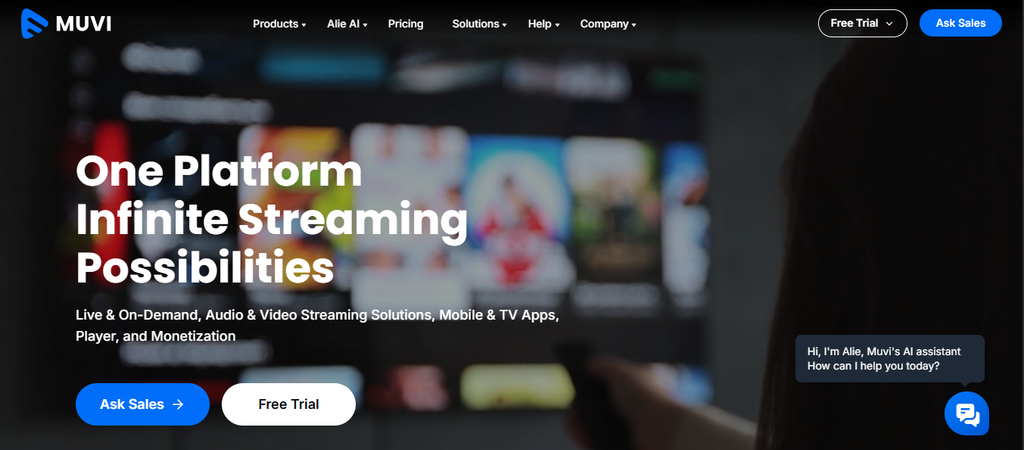
Best for: Businesses looking for an all-in-one OTT SaaS platform
Muvi is an OTT platform focused on helping businesses launch and manage streaming services through a managed platform.
Its offering is aimed at organizations that want content management, monetization, applications and streaming capabilities within an integrated environment.
Key features
- VOD
- Live streaming
- Video CMS
- Subscription management
- Multiple monetization options
- Web and mobile applications
- Connected TV support
- Analytics
- Content protection
- Custom branding
- APIs and integrations
Best for
Muvi can be suitable for:
- Businesses launching OTT services
- Media companies
- Educational businesses
- Content owners
- Enterprises wanting an all-in-one SaaS approach
Pros
- Broad OTT feature set
- Managed SaaS model
- Multiple monetization options
- Multi-platform distribution
- Suitable for businesses that want less infrastructure management
Things to consider
Businesses with highly specialized infrastructure or extensive custom engineering requirements may need to evaluate how well the platform’s standard architecture fits their needs.
Verdict
Muvi is worth considering if you want an all-in-one OTT SaaS platform rather than assembling multiple streaming technologies yourself.
3. Brightcove
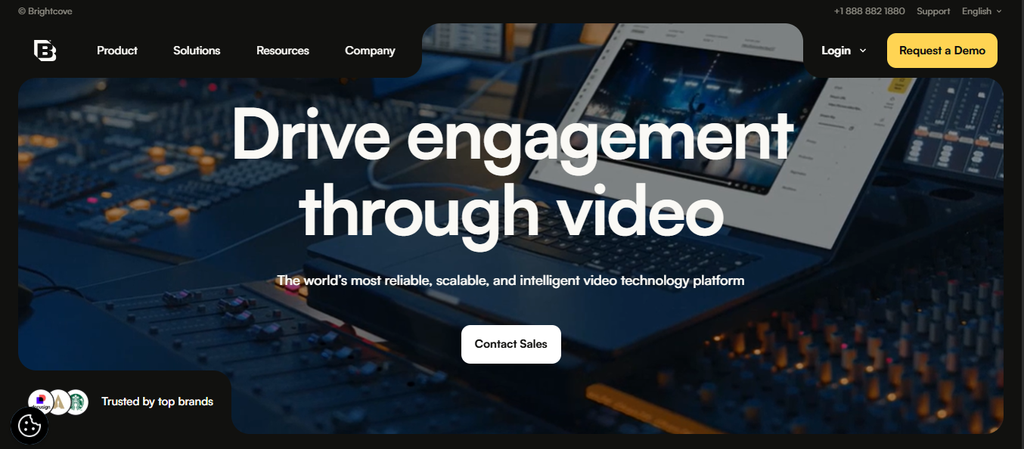
Best for: Enterprise media companies, publishers and broadcasters
Brightcove is an enterprise video platform focused on professional video hosting, distribution, engagement and monetization.
It is particularly relevant to larger organizations with established video operations and more complex enterprise requirements.
Key features
- Video management
- Video hosting
- Live streaming
- Analytics
- Video players
- Content delivery
- Advertising integrations
- APIs
- Security features
- Enterprise video workflows
- Connected-device experiences
Best for
- Large media companies
- Publishers
- Broadcasters
- Enterprise video teams
- Organizations with sophisticated advertising requirements
Pros
- Enterprise-oriented platform
- Strong video infrastructure
- Advanced analytics
- Advertising capabilities
- Designed for large-scale video operations
Things to consider
Brightcove may be more than a smaller OTT startup needs. Businesses should compare its implementation requirements and commercial model with platforms designed specifically for launching branded OTT services.
Verdict
Brightcove is a strong enterprise video option for organizations that prioritize professional video infrastructure and large-scale media operations.
4. Kaltura
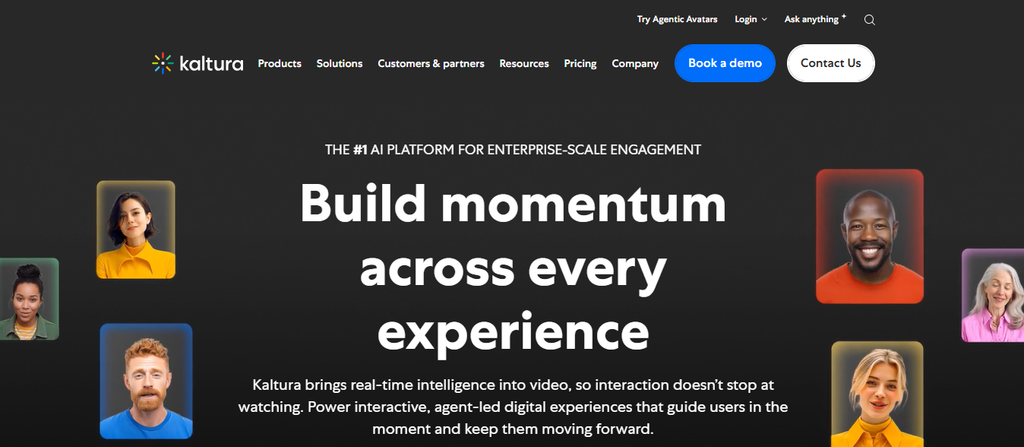
Best for: Enterprises that need extensive customization
Kaltura takes a more modular approach to video technology and is widely used for enterprise video, education, media and other complex deployments.
Its flexibility can be an advantage for organizations with technical teams that need control over integrations and workflows.
Key features
- Video management
- Live streaming
- VOD
- APIs
- Video applications
- Analytics
- DRM
- Monetization capabilities
- Integration options
- Enterprise video workflows
Best for
- Large enterprises
- Universities
- Telecom businesses
- Media organizations
- Businesses with internal engineering teams
Pros
- Highly configurable
- Strong enterprise capabilities
- Extensive integration possibilities
- Suitable for complex video ecosystems
Things to consider
Greater flexibility can also mean greater implementation complexity. Organizations should evaluate the technical resources required to customize and operate the platform.
Verdict
Kaltura is a strong choice for organizations that prioritize customization and have the technical resources to manage a more flexible video platform.
5. JW Player
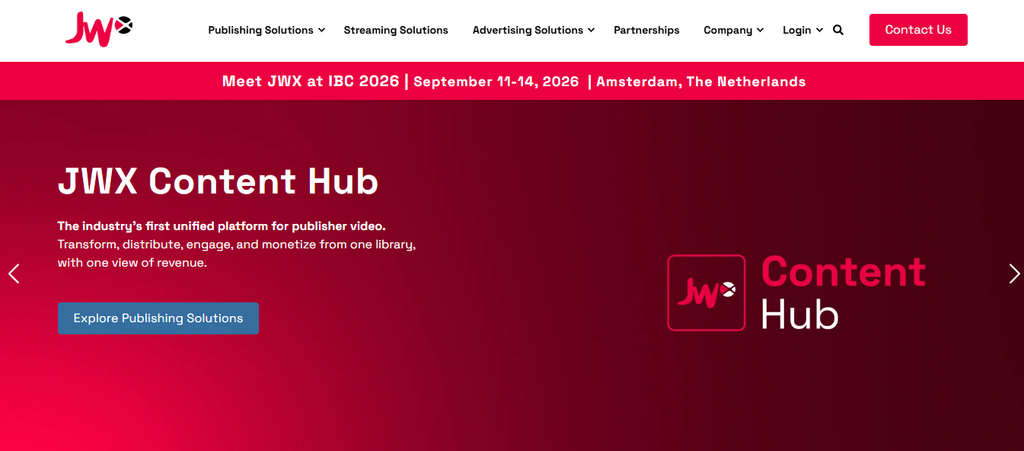
Best for: Publishers and advertising-focused video businesses
JW Player is known for its video player and broader video technology ecosystem, with capabilities supporting video delivery, engagement, analytics and monetization.
Key features
- Video player
- Video hosting
- Streaming
- Analytics
- Advertising
- Content management
- APIs
- Multi-device video delivery
Best for
- Publishers
- News organizations
- Digital media companies
- Ad-supported video businesses
Pros
- Strong video player technology
- Advertising capabilities
- Analytics
- Developer tools
- Suitable for publishers
Things to consider
Businesses looking for a complete white-label OTT business platform should compare its capabilities against providers that focus specifically on end-to-end OTT services.
Verdict
JW Player is particularly relevant for publishers and businesses where video advertising is an important part of the revenue strategy.
6. Zype
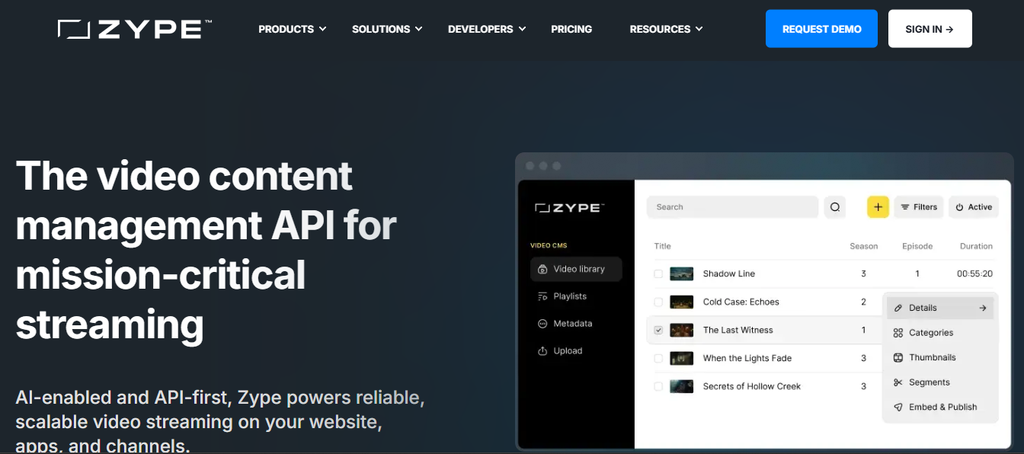
Best for: API-driven OTT businesses
Zype focuses on helping businesses manage, distribute and monetize video through an API-oriented platform.
Key features
- Video management
- OTT distribution
- APIs
- Monetization
- Analytics
- Applications
- Integrations
- Content management
Best for
- Technical teams
- Media companies
- Businesses with custom applications
- API-driven streaming services
Pros
- API-focused approach
- Flexible integrations
- Suitable for technical teams
- Multi-platform video distribution
Things to consider
An API-first approach can be valuable when you have developers available to build and maintain custom experiences. Businesses without technical resources may prefer a more turnkey platform.
Verdict
Zype is worth considering for businesses that want an API-driven approach to OTT distribution and have the technical resources to take advantage of it.
7. VPlayed
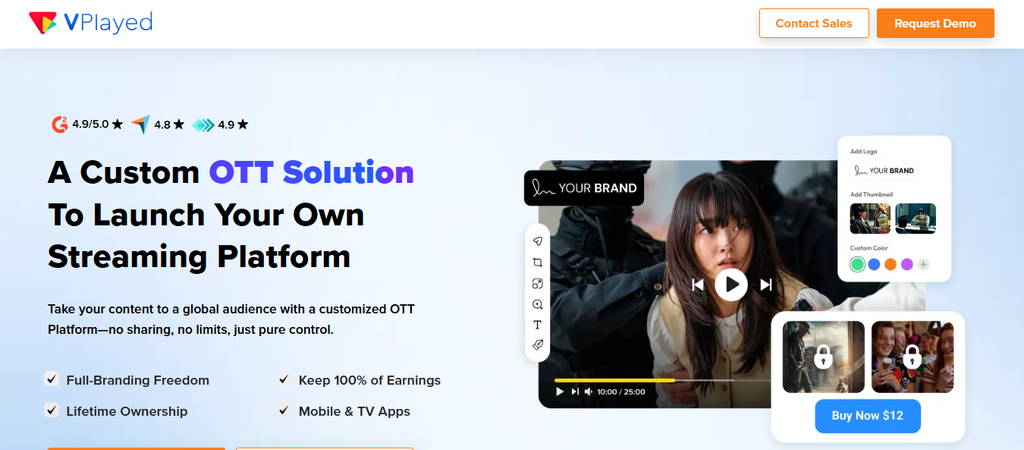
Best for: Businesses seeking a customizable OTT solution
VPlayed is positioned as an OTT platform for businesses that want a combination of ready-made streaming functionality and customization.
Key features
- VOD
- Live streaming
- Video CMS
- SVOD
- AVOD
- TVOD
- PPV
- Multi-device applications
- Analytics
- Content security
- Customization options
Best for
- Broadcasters
- Media businesses
- Educational platforms
- Fitness businesses
- Content creators
- Regional OTT startups
Pros
- Broad monetization support
- Customizable OTT experience
- Multiple streaming use cases
- Multi-device support
Things to consider
Businesses should evaluate the exact deployment model, app requirements, customization scope and ongoing support before selecting the platform.
Verdict
VPlayed can be a suitable option for businesses that want more flexibility than a basic creator-focused streaming service.
8. Dacast
Best for: Live streaming, events and VOD
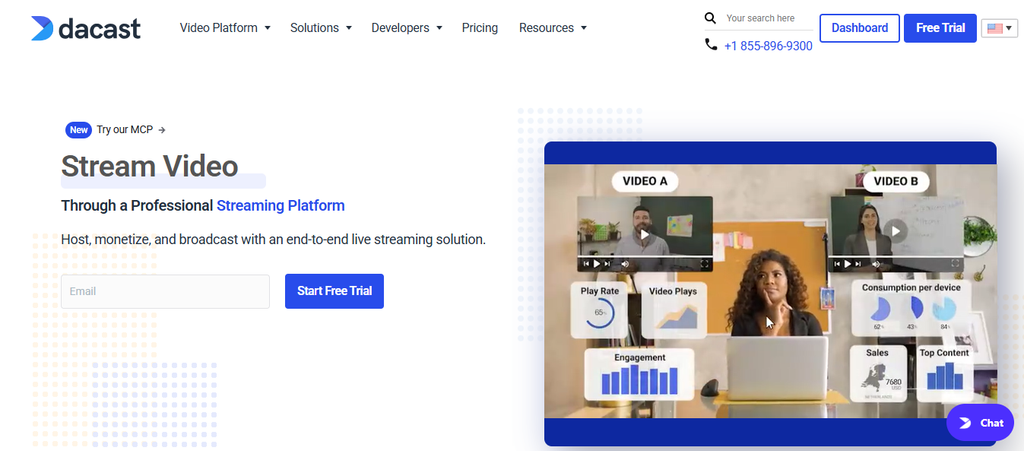
Dacast is particularly relevant to businesses that need professional live streaming alongside video-on-demand capabilities.
Key features
- Live streaming
- VOD
- Video hosting
- Paywall
- Monetization
- Analytics
- Content delivery
- White-label video experiences
Best for
- Events
- Sports
- Webinars
- Conferences
- Educational organizations
- Corporate communications
- Live broadcasters
Pros
- Strong live streaming focus
- VOD support
- Monetization options
- Suitable for professional events
- Managed streaming infrastructure
Things to consider
Businesses focused primarily on building a large branded subscription OTT ecosystem should compare its capabilities with platforms designed specifically around complete OTT businesses.
Verdict
Dacast is a strong choice when live streaming is central to your business model.
9. Vimeo OTT
Best for: Creators and subscription video businesses
Vimeo OTT is designed for creators and businesses that want to distribute and monetize video through their own branded streaming experience.
Key features
- Video hosting
- Subscription video
- Transactional monetization
- Video management
- Analytics
- Mobile and TV distribution
- Branded OTT experiences
Best for
- Independent creators
- Subscription businesses
- Niche video services
- Organizations already using Vimeo
Pros
- Recognized video platform
- Subscription-focused capabilities
- Creator-friendly approach
- Managed infrastructure
Things to consider
Larger businesses with complex monetization, infrastructure or customization requirements should compare the platform’s capabilities against enterprise-focused OTT providers.
Verdict
Vimeo OTT is a practical option for creators and businesses that want to build a subscription-based video service without managing streaming infrastructure themselves.
10. Uscreen
Best for: Membership, creator and community-based video businesses
Uscreen focuses on helping creators and businesses turn video content into subscription-based digital products.
Key features
- Video hosting
- Subscription management
- Membership features
- Community tools
- Mobile applications
- TV applications
- Analytics
- Content management
Best for
- Fitness businesses
- Coaches
- Educators
- Creators
- Membership communities
- Niche subscription services
Pros
- Strong membership focus
- Creator-friendly
- Subscription tools
- Community features
- Managed platform
Things to consider
Businesses building large-scale media or advertising-focused OTT services should compare its feature set with platforms designed for broader OTT use cases.
Verdict
Uscreen is particularly suitable for creators and membership businesses where subscriptions and community engagement are central to the business model.
Best OTT Platform by Use Case
The best OTT platform depends heavily on what you are trying to build.
Best OTT platform for launching your own branded streaming service
Flicknexs
Flicknexs is designed around white-label OTT deployment, giving businesses branded streaming websites and apps alongside VOD, live streaming, monetization, analytics and content protection.
Best OTT platform for enterprise video
Brightcove
Brightcove is a strong option for established organizations that need enterprise video infrastructure and professional media workflows.
Best OTT platform for highly customized deployments
Kaltura
Kaltura is better suited to organizations with technical resources and complex integration requirements.
Best OTT platform for creators
Uscreen
Uscreen is particularly relevant to membership and creator businesses that rely heavily on subscription revenue and community engagement.
Best OTT platform for subscription video
Vimeo OTT
Vimeo OTT can be a good fit for creators and businesses focused primarily on subscription-based video.
Best OTT platform for live streaming
Dacast
Dacast is worth considering when live events, webinars, sports and other real-time broadcasts are central to your service.
Best OTT platform for advertising
JW Player
JW Player is particularly relevant to publishers and video businesses where advertising plays a major role in monetization.
Best OTT platform for API-driven businesses
Zype
Zype can make sense for businesses that want API-based video infrastructure and have developers available to build custom experiences.
What Features Should the Best OTT Platform Software Have?
The best OTT platform software should cover the complete journey from uploading content to delivering it to a paying viewer.
1. Video CMS
A video CMS should let you upload, organize, categorize, schedule, publish and manage your content.
2. Live streaming
If you plan to stream sports, events, classes, news, worship services or other live programming, live streaming should be built into the platform or supported through reliable integrations.
3. Adaptive bitrate streaming
Adaptive bitrate streaming automatically adjusts video quality based on the viewer’s available bandwidth and device conditions.
4. Multi-device streaming
Your platform should support the devices your audience actually uses, including:
- Web
- iOS
- Android
- Smart TVs
- Roku
- Fire TV
- Apple TV
- Android TV
Flicknexs currently lists support across web, mobile, Smart TV, Roku, Fire TV, Apple TV, Samsung Tizen, LG webOS, Chromecast and AirPlay.
Adaptive bitrate streaming automatically adjusts video quality based on the viewer’s available bandwidth and device conditions a widely used approach across the streaming industry, with the underlying technology documented in Wikipedia’s overview of adaptive bitrate streaming.
5. DRM and content protection
Premium content needs protection against unauthorized access and redistribution. Look for appropriate DRM and access-control capabilities.
6. Multiple monetization models
A flexible OTT business may use:
- SVOD
- AVOD
- TVOD
- PPV
- Hybrid monetization
This lets you adapt your revenue model as your audience develops.
7. Analytics
Look for analytics covering:
- Watch time
- Views
- Viewer engagement
- Content performance
- Subscriber behavior
- Retention
- Revenue
8. White-label branding
If you are launching your own streaming business, your brand should be visible across your website and apps rather than the OTT provider’s branding.
9. Payment and subscription management
The platform should make it possible to manage plans, subscriptions, transactions, trials and viewer access.
10. Scalability
Your OTT platform should be capable of handling growth in content, viewers, traffic, devices and geographic reach.
How Much Does OTT Platform Software Cost?
There is no universal price for OTT platform software.
The cost depends on the platform, number of viewers, content volume, streaming bandwidth, apps, monetization model, integrations and level of customization.
Common OTT pricing models include:
SaaS subscription:
You pay a recurring platform fee, usually based on the plan and usage.
Enterprise pricing:
Large deployments typically require a custom quote based on audience size, features, infrastructure, support and integrations.
White-label licensing:
Some providers offer licensing or customized commercial arrangements for businesses that want deeper branding and control.
Custom development:
Building an OTT platform from scratch introduces development, infrastructure, app development, maintenance, security and ongoing engineering costs.
What affects OTT platform cost?
- Number of viewers
- Video storage
- Streaming bandwidth
- Live streaming requirements
- Number of apps
- Content protection
- Monetization
- Payment integrations
- Custom features
- Analytics
- Customer support
- Geographic distribution
Rather than choosing an OTT provider solely by its monthly subscription price, calculate the total cost of ownership.
OTT Platform Software vs Building From Scratch
Should you buy OTT platform software or build your own?
For most businesses, the answer depends on how much control and technical responsibility they actually need.
| Factor | OTT Platform Software | Custom OTT Development |
| Launch speed | Faster | Slower |
| Initial development | Lower | Higher |
| Video infrastructure | Usually managed | Build or manage separately |
| Apps | Often available | Develop separately |
| Monetization | Usually built in | Build/integrate |
| DRM | Usually available | Implement separately |
| Maintenance | Vendor-managed | Internal team |
| Customization | Provider-dependent | Maximum |
| Technical resources | Lower | Higher |
| Scalability | Platform-dependent | Fully controlled |
Choose OTT platform software if:
- You want to launch quickly
- You do not want to build streaming infrastructure
- You need ready-made apps
- You want built-in monetization
- You have a small technical team
- You want predictable operations
Consider custom development if:
- You need complete control over the technology stack
- Your requirements are highly specialized
- You have a large engineering team
- You need infrastructure that a SaaS platform cannot provide
- You are prepared for higher development and maintenance costs
For many businesses, a white-label OTT platform provides a practical middle ground between a generic video host and a completely custom streaming platform.
How to Choose the Right OTT Platform
Before signing up for an OTT platform, answer these questions.
1. What type of content will you stream?
Is your business based on movies, series, sports, education, fitness, news, live events, religious content or user-generated video?
2. How will you make money?
Decide whether you need:
- Subscriptions
- Advertising
- Pay-per-view
- Rentals
- Purchases
- Hybrid monetization
3. Where will viewers watch?
Identify whether your audience needs web, mobile, Smart TV, Roku, Fire TV, Apple TV or other applications.
4. How much customization do you need?
If brand ownership is important, choose a platform that provides strong white-label capabilities.
5. How technical is your team?
A platform requiring extensive development may not be appropriate if you do not have dedicated engineers.
6. What happens as you grow?
Check how the provider handles increased traffic, content, users, storage, bandwidth, apps and geographic expansion.
7. What is actually included?
Ask about:
- Hosting
- CDN
- Storage
- Bandwidth
- Apps
- DRM
- Analytics
- Support
- Integrations
- Maintenance
- App store publishing
8. What will your total cost be?
Don’t compare providers only on their advertised subscription price. Calculate the full operating cost.
How to Launch Your Own OTT Platform
You do not necessarily need to build an OTT platform from scratch.
A white-label OTT platform can provide the underlying technology while you focus on your content, brand, audience and business model.
Step 1: Choose your OTT platform
Compare providers based on features, monetization, apps, pricing, scalability, customization and support.
Step 2: Prepare your content
Organize your movies, series, courses, live events or other video content.
Step 3: Configure your OTT platform
Set up your catalog, categories, homepage, user access and content settings.
Step 4: Choose your monetization model
Configure subscriptions, advertising, PPV, TVOD or a hybrid model.
Step 5: Customize your branding
Add your:
- Logo
- Colors
- Domain
- App branding
- Content categories
- User experience
Step 6: Launch your apps
Publish your website and supported mobile and TV applications.
Step 7: Track performance
Use analytics to monitor viewing behavior, engagement, subscriptions, retention and revenue.
Step 8: Optimize and scale
Use viewer data to improve your content strategy, pricing, marketing and user experience.
Why Choose a White-Label OTT Platform?
Building a streaming service is more than creating a video player.
You need technology for:
- Video storage
- Encoding
- Transcoding
- Content delivery
- Video playback
- DRM
- User authentication
- Payments
- Subscriptions
- Analytics
- Mobile apps
- TV apps
- Content management
A white-label OTT platform brings many of these components together so you can focus on operating your streaming business.
Flicknexs, for example, positions its platform around fully branded OTT services, multi-device applications, monetization, DRM, analytics and managed streaming infrastructure.
Final Verdict: Which OTT Platform Should You Choose?
The best OTT platform software is not necessarily the platform with the longest feature list.
It is the platform that fits your:
- Content strategy
- Audience
- Monetization model
- Device requirements
- Budget
- Technical resources
- Branding requirements
- Growth plans
For enterprise video operations, platforms such as Brightcove and Kaltura may be worth evaluating. For creators and membership businesses, Uscreen and Vimeo OTT can be strong candidates. For live-focused businesses, Dacast is worth considering. For API-driven deployments, Zype may be a better fit.
For businesses that want to launch a branded OTT streaming service with VOD, live streaming, flexible monetization, content protection, analytics and multi-device apps without building the entire infrastructure from scratch, Flicknexs is a strong option to evaluate. Its current platform offering includes white-label branding, multiple monetization models, DRM, global content delivery, analytics and applications across major web, mobile and connected-TV platforms.
The best way to make the final decision is to compare the platforms against your actual requirements, confirm current pricing and features with each provider and calculate the total cost of operating your streaming service.
Frequently Asked Questions
Ready to build?
If you’re planning your next OTT project, Flicknexs handles the video infrastructure end-to-end so you can ship in weeks, not months.
Create Your OTT PlatformMore OTT platform guides
Continue exploring more on this topic across the Flicknexs blog.


Comments
22 responses to “Best OTT Platform Software & OTT Solution in 2026 Complete Comparison Guide”
This guide is incredibly helpful for anyone looking to choose an OTT platform software. The breakdown of key features and considerations to keep in mind really simplifies the decision-making process.
This guide is incredibly helpful! I’ve been considering launching my own OTT platform, and the comprehensive breakdown of features and considerations in this article will definitely assist me in making an informed decision. Thank you!
This is a comprehensive guide to choosing the best OTT platform software! I appreciate the step-by-step approach and the detailed explanations of key considerations. It’s a valuable resource for anyone looking to launch their own streaming service.
I appreciate the comprehensive approach in this guide. The explanation of different features and functionalities of OTT platform software is clear and easy to understand, even for someone who’s new to this industry. It’s a great resource for beginners.
Wow, what an informative article! I’ve been looking for a guide on choosing the best OTT platform software, and this definitely delivered. It covered all the essential aspects and provided valuable insights. Thank you for sharing!
Wow, this article is truly the ultimate guide to choosing the best OTT platform software! It covers all the important aspects and factors that one should consider before making a decision. The comparison between popular platforms is especially helpful. Thanks for sharing!
This article provided a comprehensive overview of different OTT platform software options. It’s helpful to have all this information in one place when making a decision. I particularly liked the comparison between the features and pricing of various platforms. It gave me a clear understanding of what each platform has to offer.
This article provides a comprehensive guide to choosing the best OTT platform software. I found it incredibly helpful and informative.
Great article! I found the guide to choosing the best OTT platform software really helpful. I’m currently looking into starting my own streaming service, and this information will definitely assist me in making an informed decision. Thanks for sharing!
Wow, this article on choosing the best OTT platform software is incredibly informative! I never realized there were so many factors to consider when making this decision. Thank you for breaking it down in such a clear and concise manner.
I appreciate you sharing such valuable insights about OTT software. Your post has been extremely helpful in guiding me to select the best option. I’m always on the lookout for high-quality content, and I’m delighted to have discovered it in your article. Keep up the great work!
I thoroughly enjoyed reading your blog about the latest trends in OTT platform software – it provided great insights!
After going through this blog, I’m convinced that investing in reliable OTT platform software is the right move for my business.
After reading the blog, I’m eager to explore more about OTT platform software and its potential for transforming the entertainment industry!
After reading the blog, I’m intrigued to explore more OTT platform software options for seamless streaming and a diverse range of content!
Nice, this article is incredibly informative! I’ve been considering starting my own OTT platform, and this guide has given me so much insight into the different software options available. Thanks for breaking down the features and considerations in such a clear way!
Wow, this article is incredibly informative! I’ve been researching OTT platform software for my startup, and this guide covers all the essential aspects I need to consider. Thank you for compiling such a comprehensive resource!
Wow, this article is really comprehensive! I never knew there were so many factors to consider when choosing an OTT platform software. It definitely helped me understand the options better.
This blog was an eye-opener! I never knew OTT platforms used such advanced software to deliver seamless streaming experiences. Impressive stuff!
The blog provided valuable insights into OTT platform software, making me confident in choosing the right one to enhance my streaming experience and discover exciting new shows and movies.
The blog provided valuable insights into the features and benefits of OTT platform software, making me excited about the future of streaming services.
After reading the blog, I’m excited to explore the latest OTT platform software options for my streaming needs!