
Streaming Tech
When a video is uploaded to a streaming platform, it undergoes several processes before it reaches a viewer’s device. The video is transcoded into various formats and resolutions, and then packaged with digital rights management and other metadata. This prepared content is then distributed through a content delivery network to await a viewer’s request to play it.
-
Linear to Streaming Migration: What BBC Three Already Taught Broadcasters
Quick answerA linear to streaming migration moves a TV channel’s audience from a broadcast schedule to internet delivery (on-demand, live streams, or a streamed linear channel). The BBC’s own history shows the risk: when BBC Three went online-only in 2016, it lost most of its young audience and returned to TV in 2022. The safe…
-
CRTC Streaming Levy 2026: What OTT Platforms Actually Owe
Quick answer: The CRTC streaming levy is a set of contribution rules for large online streamers under Canada’s Online Streaming Act. The 2024 5% base contribution is stayed in court and slated for elimination (Michael Geist); the 2026 15% spending framework is under government-directed review (Cassels); no new payments are flowing. Small services under C$25…
-
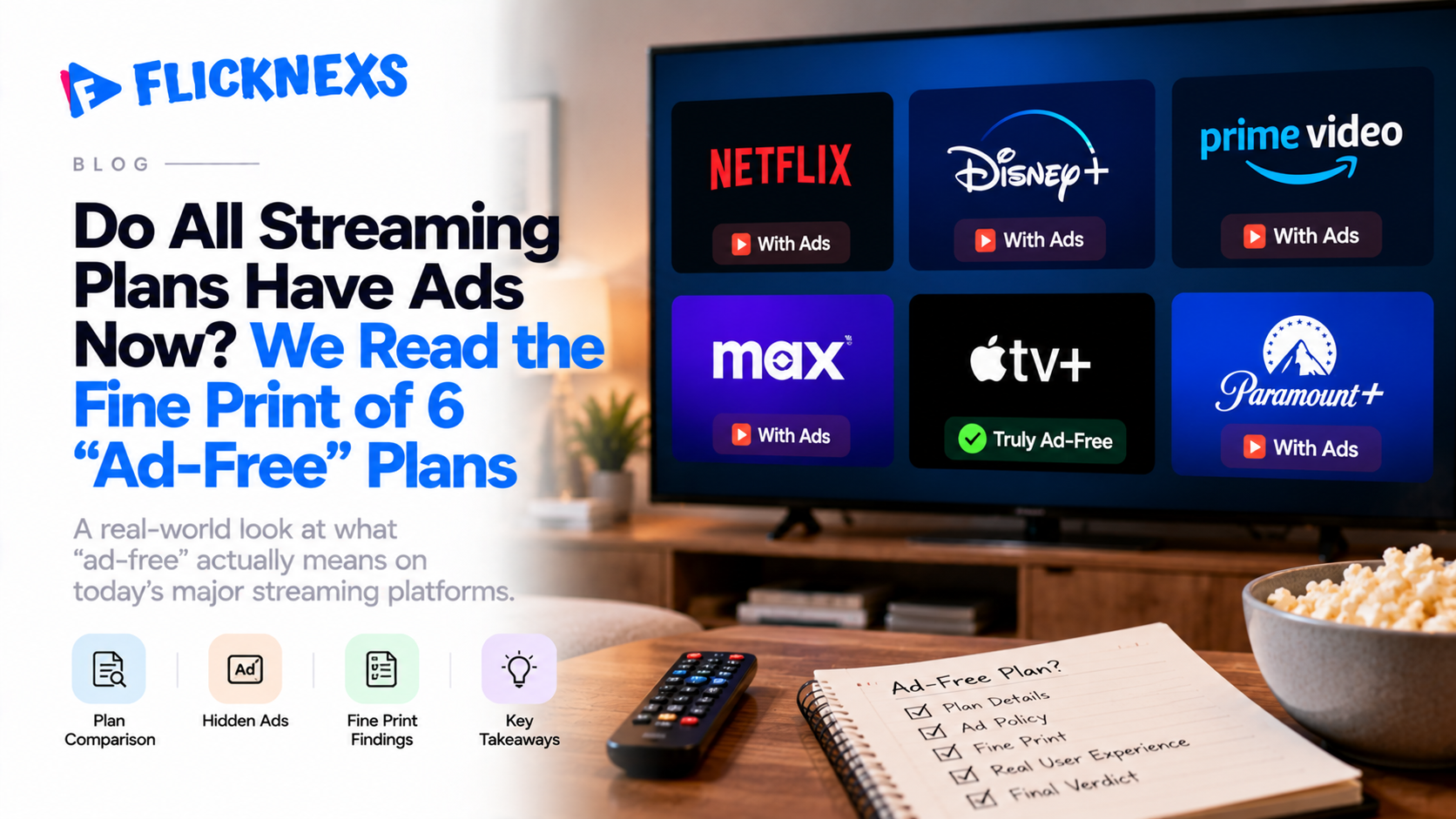
Do All Streaming Plans Have Ads Now? We Read the Fine Print of 6 “Ad-Free” Plans
Quick answer: No. Most major streamers still offer a paid tier with no commercial breaks during on-demand movies and series. But “ad-free” now usually excludes live sports, live events, linear channels, trailers, house promotions and sponsorships. On several services, those can carry ads on every plan, including the most expensive one. Do all streaming plans have…
-
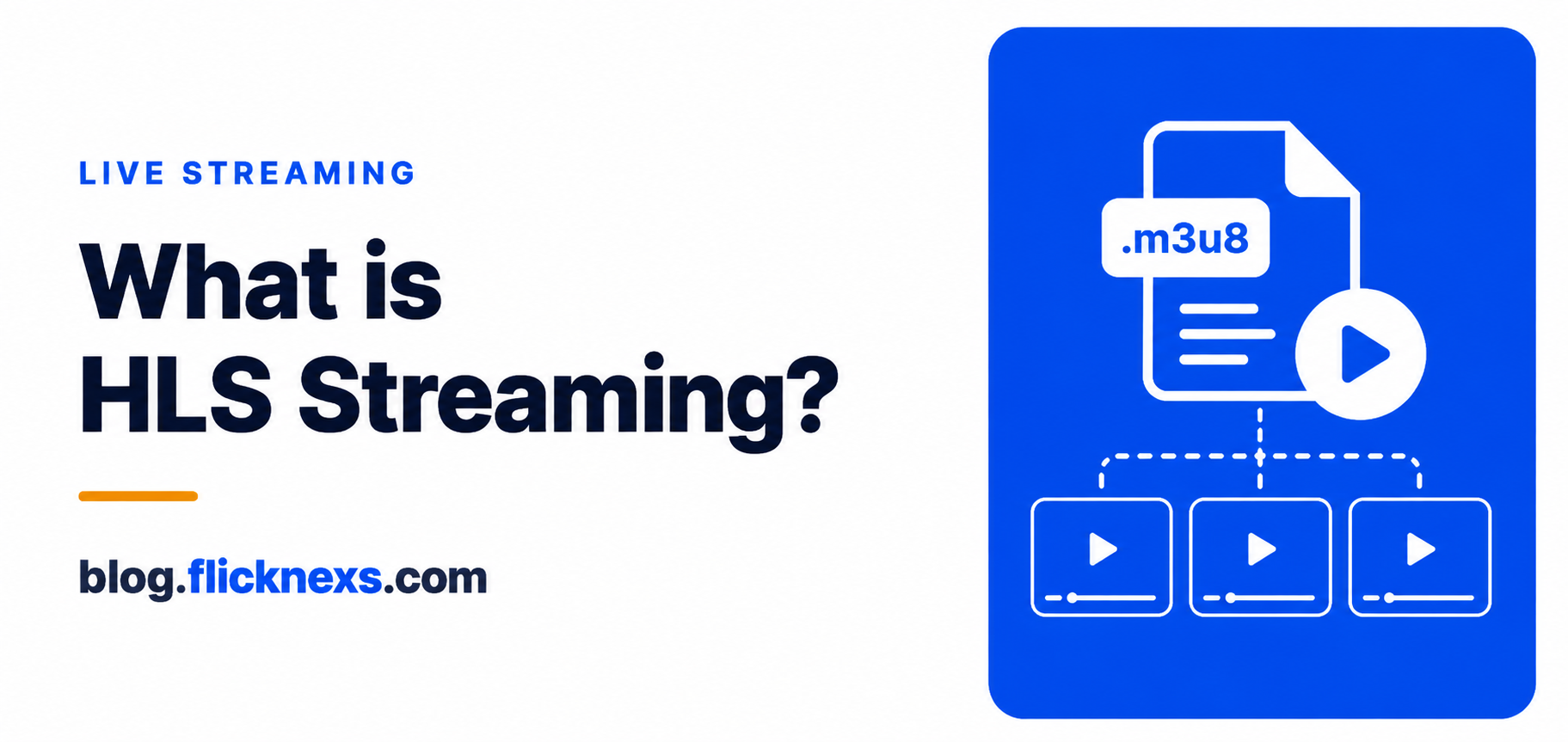
What is HLS Streaming?
Quick answer HLS (HTTP Live Streaming) is a video streaming protocol that breaks video into small segments and delivers them over standard HTTP. It supports adaptive bitrate streaming, allowing playback quality to adjust based on the viewer’s internet connection and device. A reliable setup combines secure video hosting, a video streaming platform, video CMS software…
-
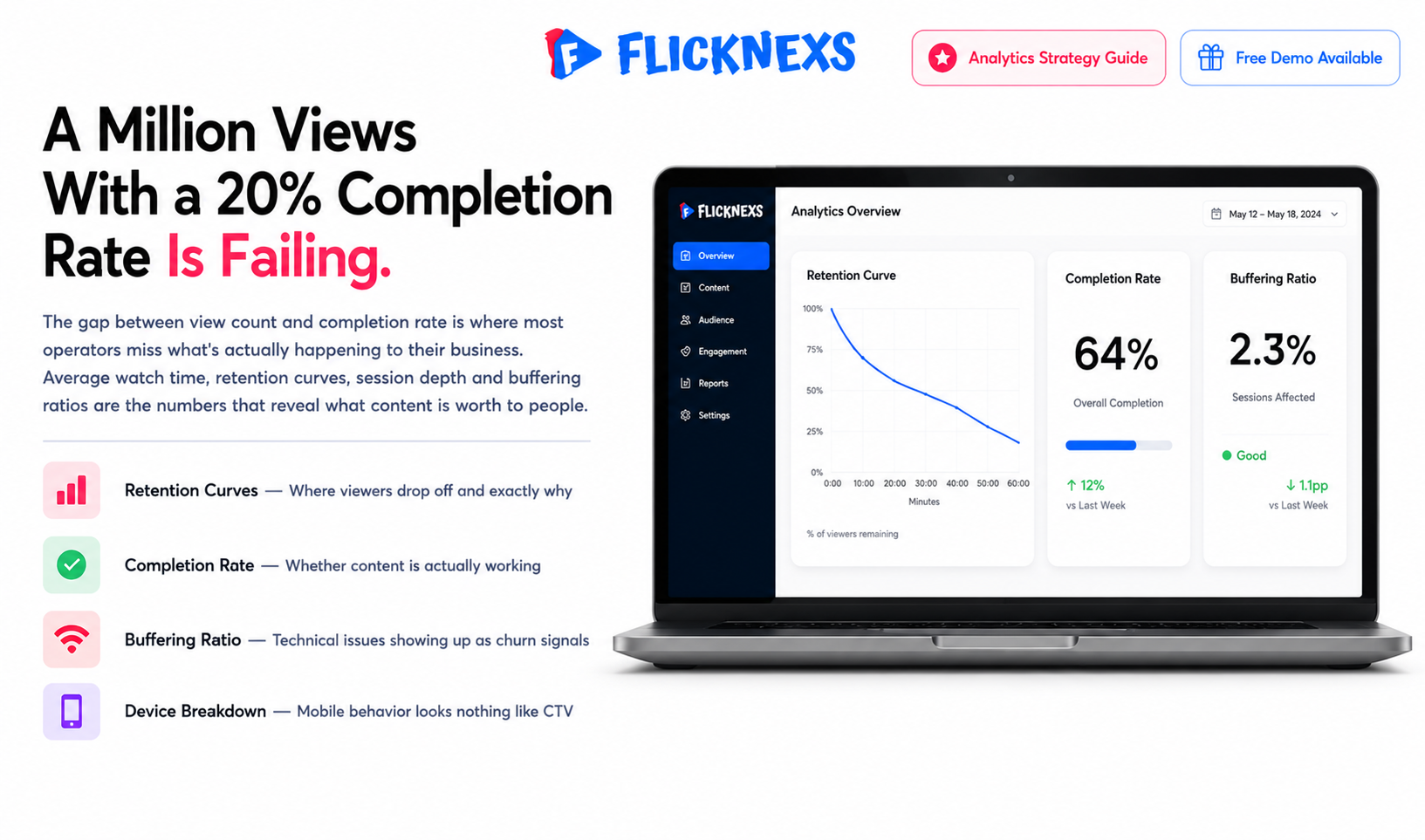
Video Analytics and Viewer Engagement Metrics That Matter
Discover essential video analytics & viewer engagement metrics for OTT platforms. Boost your streaming app’s performance with Flicknexs.
-
HLS vs MPEG-DASH: Choosing the Right Streaming Protocol in 2026
A practical, operator-grade HLS vs DASH comparison for OTT: device reach, DRM, latency, codecs, and why CMAF lets you package once and deliver both protocols.
-
CDN for Video Streaming: Single vs Multi-CDN and How to Cut Delivery Costs
A practical guide to using a CDN for video streaming: single vs multi-CDN trade-offs, how routing works, and the real levers that cut OTT and VOD delivery costs.
-
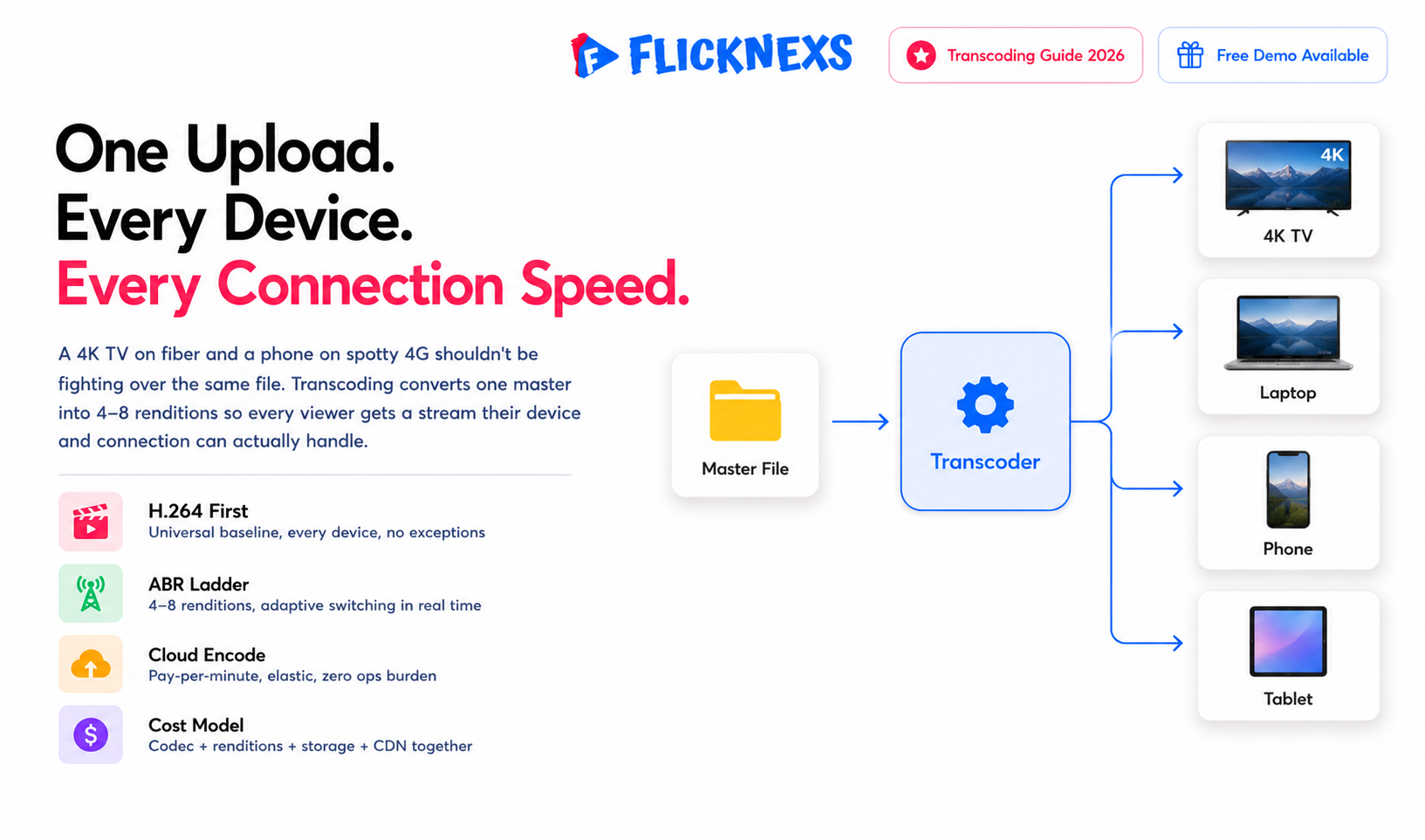
Video Transcoding for OTT: Codecs, Renditions & Cloud vs On-Prem Costs
An operator-grade guide to video transcoding for OTT: choosing codecs like H.264, HEVC and AV1, building an ABR rendition ladder, and cloud vs on-prem costs.
-
Streaming Infrastructure Explained: Transcoding, CDN, Packaging & Players
An operator’s guide to streaming infrastructure: how transcoding, packaging, CDN delivery and video players work together to power OTT, VOD and IPTV.
-
Best JW Player Alternatives for OTT Platforms in 2026
Compare the best JW Player alternatives for OTT in 2026: player-only swaps like Video.js and Bitmovin versus full white-label platforms like Flicknexs.