
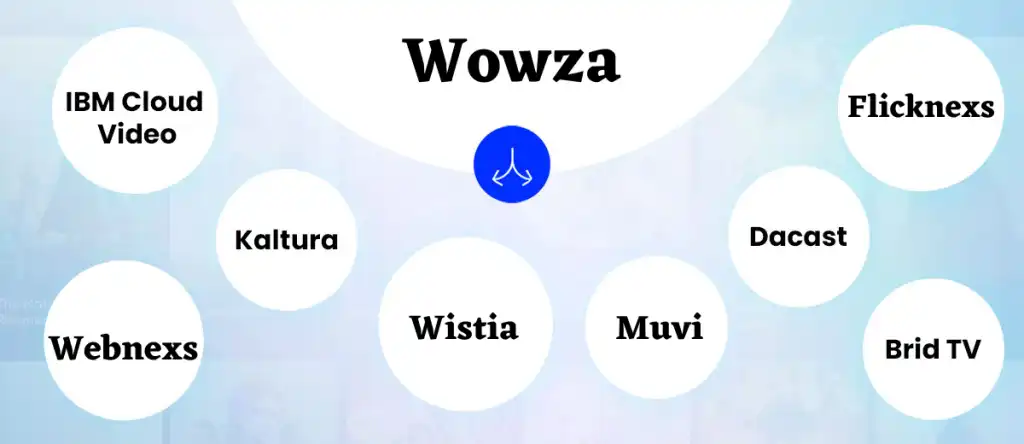
What Is Wowza?
Wowza is an enterprise-grade video streaming infrastructure platform designed to ingest, process and deliver live and on-demand video at scale across websites, mobile applications, OTT platforms and connected devices.
For organizations operating large video ecosystems such as broadcasters, media companies and global enterprises, Wowza acts as the core streaming server that manages the end-to-end workflow of video delivery. This includes receiving video feeds from production systems, processing them into adaptive streaming formats and distributing them reliably to viewers worldwide through CDN video delivery integrations.
Many enterprises use Wowza as a backend live video streaming infrastructure layer that integrates with existing content management systems, video players, analytics tools and distribution networks.
Because of this flexibility, it has long been considered a foundational technology in enterprise video architecture. However, organizations evaluating Wowza alternatives often compare it with newer cloud-native video streaming platforms that provide more automated scalability and managed infrastructure.
Is Wowza Good for Enterprise Streaming?
Wowza is widely regarded as a powerful enterprise streaming platform, particularly for organizations that require deep control over their video infrastructure.
Its strengths include:
- Flexible deployment across on-premise, cloud or hybrid environments
- Support for adaptive bitrate streaming across multiple devices
- Integration with professional broadcasting systems
- Extensive configuration options for video engineers
However, the same flexibility can introduce operational complexity. Managing servers, scaling infrastructure and maintaining uptime often requires dedicated engineering teams.
As a result, some organizations evaluating long-term scalability begin researching Wowza alternatives that provide managed infrastructure, automated scaling and simplified deployment models.
Is Wowza a CDN?
No. Wowza is not a CDN.
Wowza functions as a streaming server and media processing platform, while a CDN (Content Delivery Network) is responsible for distributing video content across geographically distributed edge servers.
In most enterprise streaming architectures:
- Wowza handles ingestion, transcoding and stream preparation
- CDNs handle global content distribution and edge delivery
This separation is common across modern video streaming platform architectures. Many organizations evaluating alternatives to Wowza specifically look for platforms that combine streaming infrastructure with integrated CDN video delivery to simplify deployment.
What Is Wowza Used For?
Enterprises use Wowza to build and operate large-scale live streaming platforms and OTT video services.
Common applications include:
- Live sports broadcasting
- OTT streaming platforms
- Corporate video communications
- Online education and training systems
- Media and entertainment distribution networks
In these scenarios, Wowza serves as the core streaming infrastructure layer responsible for ingesting video feeds, processing streams and delivering content to playback devices.
However, as enterprise streaming architectures evolve toward fully managed cloud services, many organizations begin evaluating Wowza competitors and newer platforms that offer built-in scaling and simplified infrastructure management.
How Wowza Works in an Enterprise Streaming Architecture
Within enterprise video infrastructures, Wowza typically functions as the central streaming server responsible for media processing and delivery orchestration.
Video Ingestion From Broadcast and Production Systems
Wowza receives incoming video streams from professional broadcasting equipment, encoders, production software or live event systems. These streams are commonly ingested using protocols such as RTMP or WebRTC.
This ingestion layer allows organizations to capture live video feeds from studios, sports venues, corporate events or remote production environments.
Many Wowza streaming engine alternatives support similar ingestion protocols while providing additional automation for scaling and monitoring enterprise streaming workflows.
Transcoding and Adaptive Streaming Preparation
Once a video stream is received, Wowza can transcode the content into multiple bitrate profiles and formats. This process ensures that viewers with different internet speeds and devices can receive an optimized playback experience through adaptive bitrate streaming.
Adaptive bitrate streaming is a critical feature of any modern video hosting platform, allowing video players to dynamically adjust quality levels to prevent buffering during playback.
Organizations comparing Wowza alternatives frequently evaluate how efficiently different platforms handle transcoding workloads and stream processing pipelines.
Global Video Delivery
After processing, Wowza distributes video streams to audiences using widely supported delivery protocols such as HLS and MPEG-DASH.
Enterprises typically integrate Wowza with global CDN video delivery networks to ensure high performance and reliable playback across geographically distributed audiences.
Some Wowza media server alternative platforms provide built-in global distribution layers, reducing the need for multiple third-party integrations.
Core Wowza Products Used by Enterprises
Wowza offers two primary solutions designed to support different deployment strategies across enterprise streaming environments.
Wowza Streaming Engine
Wowza Streaming Engine is a self-managed streaming server software that organizations deploy within their own infrastructure environments, including private data centers or public cloud platforms.
This solution provides maximum control over the streaming pipeline and is commonly used by enterprises with dedicated DevOps or video engineering teams.
However, organizations evaluating Wowza streaming engine alternatives often seek platforms that reduce infrastructure maintenance while still delivering high-performance live video streaming infrastructure.
Wowza Video (Managed Cloud Platform)
Wowza Video is a managed cloud live streaming platform that simplifies infrastructure management by handling encoding, scaling, and distribution automatically.
This option is frequently used by organizations seeking faster deployment and reduced operational overhead while maintaining enterprise-grade streaming capabilities.
Despite this managed approach, some companies exploring Wowza alternatives look for platforms with more integrated analytics, monetization tools or built-in OTT platform features.
Key Capabilities of Wowza for Enterprise Video Platforms
Enterprises rely on Wowza to support a wide range of mission-critical video streaming platform capabilities, including:
- Live and on-demand video streaming infrastructure
- Adaptive bitrate streaming for multi-device playback
- Video transcoding and stream processing
- Low latency streaming pipelines for live events
- API-driven integrations with enterprise systems
- Secure video delivery with authentication controls
- Integration with global CDN video delivery networks
These capabilities allow organizations to build scalable video platforms for both internal communications and large public streaming services.
However, when evaluating Wowza competitors, enterprises often compare these capabilities with newer platforms offering fully managed enterprise streaming infrastructure.
Industries That Commonly Use Wowza
Because of its flexible deployment model and developer-focused architecture, Wowza is widely used in industries where video streaming plays a central operational role.
Common enterprise use cases include:
- OTT streaming platforms
- Live sports broadcasting
- Media and entertainment distribution networks
- Corporate video communications and internal broadcasting
- Online education and digital learning platforms
Many organizations in these sectors eventually evaluate Wowza alternatives as their streaming requirements grow and infrastructure needs evolve.
Why Enterprises Look for Wowza Alternatives
For years, Wowza has been widely used as a streaming engine for live and on-demand video. However, as enterprise video streaming infrastructure requirements evolve, many organizations begin actively evaluating Wowza alternatives that better align with modern cloud-native architectures.
Several strategic and operational factors drive this evaluation.
Limitations of Wowza for Enterprise-Scale Deployments
Large organizations operating global OTT platforms, live sports broadcasts or corporate video networks often require infrastructure capable of supporting millions of concurrent viewers.
While Wowza offers flexibility, scaling deployments across multiple regions may require extensive configuration, infrastructure provisioning and third-party integrations.
For this reason, enterprises researching alternatives to Wowza often prioritize platforms with built-in scalability and automated global distribution.
Operational Complexity and Maintenance Overhead
Self-managed streaming infrastructure can create significant operational responsibilities. Engineering teams must manage servers, monitor system performance, apply updates and maintain uptime.
Organizations without dedicated DevOps teams often explore Wowza alternatives that reduce infrastructure maintenance through fully managed cloud streaming services.
Cost Scalability Concerns
As streaming traffic grows, operational costs can increase due to infrastructure expansion, bandwidth consumption and monitoring requirements.
Many enterprises evaluating Wowza streaming engine pricing also compare the total cost of ownership across competing video streaming platforms.
This is one of the primary drivers behind organizations researching Wowza competitors in the enterprise streaming market.
Need for Modern Cloud-Native Architectures
Many enterprises are transitioning toward cloud-native streaming infrastructure built on microservices, container orchestration platforms such as Kubernetes and automated scaling systems.
Streaming platforms designed for these architectures often integrate more easily with modern DevOps workflows and CI/CD pipelines.
As a result, organizations increasingly explore Wowza streaming engine alternatives that support cloud-native deployment models.
Create your own video streaming platform!
Key Enterprise Requirements When Choosing a Wowza Alternative
Selecting a Wowza alternative involves evaluating a wide range of technical, operational and business factors.
Scalability and Global Delivery
Enterprise video streaming platforms must support global audiences while maintaining high performance during traffic spikes such as live events or product launches.
Integration with global CDNs and edge delivery networks ensures consistent playback quality worldwide.
Reliability and Uptime Guarantees
Downtime during major broadcasts can result in revenue loss and reputational damage.
Enterprise live streaming platforms therefore prioritize redundancy, high availability and strong service-level agreements.
Security and Compliance
Video content may include premium media assets or confidential internal communications.
Secure video hosting platforms provide encryption, authentication controls and regulatory compliance features.
Monetization Capabilities
Many organizations use video platforms to generate revenue through advertising, subscriptions or pay-per-view events.
A modern OTT streaming platform should support multiple monetization models.
Developer Ecosystem and APIs
Engineering teams need tools that allow them to integrate streaming capabilities into websites, mobile applications and enterprise systems.
APIs, SDKs and developer documentation are therefore critical components of modern enterprise streaming infrastructure.
Cloud-Native vs Self-Hosted Streaming Infrastructure
When evaluating Wowza alternatives, enterprises must decide whether to deploy streaming infrastructure on-premise, use managed cloud platforms or adopt hybrid architectures.
On-Premise Streaming Servers
On-premise streaming servers provide full control over hardware, network configuration and security policies.
This approach can benefit organizations with strict data governance requirements. However, maintaining physical infrastructure often requires significant operational investment.
Managed Cloud Streaming Platforms
Cloud-based live streaming platforms eliminate many infrastructure management tasks by automatically handling encoding, scaling and distribution.
These platforms typically include built-in CDN video delivery capabilities and global streaming infrastructure.
Many enterprises exploring Wowza alternatives prioritize managed platforms for this reason.
Hybrid Streaming Architectures
Some organizations combine on-premise ingestion pipelines with cloud-based distribution systems.
Hybrid architectures allow enterprises to maintain control over sensitive workloads while leveraging cloud scalability for large-scale video streaming platform deployments.
Streaming Protocols and Technology Stack Comparison
Technical decision-makers evaluating Wowza alternatives often compare platforms based on their supported streaming protocols, encoding technologies and overall media delivery architecture.
The underlying technology stack directly affects latency, device compatibility and scalability in a video streaming platform.
HLS vs DASH vs WebRTC
HLS (HTTP Live Streaming) is widely supported across browsers and devices, making it a common choice for OTT streaming platforms and large-scale video distribution systems.
MPEG-DASH provides similar adaptive bitrate streaming capabilities and is widely used in enterprise video streaming infrastructure where cross-device compatibility is required.
WebRTC is designed for ultra-low latency applications such as interactive streaming, live auctions and real-time communications. Some Wowza streaming engine alternatives rely heavily on WebRTC pipelines to reduce broadcast latency.
RTMP Ingestion Support
Many broadcasters rely on RTMP for ingesting live video streams from encoders and production software.
Most live streaming platforms accept RTMP input and convert incoming streams into adaptive streaming formats such as HLS or DASH for playback delivery.
Organizations evaluating Wowza competitors often compare how efficiently different platforms handle ingest pipelines and real-time transcoding.
CMAF Streaming
CMAF (Common Media Application Format) enables more efficient CDN video delivery by allowing multiple streaming protocols to share a common media container.
This architecture simplifies packaging workflows and improves compatibility across playback environments, which is particularly important for large-scale enterprise video streaming platforms.
Low-Latency Streaming Architecture
Modern live video streaming infrastructure increasingly relies on technologies such as Low-Latency HLS, WebRTC delivery pipelines and edge-based processing to reduce broadcast delay.
These architectures are particularly important for sports broadcasting, financial events and interactive streaming experiences.
Organizations researching alternatives to Wowza often compare how effectively different platforms support low-latency streaming capabilities.
Scalability: Handling Millions of Concurrent Viewers
Large-scale events such as sports tournaments or global product launches require video streaming infrastructure capable of supporting millions of simultaneous viewers.
Scalability is therefore one of the primary factors enterprises consider when evaluating Wowza alternatives.
Auto-Scaling Streaming Infrastructure
Cloud-based video hosting platforms can automatically allocate additional computing resources during traffic spikes.
This dynamic scaling ensures stable viewer experiences even when audience demand increases rapidly during live events.
Many Wowza streaming engine alternatives offer built-in autoscaling capabilities that reduce the need for manual infrastructure provisioning.
CDN Integrations
Content Delivery Networks distribute video streams through geographically distributed edge servers.
This CDN video delivery model reduces buffering, improves startup time and ensures consistent playback quality across global audiences.
Global Edge Delivery
Edge networks store video segments closer to end users, reducing latency and improving streaming performance.
Modern enterprise streaming infrastructure increasingly relies on edge computing to handle traffic surges efficiently.
Load Balancing and Redundancy
Load balancing systems distribute viewer traffic across multiple servers to prevent infrastructure bottlenecks.
Redundant streaming systems ensure continuous service even during hardware or network failures.
Multi-CDN Strategy
Large enterprises often deploy multiple CDN providers simultaneously to improve reliability and optimize global delivery performance.
Organizations comparing Wowza alternatives frequently prioritize platforms that simplify multi-CDN orchestration.
Security and DRM Capabilities for Enterprise Video Platforms
Protecting video content is a critical requirement for media companies, broadcasters and enterprise organizations operating large video streaming platforms.
Many Wowza competitors differentiate themselves by offering advanced content protection and digital rights management capabilities.
Multi-DRM Support
Modern enterprise streaming platforms support multiple digital rights management systems such as:
- Google Widevine
- Apple FairPlay
- Microsoft PlayReady
Multi-DRM ensures secure playback across web browsers, smart TVs and mobile devices.
Token Authentication
Token-based authentication mechanisms help control access to video streams and prevent unauthorized viewing.
This security layer is widely used across OTT platforms and subscription-based streaming services.
Geo-Blocking
Geo-blocking allows content owners to restrict access to video streams based on geographic location.
This capability is commonly used to enforce regional licensing agreements.
Content Piracy Protection
Advanced anti-piracy systems may include dynamic watermarking, forensic tracking and automated monitoring tools designed to detect illegal stream redistribution.
Organizations evaluating Wowza alternatives often prioritize platforms that provide built-in anti-piracy solutions.
Video Monetization Models Supported by Wowza Alternatives
For many digital media businesses, video platforms serve as core revenue engines.
When organizations evaluate Wowza alternatives, they often analyze which monetization models are supported natively within the video streaming platform.
AVOD (Advertising-Based Video on Demand)
In the AVOD model, users access video content for free while advertisements generate revenue for the platform.
Advertising-based monetization is widely used by large OTT streaming platforms.
SVOD (Subscription Video on Demand)
Subscription-based streaming services charge users recurring fees for unlimited access to a content library.
SVOD is one of the most common revenue models used by modern video hosting platforms.
TVOD / Pay-Per-View
Transactional video on demand allows viewers to purchase individual events or pieces of content.
This model is commonly used for live sports, concerts and special events.
Hybrid Monetization
Many modern live streaming platforms combine multiple revenue strategies such as subscriptions, advertising and pay-per-view access to maximize audience reach and profitability.
Organizations evaluating Wowza competitors often compare built-in monetization capabilities when selecting a streaming platform.
Analytics and Viewer Intelligence for Streaming Platforms
Data analytics play a critical role in optimizing streaming performance and audience engagement across enterprise video streaming infrastructure.
Viewer Engagement Tracking
Key metrics such as watch time, viewer retention and completion rates help organizations evaluate content performance.
These insights allow content teams to refine programming strategies across their OTT platforms.
QoE Monitoring
Quality-of-experience analytics track playback metrics such as buffering events, startup delays and playback errors.
Maintaining a high quality of experience is essential for video streaming platforms delivering large-scale live broadcasts.
Real-Time Streaming Analytics
Real-time monitoring dashboards allow operators to track live event performance and identify technical issues quickly.
Many Wowza streaming engine alternatives include advanced real-time monitoring tools to improve operational visibility.
Audience Segmentation
Advanced analytics tools can categorize viewers based on demographics, location and viewing behavior.
These insights enable personalized content delivery and targeted advertising strategies.
Developer Ecosystem and API Capabilities
Enterprise video streaming platforms must integrate seamlessly into complex technology ecosystems.
Developer tooling is therefore a key factor when organizations evaluate Wowza alternatives.
REST APIs
APIs allow developers to automate core streaming workflows including:
- Video ingestion
- Encoding configuration
- Playback management
- Content publishing
This automation capability is essential for organizations building large-scale video streaming infrastructure.
SDKs
Software development kits enable developers to embed streaming functionality into web applications, mobile apps and connected devices.
SDK support is particularly important for companies building custom live streaming platforms.
Player Customization
Customizable video players allow organizations to control branding, advertising placement and user interface design.
Player flexibility is often a differentiator among Wowza competitors.
Integration With Internal Systems
Streaming platforms frequently integrate with enterprise tools such as:
- CRM systems
- Marketing automation platforms
- Analytics software
- Content management systems
This integration layer allows video streaming to function as part of a broader enterprise technology stack.
DevOps and CI/CD Integration
Modern cloud-native streaming platforms increasingly support automated deployment pipelines, containerized infrastructure and infrastructure-as-code workflows.
These capabilities simplify operational management for large engineering teams.
Migration Guide: Moving from Wowza to Another Streaming Platform
Migrating enterprise video streaming infrastructure from one platform to another requires careful planning.
Organizations evaluating Wowza streaming engine alternatives must ensure that existing workflows, integrations and delivery systems remain functional throughout the migration process.
Migration Challenges
The first step is evaluating compatibility between current streaming workflows and the new video streaming platform.
Organizations must determine whether encoding pipelines, player integrations and CDN configurations will remain compatible.
Data and Infrastructure Transfer
Migration typically involves transferring media libraries, metadata, encoding profiles and distribution configurations.
This process must be carefully managed to avoid service interruptions.
Player Compatibility
Existing embedded video players must continue functioning without disruption during the migration.
Maintaining playback compatibility is critical for OTT services and enterprise video hosting platforms.
Testing and Rollout Strategies
Most organizations implement phased migration strategies by gradually shifting viewer traffic from the old infrastructure to the new streaming platform.
This controlled rollout reduces operational risk during the transition.
Cost Comparison: Total Cost of Ownership
Enterprise buyers rarely evaluate streaming solutions based solely on initial pricing.
Instead, they analyze the long-term total cost of ownership when comparing Wowza alternatives.
Many organizations evaluating Wowza Streaming Engine pricing also compare infrastructure costs, operational overhead and long-term scalability across competing video streaming platforms.
Infrastructure Costs
Servers, storage, encoding systems and monitoring tools contribute to overall video streaming infrastructure expenses.
Bandwidth and CDN Fees
Video streaming generates large volumes of data transfer.
Bandwidth usage and CDN video delivery costs can therefore represent a significant portion of long-term operational spending.
Licensing Costs
Licensing models vary between platforms and may depend on features, usage levels or traffic volume.
Operational Overhead
DevOps staffing, system monitoring and infrastructure maintenance contribute to long-term operational costs.
Organizations evaluating alternatives to Wowza often compare how different platforms reduce operational complexity.
3-Year Cost Modeling
Enterprises frequently evaluate costs across multi-year timeframes to estimate long-term financial impact.
This approach provides a clearer comparison between Wowza competitors and modern cloud-native streaming platforms.
Reliability, Uptime, and Failover Architecture
Streaming reliability is critical for mission-critical broadcasts and enterprise live streaming infrastructure.
Organizations evaluating Wowza alternatives often compare redundancy and failover capabilities across platforms.
Multi-Region Redundancy
Deploying infrastructure across multiple geographic regions improves platform availability and reduces the risk of localized outages.
Disaster Recovery Strategies
Backup streaming systems enable organizations to restore services quickly if infrastructure failures occur.
Failover Streaming Architecture
Automated failover systems can redirect viewer traffic to backup streams if the primary stream fails.
SLA Guarantees
Service-level agreements define uptime guarantees and support response times provided by the platform vendor.
Enterprise Support Expectations
Large organizations often require 24/7 support, dedicated account management and rapid incident response when operating mission-critical video streaming platforms.
Compliance and Regulatory Requirements
Many industries must comply with strict regulatory standards when deploying enterprise video streaming infrastructure.
Organizations evaluating Wowza alternatives frequently assess compliance capabilities when selecting a streaming platform.
GDPR Compliance
Platforms serving European audiences must adhere to data protection regulations governing user privacy and data storage.
SOC 2 Certification
SOC 2 certification demonstrates that a platform follows strict security and operational controls.
HIPAA Compliance
Healthcare organizations require video hosting platforms capable of protecting sensitive patient data.
Data Sovereignty
Some governments require data to remain within specific geographic regions.
Streaming platforms must therefore provide regional infrastructure deployment options.
Future-Proof Streaming Technologies
When selecting a video streaming platform, enterprises often evaluate whether the platform supports emerging technologies.
Organizations researching Wowza alternatives frequently prioritize platforms that provide long-term technological flexibility.
AI-Powered Video Analytics
Artificial intelligence systems can analyze viewer behavior and automate personalized content recommendations.
Edge Streaming
Edge computing allows video processing and delivery to occur closer to end users, improving performance and reducing latency.
Ultra-Low Latency Streaming
Advanced streaming architectures enable near real-time video delivery, which is essential for interactive broadcasts.
8K and Next-Generation Codecs
New codecs such as AV1 enable more efficient delivery of high-resolution video streams while reducing bandwidth consumption.
Enterprise Use Cases for Wowza Alternatives
Enterprise video streaming platforms support a wide range of business-critical applications. Organizations evaluating Wowza alternatives often consider the following use cases:
OTT Platforms
Media companies distribute movies, TV shows and exclusive content directly to consumers. Fully managed platforms provide integrated adaptive bitrate streaming and monetization tools, reducing infrastructure complexity compared to self-managed servers like Wowza Streaming Engine.
Live Sports Broadcasting
Sports leagues and event organizers require low latency streaming infrastructure capable of supporting massive audiences during live events. Platforms like Ant Media Server or Dacast often outperform self-managed Wowza deployments for ultra-low latency scenarios.
Corporate Communications
Enterprises use video streaming platforms for internal communications, including town halls, webinars and training sessions. Managed OTT solutions reduce the operational overhead required to maintain internal streaming infrastructure.
Online Education Platforms
Educational institutions deliver lectures, certification programs and interactive sessions using scalable enterprise streaming infrastructure. Organizations evaluating Wowza alternatives prioritize platforms with robust analytics and integration with LMS systems.
Media and Entertainment Networks
Broadcasters rely on video hosting platforms to distribute content across multiple devices. Integrated CDN delivery and built-in DRM support are often decisive factors when selecting Wowza competitors.
Comparison Table: Top Wowza Alternatives
| Platform | Deployment Type | Latency | DRM Support | Monetization | Pricing Model |
| Brightcove | Cloud | Low | Yes | AVOD/SVOD | Enterprise |
| Kaltura | Hybrid | Medium | Yes | AVOD/SVOD | Custom |
| Dacast | Cloud | Low | Yes | AVOD/SVOD/TVOD | Subscription |
| Uscreen | Cloud | Low | Yes | SVOD | Subscription |
| IBM Video Streaming | Cloud | Medium | Yes | Enterprise | Custom |
This comparison highlights platforms commonly evaluated alongside Wowza alternatives, focusing on deployment type, latency, DRM support and monetization capabilities.
Pros and Cons of Popular Wowza Alternatives
Advantages
- Managed infrastructure reduces operational complexity compared to self-managed Wowza streaming engine alternatives
- Built-in analytics and monetization features simplify business operations for OTT platforms
- Integrated global CDN improves playback performance and scalability
Limitations
- Vendor lock-in may restrict platform flexibility
- Pricing structures vary significantly across enterprise use cases
- Customization options differ between platforms
Vendor Lock-In Risks
Enterprises must carefully consider migration complexity, API portability and integration dependencies when selecting Wowza competitors.
You can also create your own video streaming platform for TV
1. Flicknexs
Architecture
Flicknexs is a full OTT platform architecture rather than a pure streaming engine. Its architecture integrates:
- Centralized OTT CMS
- Adaptive bitrate streaming pipelines
- CDN-based video delivery
- Built-in user management and subscription systems
- Integrated mobile and TV applications
For enterprises, Flicknexs operates as a complete OTT stack, reducing the need for separate infrastructure components compared to Wowza.
Cost Considerations
Enterprise cost modeling typically includes:
- OTT platform licensing
- Application development for smart TVs and mobile devices
- CDN bandwidth and storage fees
- Payment gateway transaction costs
Total cost shifts from engineering-heavy infrastructure to platform subscription costs, a key factor for organizations evaluating Wowza alternatives.
Scalability Limits
Scalability depends on CDN infrastructure and platform architecture, including:
- Concurrent viewer capacity
- Video library scalability
- Regional CDN performance
- Peak traffic during live events
While OTT platforms scale well for consumer audiences, they may offer less flexibility for custom streaming infrastructure pipelines.
Migration Risks
Migrating from Wowza to Flicknexs may require:
- Content library migration
- CMS restructuring
- Playback player updates
- Authentication system integration
Workflow dependency is the biggest challenge, especially for organizations with custom pipelines.
Webnexs
Architecture
Webnexs provides a modular OTT platform architecture focused on business-level streaming service management. Key components include:
- OTT content management system
- Streaming infrastructure integration
- Subscription and monetization management
- Multi-device application ecosystem
Unlike Wowza, which focuses on media streaming infrastructure, Webnexs emphasizes end-to-end OTT service operations.
Cost Considerations
Key enterprise cost factors:
- OTT platform licensing fees
- Custom app development for connected TVs
- CDN usage charges
- Operational costs for managing video libraries
Enterprises often compare these costs against the engineering overhead required to maintain self-managed Wowza alternatives.
Scalability Limits
Scalability relies on:
- CDN distribution networks
- Platform architecture for user management
- Subscriber database performance
Large subscriber bases introduce challenges beyond video streaming alone.
Migration Risks
Migration considerations include:
- Transferring video libraries and metadata
- Rebuilding subscriber databases
- Integrating payment and identity systems
Legacy system integration can be a major challenge.
Kaltura
Architecture
Kaltura provides a modular enterprise video architecture enabling custom platform development using APIs and microservices. Deployments often include:
- Media ingestion and encoding pipelines
- Video management systems
- OTT service frameworks
- Enterprise video portals
High customization makes Kaltura attractive for enterprises needing flexible video streaming infrastructure.
Cost Considerations
Enterprise cost structures include:
- Licensing agreements
- Infrastructure hosting fees
- Engineering for custom integrations
- CDN bandwidth usage
Total cost of ownership can increase depending on deployment complexity.
Scalability Limits
Kaltura scales for millions of users, large video libraries and multi-region infrastructure. However, scaling often requires significant planning and engineering resources.
Migration Risks
Migration from Wowza may involve:
- Rebuilding ingestion pipelines
- Migrating CMS
- Adapting workflows to Kaltura APIs
Custom implementations usually extend migration timelines compared to managed platforms.
Dacast
Architecture
Dacast is a managed streaming platform that abstracts most streaming infrastructure complexity:
- Cloud-based video hosting
- Integrated CDN distribution
- Live streaming infrastructure
- Embeddable video players
For enterprises, this reduces operational complexity but limits infrastructure-level control.
Cost Considerations
Enterprise cost factors:
- Bandwidth usage
- Storage fees
- Platform subscription tiers
- Monetization transaction fees
Managed pricing shifts costs from infrastructure to usage-based models.
Scalability Limits
Scalability depends on CDN infrastructure and platform performance. Enterprises focus on:
- Live event support
- Regional content delivery
- Video library limits
Migration is typically simpler than moving to self-managed Wowza alternatives.
Ant Media Server
Architecture
Ant Media Server is designed for low-latency, real-time streaming applications:
- WebRTC-based streaming pipelines
- Cluster-based scalability
- Multi-protocol support
Ideal for interactive video streaming platforms.
Cost Considerations
Enterprise cost factors:
- Infrastructure hosting
- Enterprise licensing
- DevOps maintenance
Operational overhead is higher than fully managed platforms.
Scalability Limits
Horizontal cluster-based scaling requires management of:
- Server orchestration
- Load balancing
- Infrastructure monitoring
Scaling interactive streaming workloads can be resource-intensive.
Migration Risks
Migration risks include:
- Rebuilding real-time streaming pipelines
- Adapting workflows
- Retraining engineering teams
Organizations moving from managed platforms must prepare for operational complexity.
Red5 Pro
Architecture
Red5 Pro provides real-time streaming infrastructure optimized for ultra-low latency applications. Its architecture includes:
- Distributed streaming nodes
- WebRTC-based streaming pipelines
- Cluster-based scaling mechanisms
Cost Considerations
Enterprises should budget for:
- Infrastructure hosting
- Enterprise licensing
- Development and integration costs
Because Red5 Pro focuses on infrastructure-level control, engineering resources are required, a key consideration when evaluating Wowza alternatives.
Scalability Limits
Red5 Pro can scale globally through distributed nodes but requires:
- Infrastructure orchestration
- CDN integrations
- Monitoring and failover systems
Migration Risks
Migration involves:
- Replacing existing streaming pipelines
- Modifying application integrations
- Adjusting monitoring and DevOps workflows
Nimble Streamer
Architecture
Nimble Streamer is a high-performance media server widely used in IPTV and broadcast environments. Key features:
- Efficient media processing
- Protocol compatibility
- Low hardware requirements
Cost Considerations
Enterprise costs typically include:
- Server infrastructure
- Licensing fees
- Operational maintenance
Hardware efficiency reduces long-term infrastructure expenses, making it a strong candidate among Wowza streaming engine alternatives.
Scalability Limits
Supports large IPTV networks but scaling requires:
- Infrastructure design
- Server load distribution
- Optimized encoding pipelines
Migration Risks
Migration challenges include:
- Adjusting broadcast workflows
- Migrating streaming infrastructure
- Retraining operations teams
Flussonic Media Server
Architecture
Flussonic is broadcast-grade, often deployed by telecom providers. Components include:
- Live channel ingestion
- DVR recording systems
- Adaptive bitrate streaming pipelines
Cost Considerations
Enterprises budget for:
- Licensing
- Infrastructure deployment
- Operational staff
Scalability Limits
Can scale for large broadcast networks but requires:
- Distributed infrastructure
- CDN integration
- Monitoring systems
Migration Risks
Includes:
- Workflow changes
- Infrastructure reconfiguration
- Content archive migration
OvenMediaEngine
Architecture
OvenMediaEngine is an open-source streaming server optimized for low-latency streaming. Architecture highlights:
- WebRTC streaming pipelines
- Distributed streaming servers
- Open-source customization
Cost Considerations
Open-source reduces licensing costs but requires:
- Engineering expertise
- Infrastructure management
- Maintenance responsibilities
Scalability Limits
Depends on internal DevOps capabilities for infrastructure and cluster management.
Migration Risks
Migration from Wowza requires:
- Rebuilding ingestion pipelines
- Reconfiguring streaming infrastructure
- Allocation of engineering resources
FastPix
Architecture
FastPix offers an API-first video infrastructure platform for developer-focused video applications:
- Video processing pipelines
- API-driven delivery
- Cloud-based infrastructure
Cost Considerations
Enterprise costs include:
- API usage fees
- Processing costs
- Cloud scaling expenses
Scalability Limits
Scales with cloud infrastructure, but requires consideration of:
- API rate limits
- Processing throughput
- Cloud infrastructure costs
Migration Risks
Includes:
- Rebuilding video workflows
- Adapting internal systems
- Retraining development teams
How to Choose the Right Streaming Platform for Your Enterprise
Selecting the right Wowza alternative requires evaluating business objectives, technical architecture, operational complexity and long-term cost.
1. Define Your Business Objectives
Clarify the role of video in your organization:
- Launching a consumer OTT platform?
- Primarily for corporate communications or training?
- Monetization via SVOD, AVOD, or TVOD?
- Video-enabled SaaS or application product?
For example:
- Enterprises launching OTT services may prefer Flicknexs or Webnexs.
- Organizations needing enterprise video hosting may consider Kaltura or Dacast.
2. Identify the Video Infrastructure Layer You Need
Determine whether you need:
- Streaming infrastructure – Ant Media Server, Red5 Pro, Nimble Streamer, Flussonic, OvenMediaEngine
- Managed video platforms – Dacast, Kaltura
- Full OTT ecosystems – Flicknexs, Webnexs
Choosing the right layer avoids unnecessary complexity.
3. Evaluate Technical Requirements
Key factors include:
- Scalability – Can the platform handle global traffic and live events?
- Latency – Critical for sports, auctions, and interactive video.
- Streaming protocols – HLS, MPEG-DASH, WebRTC, RTMP ingestion
- Security – DRM, token authentication, encryption, secure APIs
4. Analyze Monetization and Revenue Capabilities
Ensure support for:
- SVOD (Subscription Video on Demand)
- AVOD (Advertising Video on Demand)
- TVOD / Pay-Per-View
Built-in monetization systems reduce integration overhead for enterprises evaluating Wowza alternatives.
5. Review Developer Ecosystem and Integration
Assess:
- REST APIs
- SDKs for web and mobile apps
- Customizable players
- CRM, analytics, CMS integration
- DevOps/CI-CD compatibility
Developer-focused platforms like FastPix are ideal for embedding video into applications.
6. Assess Cost and Total Cost of Ownership
Evaluate:
- Infrastructure: servers, encoding, storage
- Bandwidth and CDN fees
- Platform licensing and usage fees
- Operational costs: DevOps, monitoring, maintenance
A 3-year projection offers a realistic comparison.
7. Evaluate Vendor Reliability and Support
Check:
- SLA and uptime guarantees
- Vendor financial stability
- Enterprise support availability
- Product roadmap transparency
- Customer references
Strong vendor support is critical for live events and global deployments.
8. Consider Migration Complexity
Switching from Wowza involves:
- Video library and metadata transfer
- Player compatibility
- Authentication system integration
- Workflow adjustments
Phased migrations reduce operational risk.
9. Match Platform Strengths to Your Use Case
| Use Case | Suitable Platforms |
| Launching OTT services | Flicknexs, Webnexs |
| Enterprise video portals | Kaltura, Dacast |
| Ultra-low latency streaming | Ant Media Server, Red5 Pro |
| Broadcast/IPTV infrastructure | Nimble Streamer, Flussonic |
| Open-source infrastructure | OvenMediaEngine |
| Video-driven applications | FastPix |
Choosing based on use case alignment avoids over-engineering and unnecessary costs.
Conclusion
Selecting a Wowza alternative is a strategic decision. Enterprise organizations must evaluate:
- Business objectives
- Technical architecture
- Scalability requirements
- Operational capacity
- Long-term cost and ROI
Aligning these factors with the right streaming platform ensures scalable, secure and monetizable video delivery. Whether a full OTT ecosystem or low-level streaming infrastructure is needed, the platform becomes a foundation for growth, not just a technical replacement.



Leave a Reply to Wesley Cancel reply