
Exploring Video on Demand
and OTT Platforms
-
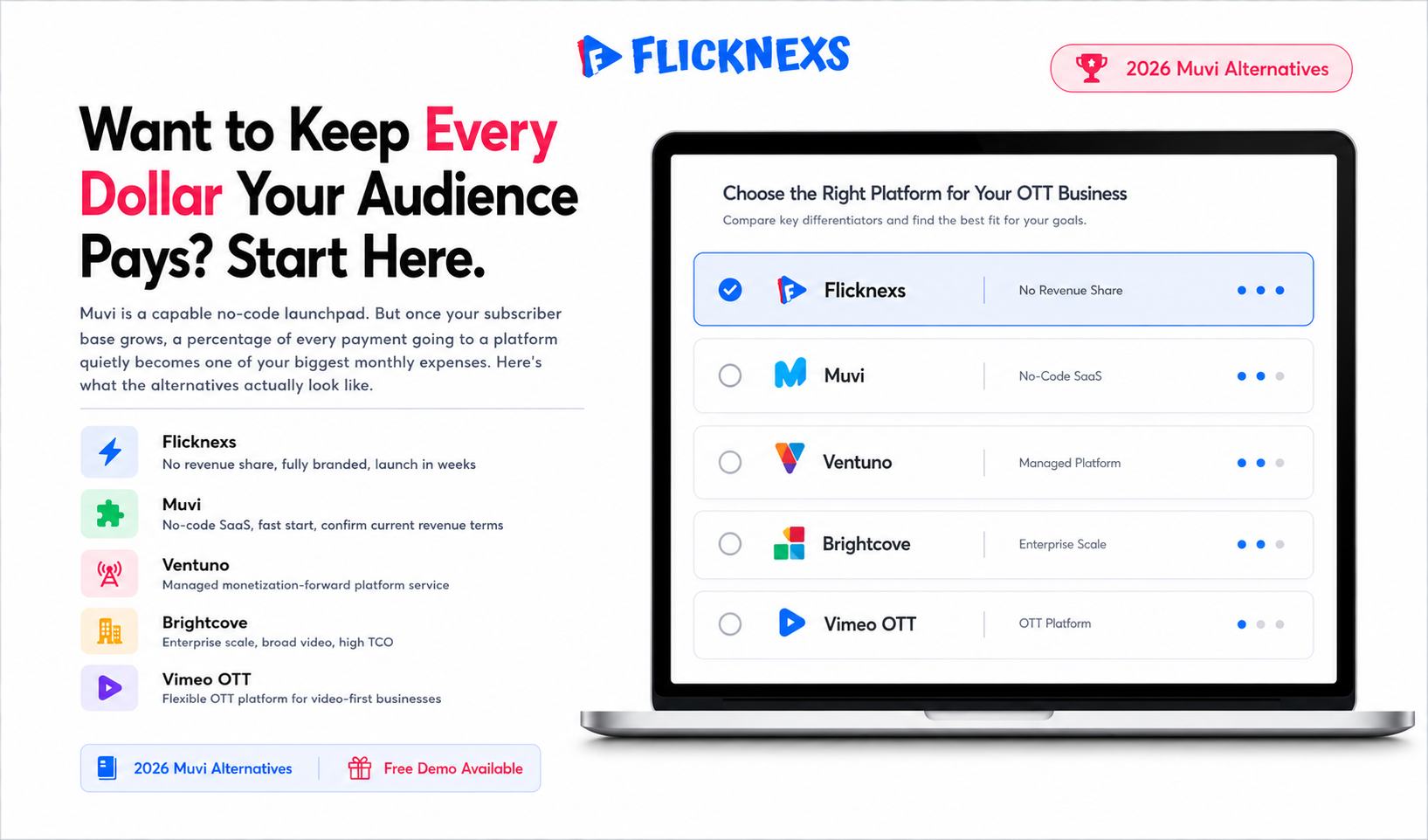
Best Muvi Alternatives in 2026: White-Label OTT Without Revenue Share
An honest 2026 buyer’s guide to the best Muvi alternatives, comparing white-label OTT platforms on revenue share, ownership, customization, and time-to-launch.
-
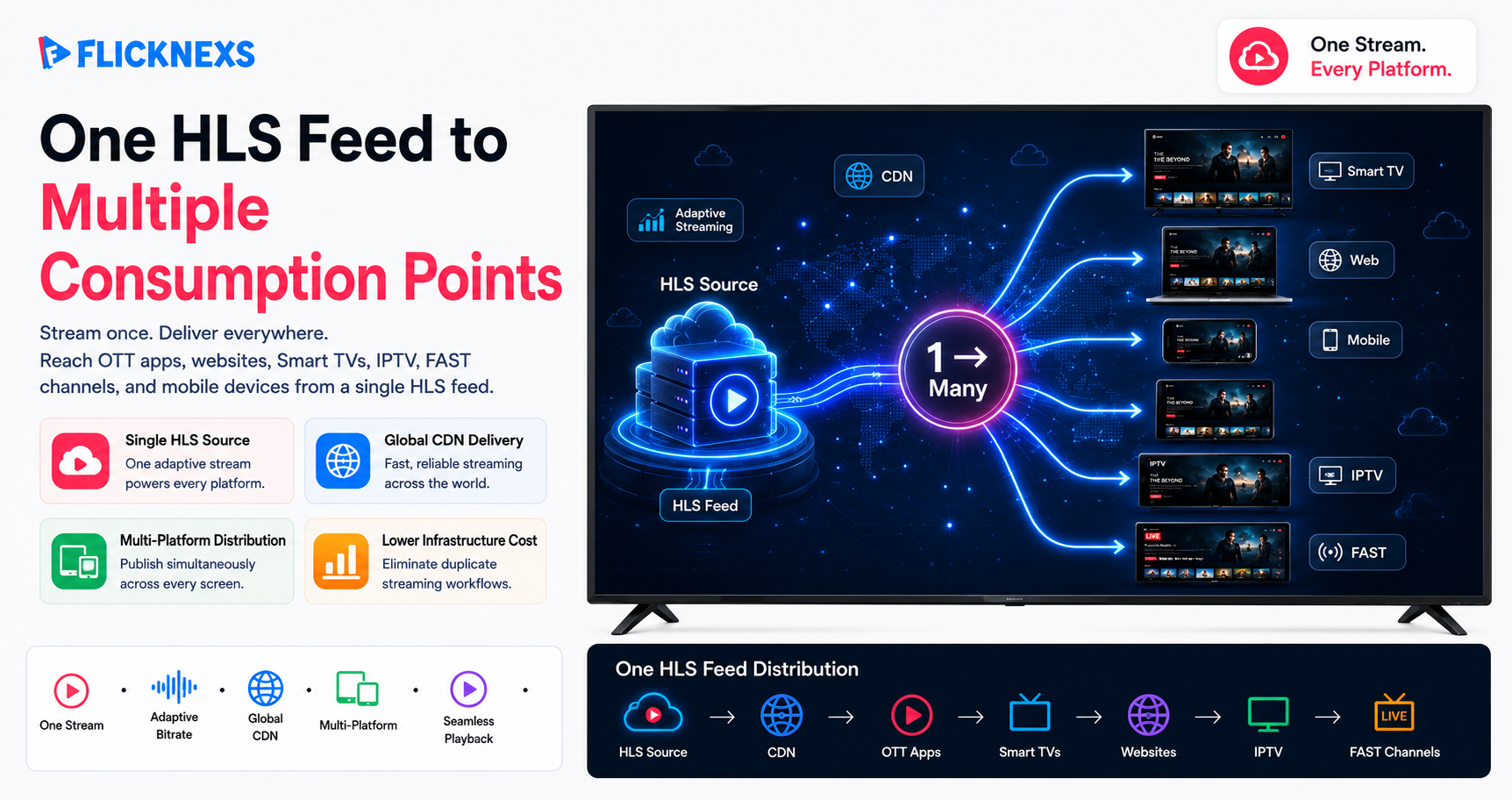
One HLS Feed to Multiple Consumption Points
A single HLS feed can power many endpoints at once — OTT apps, FAST networks, IPTV providers, aggregators, mobile apps, and websites — when you package once and let your CDN fan it out. With just one adaptive-bitrate source of video to send out throughout your network as if you were sending multiple streams of…
-
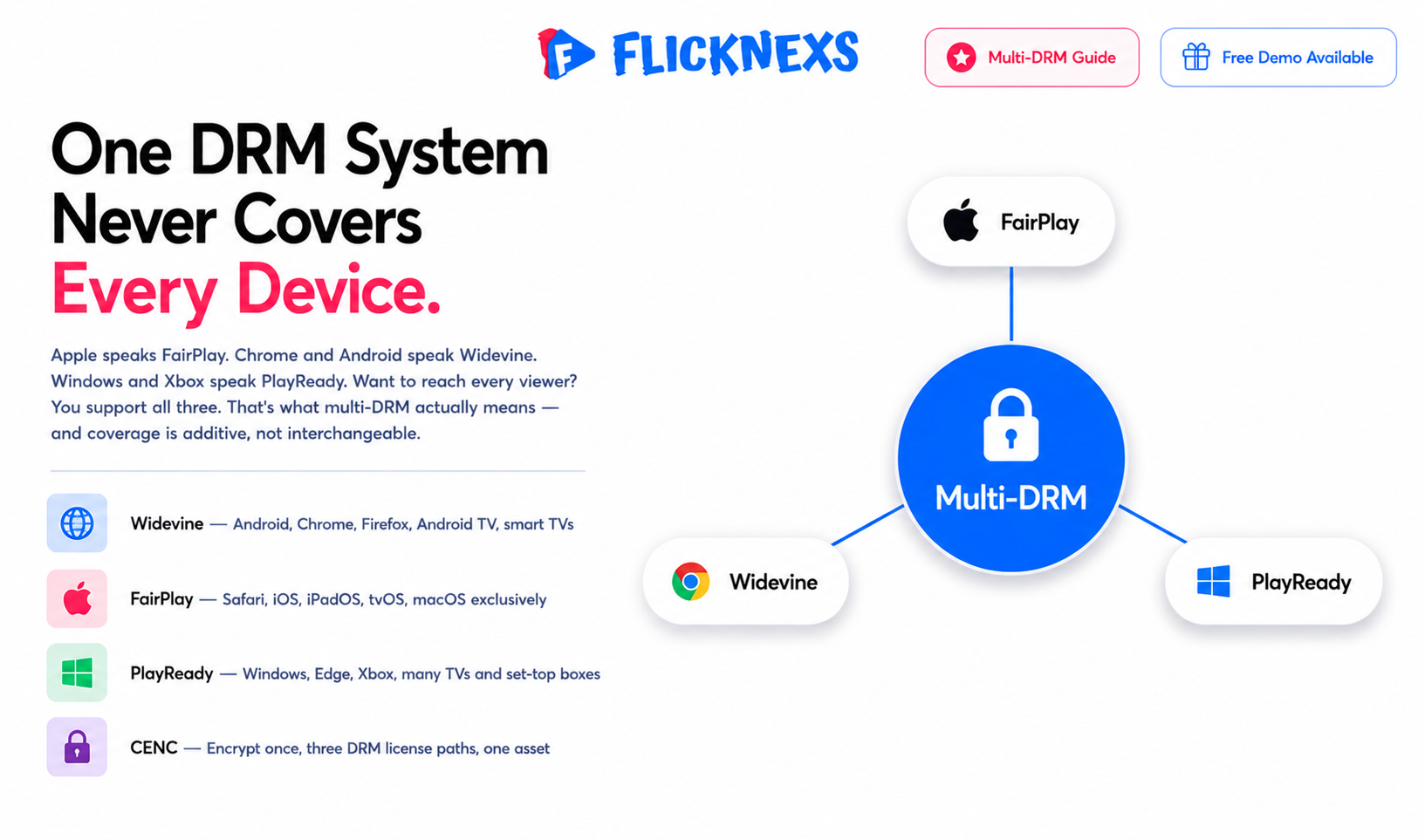
Multi-DRM Explained: Widevine, FairPlay & PlayReady for OTT Platforms
Multi-DRM means protecting video with Widevine, FairPlay and PlayReady so it plays securely on every device. Here is how the licence flow, tiers and tradeoffs work.
-
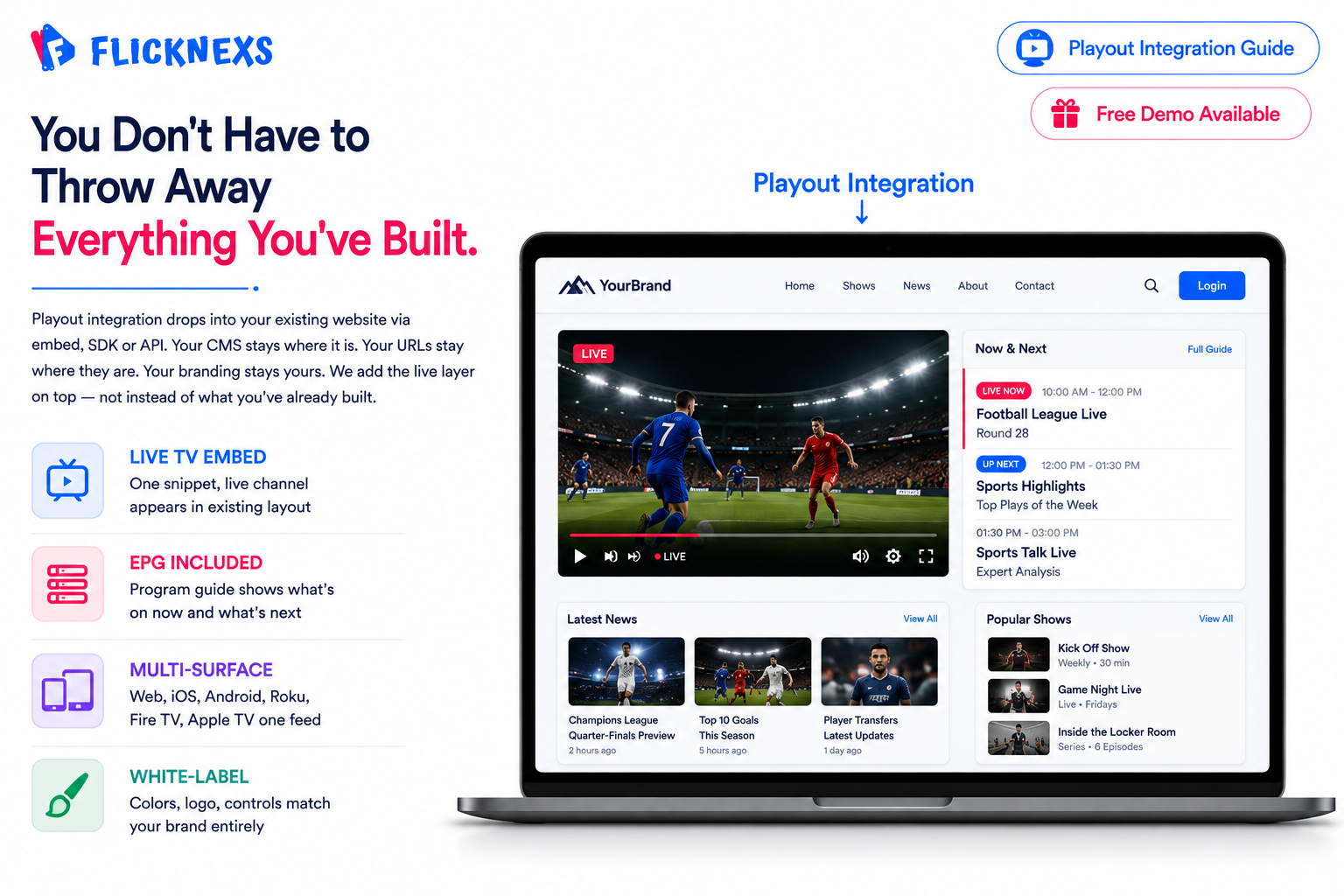
Can Flicknexs Playout Integrate With Existing Websites?
Yes, Flicknexs playout integration allows you to integrate live television, linear channel, EPG and live events into your existing website. You do not need to start from scratch as you only have to add them on top of your already running website. We integrate the television player, connect programme guide, and stream clean HLS video…
-
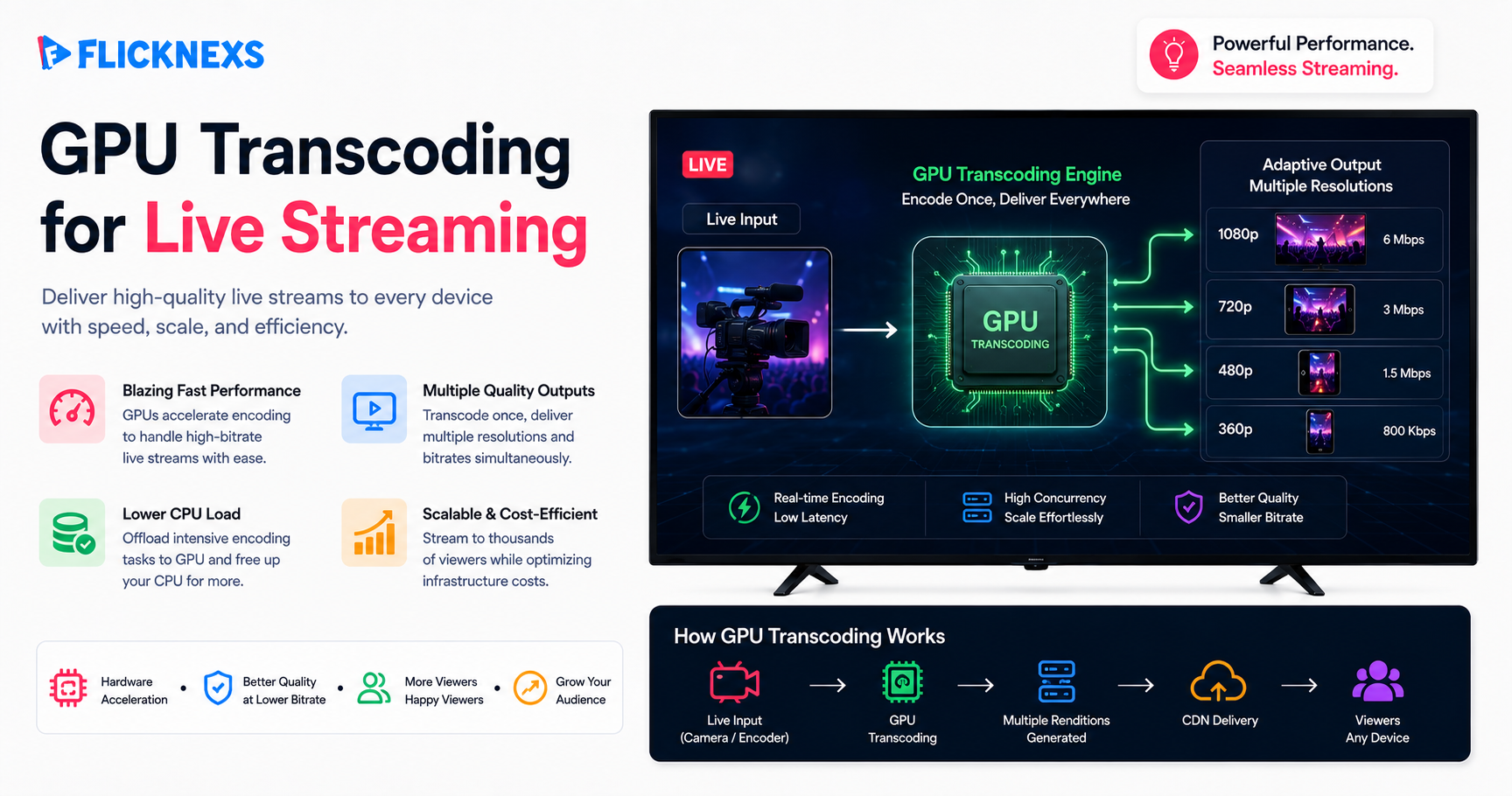
How GPU & Transcoding Improve Live Streaming
Through GPU transcoding, live streaming live events is made more efficient with multiple resolution and bitrate outputs for each incoming stream; this allows for improved playback for the user with significantly less buffering, quicker start up times and overall better performance across any device. It is important to note that live events have strict timelines…
-
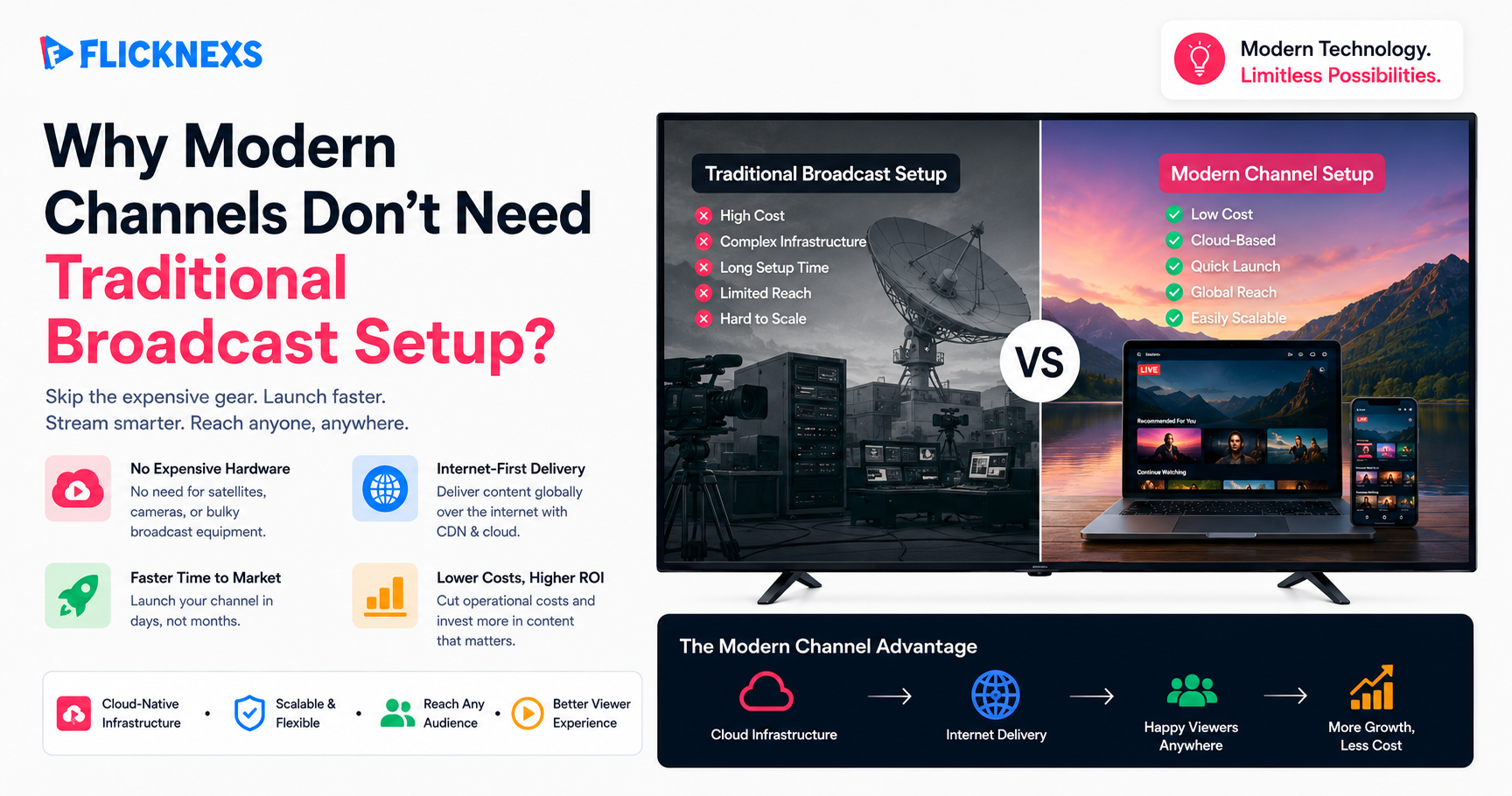
Why Modern Channels No Longer Need Traditional Broadcast Setups
With the advent of the Internet, the need to use satellite transponders, playout trucks and headend hardware has disappeared for digital-first television channels. When digital-first TV distribution began using encoders, cloud-based playout and content delivery networks to distribute programming (instead of leased uplinks and large racks of physical equipment), the cost of launching a channel…
-
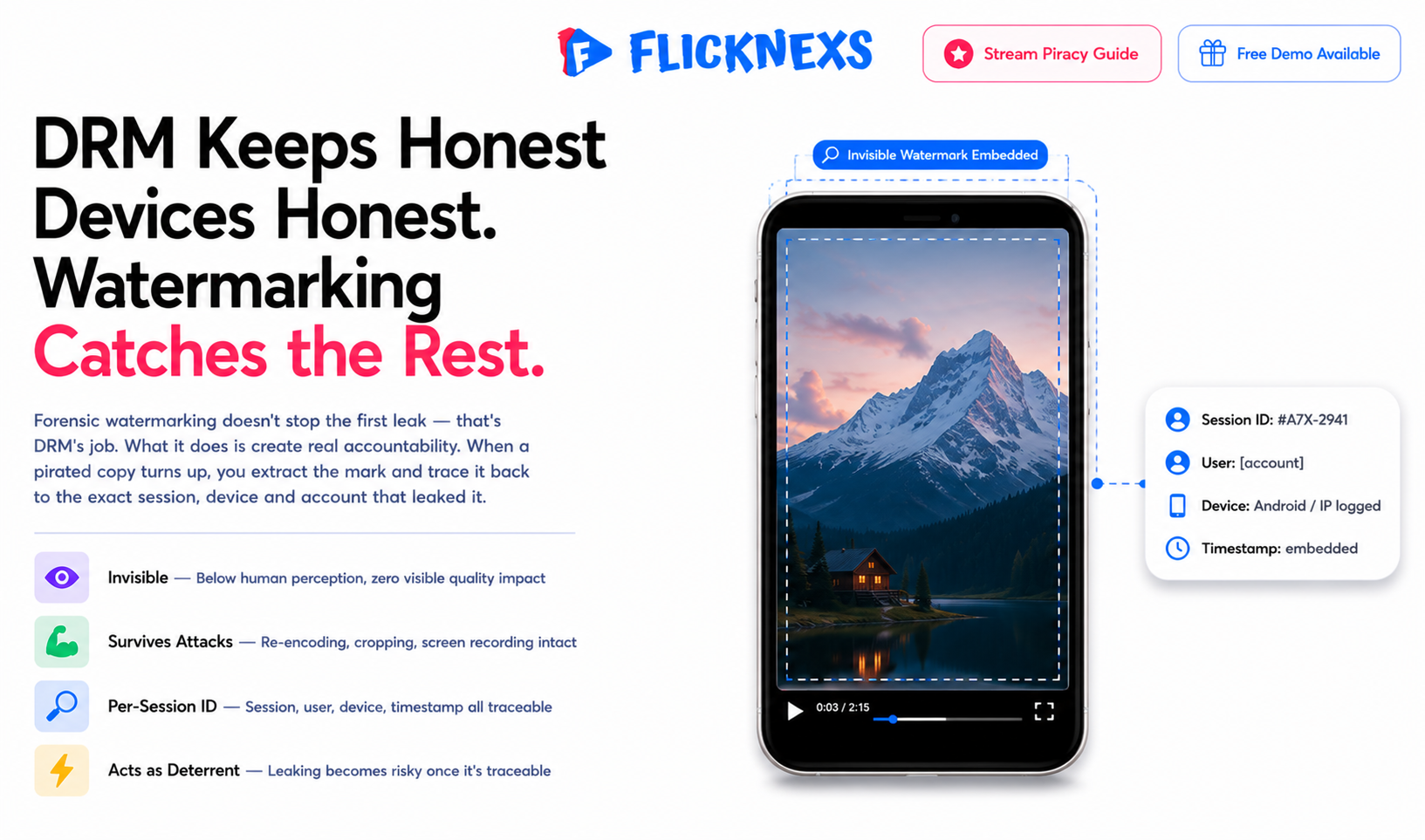
Forensic Video Watermarking: How to Trace and Stop Stream Piracy
Learn how forensic video watermarking embeds per-session IDs to trace leaked OTT streams back to the source, plus how it works with DRM and AES encryption.
-
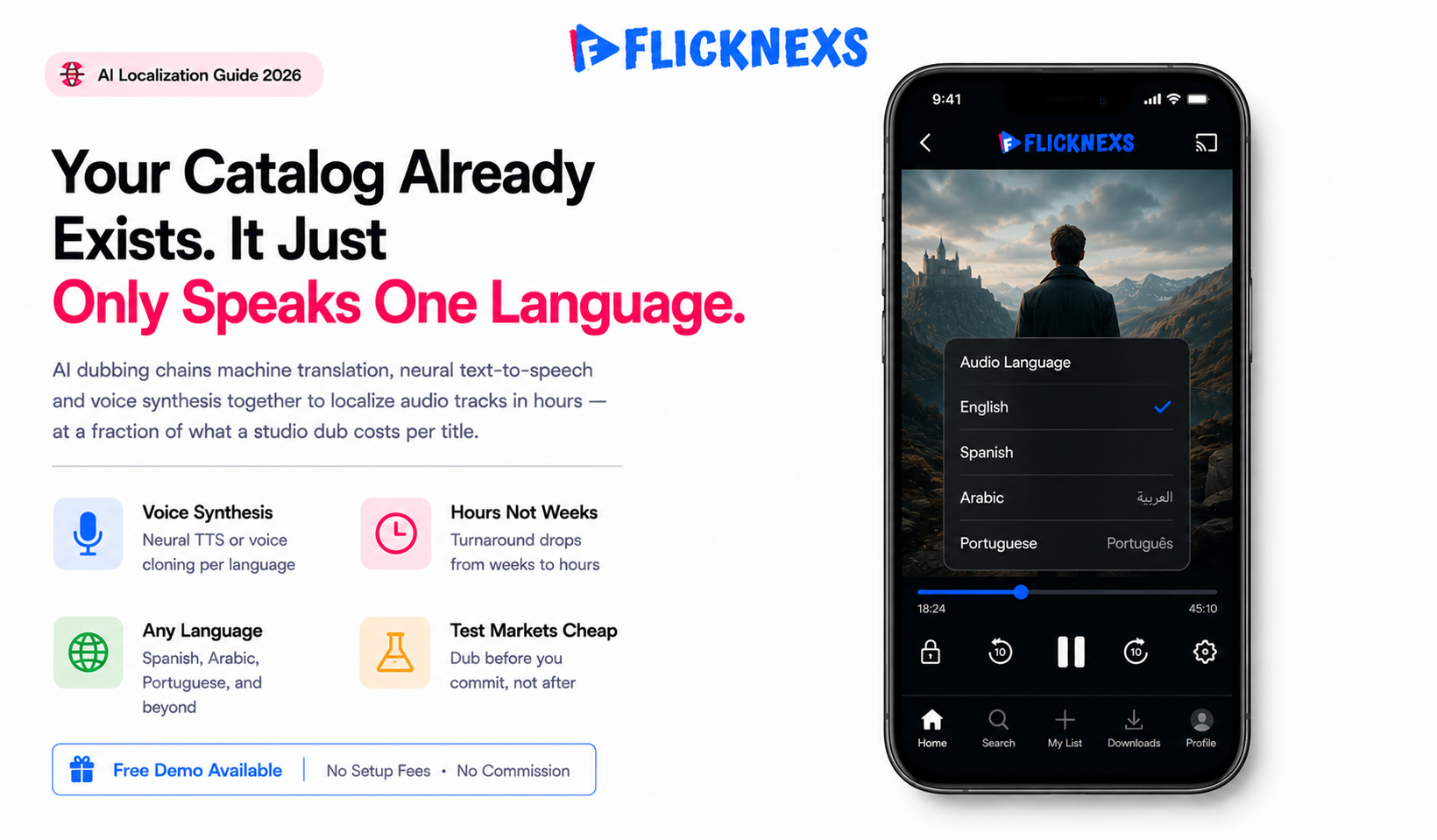
AI Dubbing for OTT: Localize Your Video Library in Any Language at Scale
Learn how AI dubbing for OTT works end to end — pipeline, costs, lip-sync, voice-cloning rights, and delivering multilingual audio tracks at scale on your platform.
-
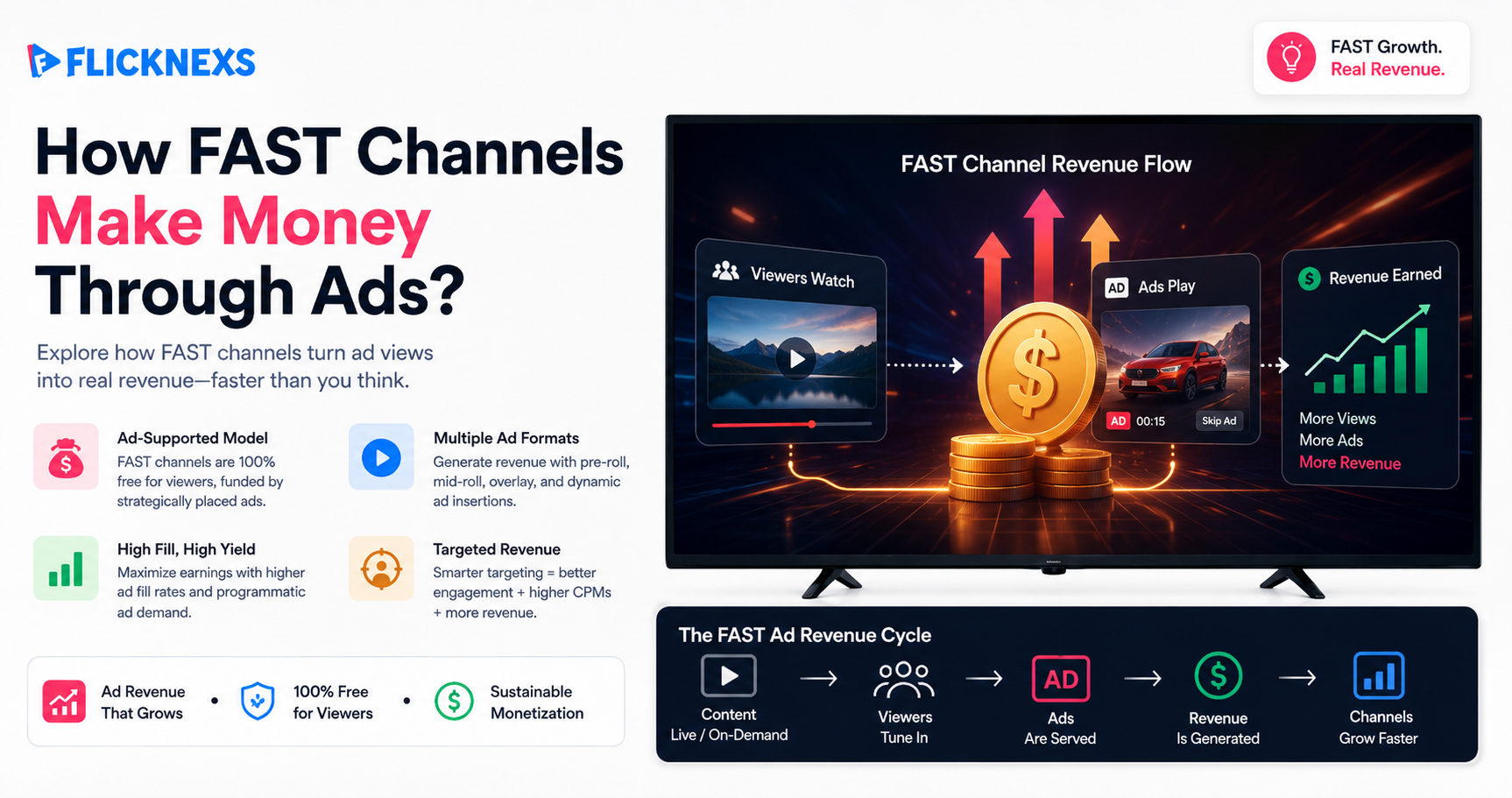
How FAST Channels Make Money Through Ads
Advertisers use FAST Channel Advertising (Advertising on Free Ad-Supported Streaming TV) to reach consumers on free to air channels (linear) by using their ads as a source of revenue. If you have or plan to have a FAST Service, knowing how the ad sales, ad insertion, and ad pricing work will determine whether you have…
-
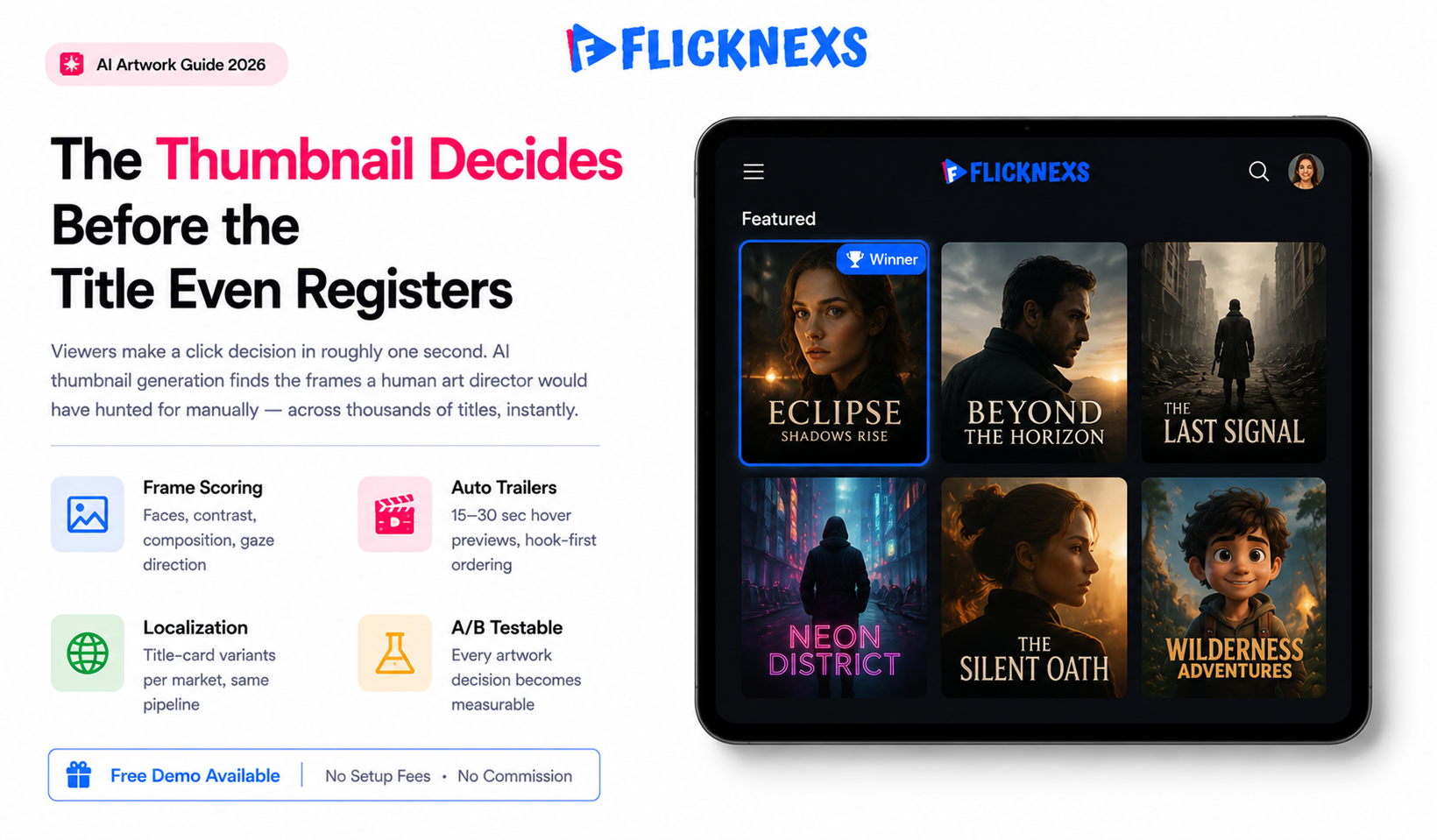
AI-Generated Thumbnails & Trailers: Lift Click-Through on Your OTT Catalog
How AI video thumbnails and trailers are generated at catalog scale, how to measure real CTR lift, and the brand and rights guardrails OTT operators need.