
Top Online Video Streaming Platforms in 2026

By Sharon Hepzibah | Last Updated on August 18, 2026

Top Online Video Streaming Platforms in 2026

Quick answer: Online Video Streaming Platforms offer personalized content, advanced AI recommendations, and diverse viewing options, prioritizing user experience and global accessibility.

Flicknexs develops innovative solutions for online video streaming platforms.

Key takeaways

  • Personalized content recommendations
  • Advanced AI technology
  • Diverse viewing options
  • Global accessibility

Quick Answer

In 2026, leading online video streaming platforms prioritize personalized content, advanced AI recommendations, and diverse viewing options. Most platforms offer exclusive originals, live events, and flexible subscription models. A large share integrates social features, enhancing user engagement. These services cater to global audiences with localized content, ensuring accessibility and broad appeal.

Online video streaming platforms have become the dominant way people consume entertainment worldwide. A modern streaming platform lets users watch movies, TV shows, web series and live events through internet-based services instead of traditional cable.

This shift has reshaped the global entertainment industry. In 2026, the video streaming market is projected to exceed a typical budget80+ billion, with over 4.a large volume users worldwide. More than a significant share of global internet traffic now comes from video streaming, and Smart TV adoption has surpassed 1.a large volume devices, accelerating OTT growth.

As demand for online streaming platforms grows, users are actively comparing video streaming services based on pricing, content availability, features and free streaming options.

In this guide, we explore everything you need to know about online video streaming platforms in 2026. To understand how modern video platforms operate, explore The Ultimate Guide to Video Streaming Platforms.

What is a Video Streaming Platform?
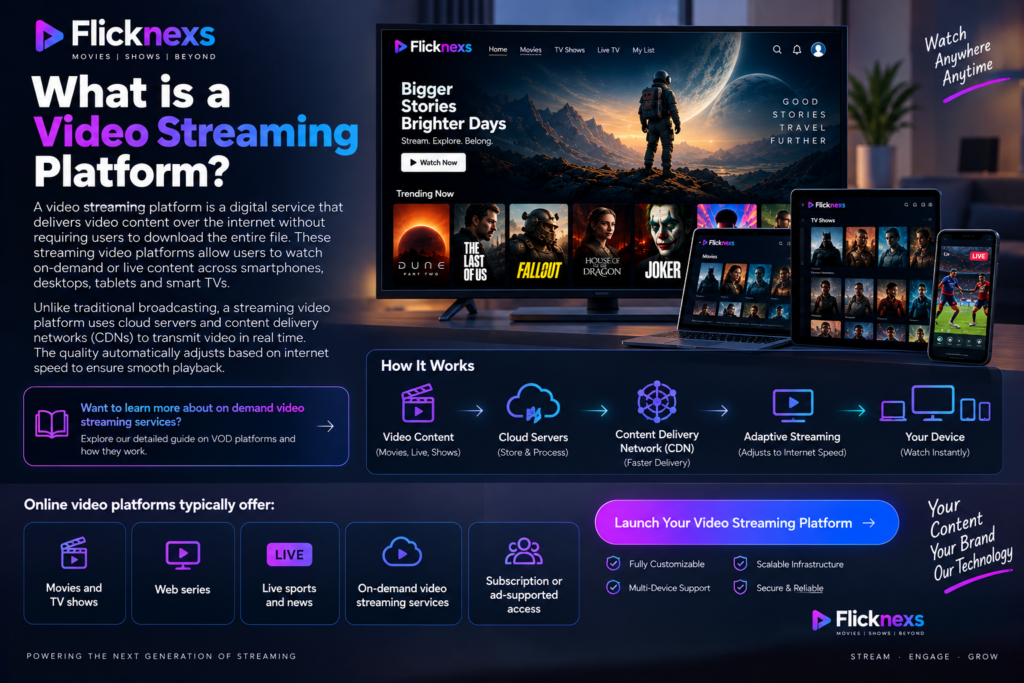
A video streaming platform is an online video streaming platform that delivers video content over the internet without requiring downloads. These streaming video platforms allow users to watch on-demand or live content across smartphones, desktops, tablets, and smart TVs.

Unlike traditional broadcasting, a streaming video platform uses cloud servers and content delivery networks (CDNs) to transmit video in real time. The quality automatically adjusts based on internet speed to ensure smooth playback.

If you want a deeper breakdown of on demand video streaming services, explore our detailed guide on VOD platforms and how they work.

Online video platforms typically offer:

  • Movies and TV shows
  • Web series
  • Live sports and news
  • On-demand video streaming services
  • Subscription or ad-supported access

Evolution of Online Video Streaming

The evolution of internet streaming video began in the mid-1990s when RealNetworks introduced early streaming technology. The landscape changed dramatically in 2005 with the rise of YouTube, which made online video mainstream.

During the 2010s, subscription-based video platforms expanded globally with services like:

  • Netflix
  • Amazon Prime Video
  • Hulu

Today, streaming video services support 4K resolution, AI recommendations, offline downloads, and multi-device synchronization.

Types of Streaming Platforms
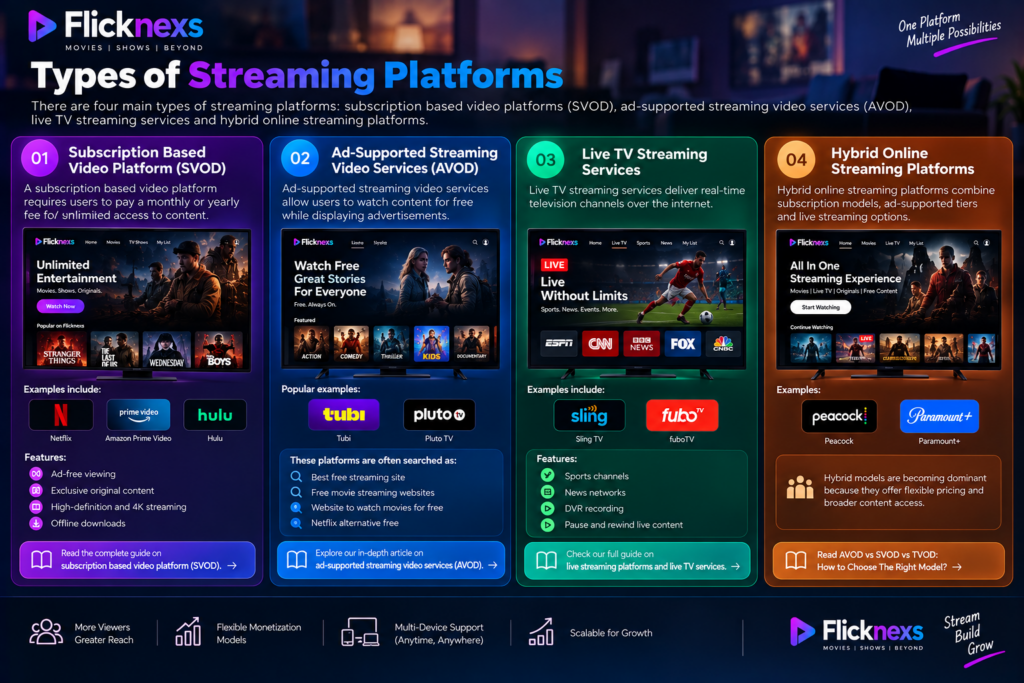
There are four main types of streaming platforms: subscription based video platforms (SVOD), ad-supported streaming video services (AVOD), live TV streaming services, and hybrid online streaming platforms.

1. Subscription Based Video Platform (SVOD)

A subscription based video platform requires users to pay a monthly or yearly fee for unlimited access to content.

Examples include:

  • Netflix
  • Amazon Prime Video
  • Hulu

Features:

  • Ad-free viewing
  • Exclusive original content
  • High-definition and 4K streaming
  • Offline downloads

To understand this monetization structure in detail, read our complete guide on subscription based video platform (SVOD).

You can also explore the strategic differences in our breakdown of the AVOD vs SVOD revenue model comparison.

2. Ad-Supported Streaming Video Services (AVOD)

Ad-supported streaming video services allow users to watch content for free while displaying advertisements.

Popular examples:

  • Tubi
  • Pluto TV

These platforms are often searched as:

  • Best free streaming site
  • Free movie streaming websites
  • Website to watch movies for free
  • Netflix alternative free

To learn how this free model is transforming digital streaming, explore our in-depth article on ad-supported streaming video services (AVOD).

3. Live TV Streaming Services

Live TV streaming services deliver real-time television channels over the internet.

Examples include:

  • Sling TV
  • fuboTV

Features:

  • Sports channels
  • News networks
  • DVR recording
  • Pause and rewind live content

If you want to explore this format in depth, check our full guide on live streaming platforms and live TV streaming services.

4. Hybrid Online Streaming Platforms

Hybrid online streaming platforms combine subscription models, ad-supported tiers, and live streaming options.

Examples:

  • Peacock
  • Paramount+

Hybrid models are becoming dominant because they offer flexible pricing and broader content access.

To understand how different monetization models work together, read AVOD vs SVOD vs TVOD: How to Choose The Right Model?.

Video Streaming Platforms Comparison (2026)
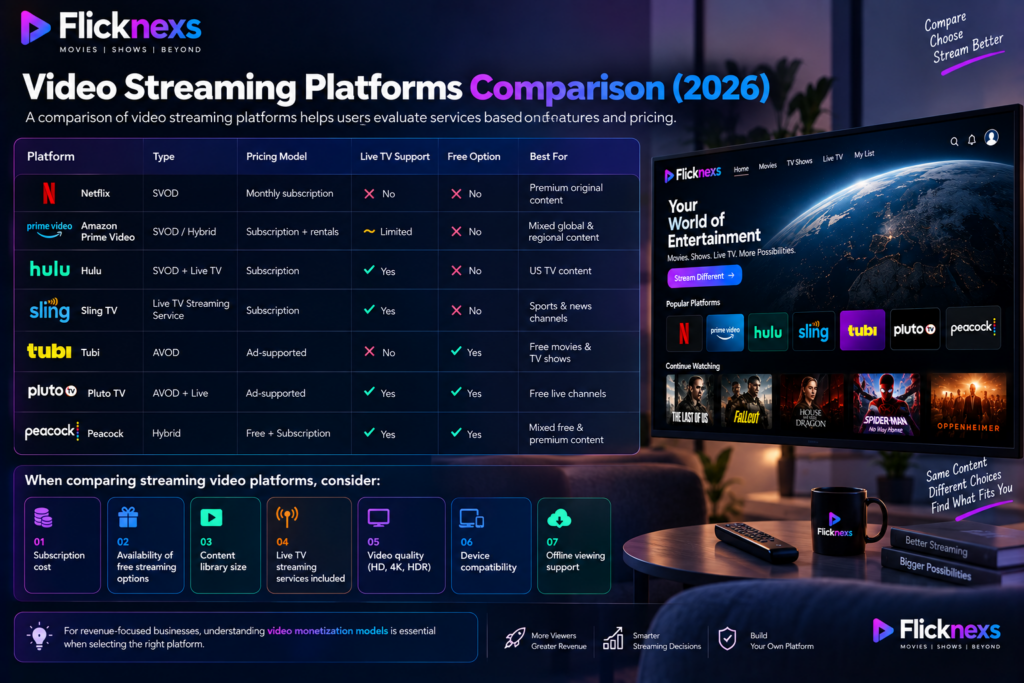
PlatformTypePricing ModelLive TV SupportFree OptionBest For
NetflixSVODMonthly subscriptionNoNoPremium original content
Amazon Prime VideoSVOD / HybridSubscription + rentalsLimitedNoMixed global & regional content
HuluSVOD + Live TVSubscriptionYesNoUS TV content
Sling TVLive TV Streaming ServiceSubscriptionYesNoSports & news channels
TubiAVODAd-supportedNoYesFree movies & TV shows
Pluto TVAVOD + LiveAd-supportedYesYesFree live channels
PeacockHybridFree + SubscriptionYesYesMixed free & premium content

A video streaming platforms comparison helps users evaluate streaming video services based on features and pricing.

When comparing streaming video platforms, consider:

  1. Subscription cost
  2. Availability of free streaming options
  3. Content library size
  4. Live TV streaming services included
  5. Video quality (HD, 4K, HDR)
  6. Device compatibility
  7. Offline viewing support

For revenue-focused businesses, understanding video monetization models is essential when selecting the right platform.

Benefits of Video Streaming Platforms

Online video streaming platforms offer several advantages:

  • Watch content anytime and anywhere
  • Flexible subscription and free streaming options
  • Access to global and regional content
  • High-definition and 4K streaming quality
  • Personalized recommendations
  • Multi-device compatibility

Challenges Facing Streaming Platforms in 2026

The main challenges facing streaming video platforms include:

  1. Rising content licensing costs
  2. Subscription fatigue among users
  3. Increased competition between streaming services
  4. Internet connectivity limitations
  5. Content piracy and illegal distribution

As the industry matures, choosing the right revenue structure such as SVOD or AVOD becomes critical for sustainability.

How Do Online Video Streaming Services Work?

Online video streaming services rely on:

  • Cloud storage
  • Content delivery networks (CDNs)
  • Video compression technology
  • Adaptive bitrate streaming

When a user presses play, the streaming video service detects internet speed and adjusts resolution automatically.

For businesses building their own streaming service, understanding video monetization platforms to boost revenue is crucial for long-term growth.

Best Free Streaming Sites and Services in 2026

Many users search for the best free streaming site or a website to watch movies for free. Legal free streaming services are typically ad-supported video streaming platforms.

Trusted free streaming platforms include:

  • Tubi
  • Pluto TV
  • Peacock (Free tier)

These platforms offer movies and TV shows without subscription fees while remaining licensed and legal.

Most free streaming services operate on an ad-supported model. To learn how this works, read AVOD: The Rise of Ad-Supported Video Streaming Platforms.

Conclusion

Video streaming platforms continue to reshape digital entertainment in 2026. From subscription based video platforms to free streaming services and live TV streaming services, users now have more options than ever.

Understanding the types of streaming platforms, comparing streaming video services, and evaluating monetization models helps viewers and businesses choose the right online video streaming platform for long-term success.

You can explore and experience how our VOD platform works for free. 

Ready to launch your streaming website? Build it on Flicknexs

Frequently Asked Questions

An online video streaming platform is a digital video streaming platform that allows users to upload, manage, stream and monetize video content over the internet. These online video platforms support on-demand video streaming services and live TV streaming services across mobile, web and smart TV devices.

An online video streaming platform works by uploading video content to secure cloud servers, converting it into multiple formats and delivering it through a content delivery network (CDN). This ensures smooth streaming video services across different devices and internet speeds using adaptive bitrate technology.

When choosing a video streaming platform, look for:

  • DRM security protection
  • Customizable video player
  • Subscription based video platform support (SVOD)
  • Ad-supported streaming video services (AVOD)
  • Live TV streaming services capability
  • Video analytics and reporting
  • API and SDK integrations
  • Adaptive streaming and multi-device compatibility

These features help businesses and creators scale their online video streaming platform effectively.

Some of the top video streaming platforms in 2026 include:

  • YouTube
  • Vimeo
  • Brightcove
  • JW Player

Each streaming video platform offers different features tailored to creators, businesses, and broadcasters.

Yes. Most modern online streaming platforms offer hybrid capabilities, allowing users to host live TV streaming services and later convert those streams into on-demand video streaming content within the same video streaming platform.

Yes, most streaming video services support multiple monetization models, including:

  • SVOD (subscription based video platform)
  • AVOD (ad-supported streaming video services)
  • TVOD (pay-per-view)
  • Hybrid monetization models

These options allow creators and businesses to generate revenue through subscriptions, ads, rentals, or premium access.

Platforms differentiate through exclusive content, advanced AI personalization, and social integration. Most prioritize user engagement with interactive features and diverse viewing options.

Services offer localized content, multilingual support, and region-specific subscriptions. A large share ensures accessibility across devices and markets.

AI enhances user experience with personalized recommendations, content curation, and predictive analytics. Most platforms use AI to optimize viewing preferences and engagement.

Netflix, Amazon Prime Video, and Disney+ remain dominant, offering extensive libraries and original content. Emerging platforms focus on niche audiences and interactive features, while traditional broadcasters enhance their streaming services to compete.

In 2026, India’s top video streaming platforms include Disney+ Hotstar, Netflix, and Amazon Prime Video, offering diverse content libraries and localized originals. These services cater to a wide range of preferences, from Bollywood and regional cinema to international shows and live sports, ensuring a comprehensive entertainment experience for Indian viewers.

Related

Implementation Steps for Online Video Streaming Platforms

Implementing an online video streaming platform requires a thorough understanding of the technical and business requirements. The first step is to define the platform’s goals and objectives, including the type of content to be offered, the target audience, and the desired user experience. According to a report by Deloitte, a well-defined strategy is crucial for the success of an online video streaming platform.

Once the goals and objectives are defined, the next step is to select a suitable content delivery network (CDN) and cloud hosting provider. A CDN is essential for ensuring fast and reliable content delivery, while a cloud hosting provider offers scalability and flexibility. The cost of CDN and cloud hosting services can vary depending on the provider and the level of service required, as noted by Amazon Web Services.

The platform’s architecture and infrastructure must also be designed and implemented. This includes setting up servers, databases, and load balancers, as well as configuring security and authentication protocols. The platform’s user interface and user experience (UI/UX) must also be designed and developed, with a focus on creating an intuitive and engaging user interface.

Content Acquisition and Licensing

Content acquisition and licensing are critical components of an online video streaming platform. The platform must obtain the necessary licenses and permissions to offer copyrighted content, such as movies and TV shows. This can be a complex and time-consuming process, involving negotiations with content owners and distributors, as reported by the Motion Picture Association of America.

The platform must also develop a content strategy, including the types of content to be offered, the frequency of new releases, and the promotion and marketing of the content. The cost of content acquisition and licensing can be significant, and must be carefully managed to ensure the platform’s profitability, as noted by Netflix.

In addition to licensed content, the platform may also offer original content, such as exclusive TV shows and movies. This requires a significant investment in production and development, as well as marketing and promotion, as reported by the Hollywood Reporter.

Cost Drivers for Online Video Streaming Platforms

The cost of operating an online video streaming platform can be significant, with several key cost drivers. One of the largest cost drivers is the cost of content acquisition and licensing, which can account for up to 50% of the platform’s total costs, according to a report by Ernst & Young.

Another significant cost driver is the cost of infrastructure and operations, including the cost of servers, databases, and load balancers, as well as the cost of maintaining and upgrading the platform’s architecture and infrastructure. The cost of marketing and promotion is also a significant factor, as the platform must attract and retain users in a highly competitive market, as noted by the Internet Advertizing Bureau.

The platform’s user interface and user experience (UI/UX) are also critical factors, as a poor UI/UX can drive users away and reduce engagement and retention. The cost of developing and maintaining a high-quality UI/UX can be significant, and must be carefully managed to ensure the platform’s success, as reported by the Nielsen Norman Group.

Common Mistakes in Online Video Streaming Platforms

There are several common mistakes that online video streaming platforms can make, which can have a significant impact on their success. One of the most common mistakes is a poor user interface and user experience (UI/UX), which can drive users away and reduce engagement and retention, as noted by the User Experience (UX) Design Agency.

Another common mistake is a lack of content diversity and depth, which can lead to user boredom and dissatisfaction. The platform must offer a wide range of content, including movies, TV shows, and original content, to keep users engaged and interested, as reported by the Variety magazine.

The platform’s technical performance is also critical, with factors such as streaming quality, buffering, and load times all impacting the user experience. The platform must be optimized for different devices and browsers, and must be able to handle high volumes of traffic and usage, as noted by the Streaming Media magazine.

Requirements for Online Video Streaming Platforms

Online video streaming platforms have several key requirements, including a robust and scalable infrastructure, a high-quality user interface and user experience (UI/UX), and a wide range of content. The platform must also be secure and reliable, with robust security protocols and backup systems in place, as reported by the Cybersecurity and Infrastructure Security Agency.

The platform’s content must be of high quality, with clear video and audio, and must be available in a range of formats and resolutions to accommodate different devices and browsers. The platform must also be accessible on a range of devices, including smartphones, tablets, and smart TVs, as noted by the Consumer Technology Association.

The platform’s business model must also be carefully considered, with factors such as subscription pricing, advertizing revenue, and content licensing all impacting the platform’s profitability. The platform must be able to balance its costs with its revenue, and must be able to adapt to changes in the market and the competitive landscape, as reported by the Harvard Business Review.

Timelines for Implementing Online Video Streaming Platforms

The timeline for implementing an online video streaming platform can vary depending on the complexity of the project and the resources available. However, a typical implementation timeline can range from several months to several years, as noted by the Project Management Institute.

The first phase of the implementation process, which includes defining the platform’s goals and objectives, selecting a CDN and cloud hosting provider, and designing the platform’s architecture and infrastructure, can take several weeks to several months, as reported by the Cloud Security Alliance.

The second phase, which includes developing the platform’s user interface and user experience (UI/UX), acquiring and licensing content, and implementing security and authentication protocols, can take several months to a year or more, as noted by the Web Development Agency.

  • Defining the platform’s goals and objectives: 2-4 weeks
  • Selecting a CDN and cloud hosting provider: 2-4 weeks
  • Designing the platform’s architecture and infrastructure: 4-8 weeks
  • Developing the platform’s UI/UX: 8-16 weeks
  • Acquiring and licensing content: 8-16 weeks
  • Implementing security and authentication protocols: 4-8 weeks

The final phase, which includes testing and debugging the platform, launching the platform, and marketing and promoting the platform, can take several weeks to several months, as reported by the Marketing Agency.

Implementing a Successful Online Video Streaming Platform

To establish a thriving online video streaming platform, several key factors must be considered. First, it is essential to develop a comprehensive content strategy, including the types of content to be offered, the target audience, and the frequency of new content releases. According to a report by Deloitte, a well-planned content strategy can help attract and retain users.

Next, the technical infrastructure of the platform must be designed and implemented. This includes selecting suitable video encoding and streaming protocols, such as H.264 or H.265, and choosing a reliable content delivery network (CDN). The CDN should be able to handle high volumes of traffic and provide fast, low-latency video streaming.

Key Technical Requirements

  • Scalable and secure servers to host video content
  • Fast and reliable content delivery network (CDN)
  • Support for multiple video formats and streaming protocols
  • Robust user authentication and access control systems
  • Comprehensive analytics and reporting tools

Another critical aspect of implementing a successful online video streaming platform is ensuring a high-quality user experience. This can be achieved by providing intuitive navigation, personalized content recommendations, and features such as pause and resume, as well as support for multiple devices and platforms.

Common Mistakes to Avoid

  • Insufficient testing and quality assurance
  • Poorly designed user interfaces and navigation
  • Inadequate content moderation and management
  • Failure to comply with copyright and licensing regulations
  • Inadequate security measures, such as encryption and access controls

Additionally, it is crucial to consider the costs associated with implementing and maintaining an online video streaming platform. These costs can include infrastructure and hardware expenses, content licensing and acquisition fees, and personnel and operational costs. As noted by a report from Ernst & Young, these costs can be significant, and careful planning and budgeting are necessary to ensure the financial sustainability of the platform.

Content Acquisition and Licensing

Acquiring and licensing high-quality, engaging content is a critical component of a successful online video streaming platform. This can involve negotiating contracts with content providers, such as movie and television studios, and ensuring that all necessary rights and permissions are obtained. According to a statement by the Motion Picture Association of America, content licensing and acquisition can be a complex and time-consuming process, requiring careful attention to detail and a deep understanding of the relevant laws and regulations.

Content Acquisition Strategies

  • Partnering with content providers to offer exclusive content
  • Acquiring rights to popular movies and television shows
  • Developing original content, such as series and documentaries
  • Aggregating content from multiple sources and providers
  • Utilizing user-generated content and crowdsourcing initiatives

Finally, it is essential to develop a comprehensive marketing and promotion strategy to attract and retain users. This can include social media marketing, email marketing, and paid advertizing, as well as partnerships with influencers and other organizations. As reported by a study from the Interactive Advertizing Bureau, a well-executed marketing strategy can help drive user engagement and retention, and ultimately contribute to the long-term success of the platform.

Implementing a Successful Online Video Streaming Platform

Implementing a successful online video streaming platform requires careful planning, execution, and ongoing maintenance. One of the first steps is to define the target audience and content strategy, as noted by Deloitte in their 2022 Digital Media Trends survey. This involves identifying the types of content to be offered, such as movies, TV shows, live events, or original content, and determining the devices and platforms that will be supported.

Next, the platform’s technical infrastructure must be designed and built, including the content delivery network (CDN), streaming servers, and user interface. According to a report by Akamai, a well-designed CDN can reduce latency by up to 50% and improve video quality. The choice of CDN and streaming servers will depend on factors such as the expected volume of traffic, the types of devices being supported, and the required level of scalability.

Content Acquisition and Licensing

Content acquisition and licensing are critical components of an online video streaming platform. This involves obtaining the necessary rights to stream content from studios, networks, and other content owners. As reported by Variety, the cost of licensing content from major studios can be substantial, with some deals reaching into the hundreds of millions of dollars. The platform must also ensure that it has the necessary agreements in place to stream content in different territories and on different devices.

The platform must also develop a content management system to manage and organize its library of content. This includes tasks such as ingesting and processing content, creating metadata, and managing content expiration dates. According to a report by IBM, a well-designed content management system can reduce the time and cost associated with content preparation by up to 70%.

Monetization Strategies

Online video streaming platforms can use a variety of monetization strategies, including subscription-based models, ad-supported models, and transactional models. As noted by eMarketer, the subscription-based model is the most common, with platforms such as Netflix and Amazon Prime Video generating billions of dollars in revenue each year. The ad-supported model is also popular, with platforms such as Hulu and YouTube using ads to generate revenue.

The transactional model, which involves charging users a fee to rent or buy individual pieces of content, is less common but still used by some platforms. According to a report by PwC, the transactional model can be effective for platforms that offer niche or specialty content that is not available on other platforms.

Common Mistakes to Avoid

There are several common mistakes that online video streaming platforms can make, including failing to properly test and optimize the platform, not providing adequate customer support, and not having a clear content strategy. As reported by Forbes, these mistakes can lead to a poor user experience, low engagement, and ultimately, a loss of revenue.

  • Failing to properly secure the platform, which can lead to piracy and other forms of content theft, as noted by the Motion Picture Association of America.
  • Not providing adequate analytics and reporting tools, which can make it difficult to measure the effectiveness of the platform and make data-driven decisions, as reported by comScore.
  • Not having a clear plan for expanding the platform to new territories and devices, which can limit the platform’s growth and revenue potential, according to a report by Strategy Analytics.

Requirements for a Successful Platform

A successful online video streaming platform requires a number of key components, including a robust and scalable technical infrastructure, a strong content library, and effective monetization strategies. As noted by Gartner, the platform must also be able to provide a high-quality user experience, with features such as fast playback, high video quality, and easy content discovery.

The platform must also be able to support a wide range of devices and platforms, including smartphones, tablets, smart TVs, and gaming consoles. According to a report by Nielsen, the ability to support multiple devices is critical, as users increasingly expect to be able to access content on any device, at any time.

In addition, the platform must be able to provide effective customer support, with features such as live chat, email support, and FAQs. As reported by Zendesk, good customer support is critical, as it can help to build trust and loyalty with users, and ultimately drive revenue and growth.

Frequently asked questions

What are online video streaming platforms?

Online video streaming platforms deliver video content over the internet without requiring downloads, offering on-demand or live content across various devices.

How do subscription-based video platforms work?

Subscription-based video platforms require users to pay a monthly or yearly fee for unlimited access to content, offering ad-free viewing and exclusive original content.

What is the difference between SVOD and AVOD?

SVOD requires a subscription for access to content, while AVOD allows users to watch content for free with advertisements.

What are hybrid online streaming platforms?

Hybrid online streaming platforms combine subscription models, ad-supported tiers, and live streaming options, offering flexible pricing and broader content access.

How has the evolution of internet streaming video impacted the entertainment industry?

The evolution of internet streaming video has reshaped the global entertainment industry, with online video streaming platforms becoming the dominant way people consume entertainment worldwide.

What is the projected growth of the video streaming market?

The video streaming market is projected to exceed a typical budget80 billion, with over 4.a large volume users worldwide, according to recent industry reports.

Sources

Start a free trial — book a call to walk through scope and pricing.

Comments

Leave a Reply

Your email address will not be published. Required fields are marked *