
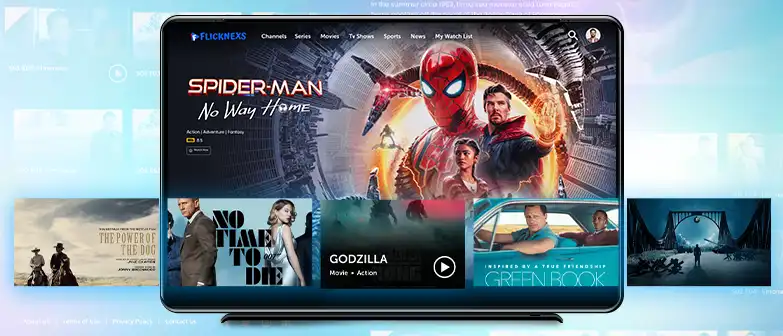
Starting a movie streaming website in 2026 makes practical sense because online video consumption continues to grow rapidly worldwide. Today, more than 70% of internet users prefer OTT platforms over traditional television, and audiences increasingly watch on-demand movies across mobile devices, web browsers, and smart TVs. The global video streaming market is projected to grow into a multi-hundred-billion-dollar industry, showing that demand is steadily moving upward.
What makes this opportunity even more attractive is how accessible launching a streaming platform has become. Businesses no longer need large development teams or massive upfront investments. Modern OTT platform builders now provide built-in capabilities such as subscriptions, advertising monetization, pay-per-view models, DRM security, analytics, and multi-device delivery.
If you are researching how to create a movie streaming website or how to build a streaming website without managing complex infrastructure, modern SaaS OTT solutions make the process significantly easier. Today, entrepreneurs and media businesses can create a streaming service orcreate your own streaming platform using ready-made technology rather than building systems from scratch.
Today, most new streaming businesses do not build platforms from scratch. Instead, they use SaaS OTT platforms that reduce launch timelines from several months to just a few weeks while significantly lowering technical risk. This guide explains the entire process and helps you choose the most practical approach based on your goals, budget, and timeline.
Fact: Leading SaaS platforms like Flicknexs already power 500+ OTT brands worldwide, enabling creators and businesses to build, brand, and monetize streaming services efficiently.
TL;DR
- The global streaming industry is expanding rapidly — projected 18.5% CAGR (2024–2032).
- You can create a movie streaming website in 6 structured steps.
- SaaS OTT platforms help reduce development time and costs significantly.
- Essential features include DRM protection, adaptive bitrate streaming, and multi-device streaming support.
- Monetization models include SVOD, TVOD, AVOD, or hybrid approaches.
- Proper licensing, CDN integration, and marketing planning are critical before launch.
- Using the right technology stack, many platforms launch within 2–4 weeks and begin monetizing securely.
Who Should Create a Movie Streaming Website?
This guide is ideal for:
- Film producers and distributors launching direct-to-consumer platforms
- Content creators building niche OTT subscription platforms
- TV channels transitioning into digital video on demand services
- Media startups building a streaming business
- Businesses targeting regional or genre-specific audiences
If your goal is understanding how to start a streaming service while minimizing technical complexity, this guide provides a practical roadmap.
What Is a Movie Streaming Website?
A movie streaming website is an online platform that allows users to watch films instantly over the internet without downloading files. It relies on cloud hosting, adaptive bitrate streaming, and content delivery network (CDN) infrastructure to ensure smooth playback across devices and network conditions.
Popular examples include Netflix, Amazon Prime Video, and Disney+, but businesses today can also create a streaming platform using SaaS OTT platform builders like Flicknexs.
How to Create Your Own Movie Streaming Website – Step by Step
Creating a movie streaming website in 2026 is far simpler than before. Whether you want to build a video streaming website, make a streaming website, or learn how to create a video streaming website, modern OTT infrastructure allows faster execution without deep engineering expertise.
By following the steps below, you can plan, launch, and scale confidently.
Step 1: Choose the Right OTT Business Model
Your monetization strategy determines how your platform generates revenue.
Common monetization models include:
- SVOD — subscription-based access
- AVOD — advertising-supported viewing
- TVOD — rentals or one-time purchases
- Hybrid model — combines multiple monetization models
Many startups begin by building a streaming service around subscriptions and expand later.
Step 2: Get Content Licensing & Legal Rights
Content licensing forms the legal foundation of any streaming business.
Important considerations include:
- Ownership agreements
- Geographic streaming rights
- Monetization permissions
- License duration and renewals
Legal clarity ensures long-term sustainability and platform credibility.
Step 3: Select the Best OTT Platform / Technology
Technology directly impacts scalability and cost efficiency.
Businesses researching how to create a movie streaming website or how to make a video streaming website often compare custom development with SaaS OTT solutions.
A reliable platform should include:
- Cloud hosting infrastructure
- DRM security and DRM protection
- Multi-device streaming support
- Analytics & performance tracking
- Built-in monetization tools
A strong video on demand architecture supported by CDN delivery and optimized streaming infrastructure ensures global playback performance.
Using a SaaS OTT platform builder can reduce development timelines from 6–12 months to a few weeks.
Step 4: Design & Branding
User experience plays a critical role in retention.
Focus on:
- Clear navigation
- Mobile-first layouts
- Consistent branding
- Fast loading interfaces
Good design strengthens trust and improves engagement across devices.
Step 5: Upload Content & Configure Streaming
Once your platform is ready, configure streaming settings carefully.
Important tasks include:
- Video encoding and adaptive bitrate streaming
- Metadata and subtitles
- Library organization
- DRM protection setup
Proper configuration ensures reliable playback regardless of user bandwidth.
Step 6: Launch & Marketing Strategy
After testing, focus on growth and acquisition.
Effective strategies include:
- SEO optimization
- Social media promotion
- Influencer marketing
- Free trials and promotions
These strategies help businesses develop video streaming websites into scalable platforms.
Alternatively, you can hire developers to build your own platform from the ground up!
Must-Have Features of a Movie Streaming Website
A successful OTT platform combines usability, security, and monetization flexibility.
User Management
- Secure login and profiles
- Subscription management
- Watch history tracking
- Admin access control
Video Hosting & Streaming
- Cloud hosting
- Adaptive bitrate streaming
- CDN acceleration
- Multi-device streaming
Monetization Options
- Subscription plans
- Ad-supported viewing
- Pay-per-view access
- Payment gateway integrations
DRM & Security
- DRM security implementation
- Secure streaming URLs
- Geo-blocking controls
- Activity monitoring
Cost to Create a Movie Streaming Website
Costs vary depending on development strategy and scale.
Development Cost
Includes:
- Website and app development
- Authentication systems
- Payment integrations
- UI/UX design
Custom builds often exceed $50,000–$150,000+, while SaaS OTT platforms reduce costs significantly.
Hosting & CDN Cost
Pricing depends on:
- Storage volume
- Bandwidth usage
- Active users
- Streaming quality
Content delivery network infrastructure ensures scalable performance globally.
Maintenance Cost
Ongoing expenses include:
- Platform updates
- Security monitoring
- Feature enhancements
- Technical support
Maintenance remains essential for long-term platform stability.
Custom Development vs Ready-Made OTT Platform
| Feature | Custom Development | Ready-Made OTT Platform |
| Initial Cost | Very high | Low to moderate |
| Time to Launch | 6–12 months | Days to weeks |
| Technical Expertise | Required | Minimal |
| Scalability | Manual | Built-in |
| Maintenance | Self-managed | Provider managed |
| Security | Custom | Built-in DRM |
| Risk | High | Predictable |
Quick Summary:
Custom development offers flexibility, but SaaS OTT solutions allow faster execution and lower operational risk.
How Flicknexs Helps You Create a Movie Streaming Website
Launching a streaming platform traditionally required complex streaming infrastructure and subscription management systems.
Flicknexs simplifies this by offering a white-label OTT platform designed for businesses looking to create a movie streaming website quickly.
With Flicknexs, you get:
- Hosting and delivery infrastructure
- Built-in monetization models
- DRM protection
- Analytics & performance tracking
- Full brand customization
This enables companies to make your own streaming platform while focusing on content and growth.
Benefits of Using a Pre-Built OTT Platform
- Faster launch timelines
- Lower upfront investment
- Pre-configured OTT platform builder tools
- Easy scalability
- Continuous updates and support
For startups planning how to start your own streaming service, pre-built solutions significantly reduce risk.
Challenges in Running a Movie Streaming Website
Common challenges include:
- Content acquisition
- Viewer retention
- Rising bandwidth costs
- Market competition
- Content protection
Successful platforms balance technology, marketing, and content strategy.
Future Trends in OTT & Movie Streaming Platforms
Key industry trends include:
- AI-driven recommendations
- Multi-device viewing experiences
- Niche OTT platforms
- Interactive live streaming
- Advanced analytics systems
Adapting early helps businesses remain competitive in the evolving streaming ecosystem.
How to Monetize Your Movie Streaming Application
| Model | Revenue Source | Ideal For | Example |
| SVOD | Subscriptions | Recurring income | Netflix |
| TVOD | Rentals | Premium releases | iTunes |
| AVOD | Ads | Large audiences | YouTube |
| Hybrid | Mixed models | Growth + revenue | Hulu |
Success Stories
Blessing TV
Client Overview
Organization: Jesus Loves Trust
Industry: Religious Broadcasting & Media
Headquarters: Chennai, Tamil Nadu, India
Operational Reach: Global
Content Focus: Sermons, live events, faith-based programming for Tamil viewers
Problem
- Limited reach with satellite broadcasting
- No global access; viewers outside the region had difficulty watching
- Poor multi-device experience (phones, web, smart TVs)
- High operational costs for satellite TV, difficult to scale
Solution
- Developed a custom OTT platform for religious streaming
- Core capabilities:
- 24/7 live channel streaming
- Global CDN-based delivery
- Multi-device support (Web, Android, Smart TV)
- Secure authentication and scalable infrastructure
- Live event streaming:
- Supports large gatherings (10,000+ in-person)
- Real-time global participation
- Adaptive streaming for all internet speeds
- Monetization: Donation-based model with global payment support
- Infrastructure highlights:
- High-quality transcoding, adaptive bitrate, API-driven architecture
- CDN (Bunny CDN) for global delivery, failover systems
- Load balancing and continuous performance upgrades
Success Achieved
- Viewership growth: 100 concurrent → 2,500+ concurrent
- Peak metrics: 5,200 concurrent viewers live, 25,000 viewers within one hour
- Global access: India, USA, Middle East, Europe, Southeast Asia
- Supported devices: Web, Android, Smart TVs (LG, Samsung, Android TV)
- Operational transformation: Lower costs, simplified workflows, scalable infrastructure
- ROI: Saved ₹1.4 Crore+ per year compared to satellite TV
Thina.lk
Client Overview
Client: Thina.lk
Organization: Tissa Nagodavithana Films Private Limited
Industry: Online Movie Streaming / OTT
Headquarters: Sri Lanka
Operational Reach: Global
Content Focus: Regional movies for international audiences
Problem
- Platform Limitations: Outdated infrastructure, poor scalability, limited support
- Subscription & Payment Complexity: No advanced controls, multi-currency billing issues, fragmented systems
- Cross-Device Issues: Subscriptions not synchronized across devices, no unified tracking
- Operational Challenges: Lack of multi-role admin control, hard to manage global users
- Performance Issues: Streaming instability and poor playback across regions
Solution
- Advanced Subscription & Monetization: SVOD model, flexible tiers, region-based pricing, multi-currency support
- Unified Subscription Orchestration Layer: Centralized subscription management across devices
- Intelligent Global Payment System: Multiple gateways, geo-location support, currency-aware billing
- High-Performance Streaming: H.265 optimization, stable playback, reduced bandwidth usage
- Device Control & Security: Concurrent streaming control, account misuse prevention
- Multi-Role Admin Management: Role-based access, improved operational efficiency
- Modern User Experience: Redesigned UI, improved navigation, age-restriction feature
- Analytics-Driven Growth: Player, PPV, subscriber, and user analytics for optimization
- Seamless Migration: 6,000+ subscribers migrated with zero downtime
Success Achieved
- 6,000+ subscribers migrated without disruption
- Global OTT infrastructure successfully deployed
- Multi-currency subscriptions enabled
- Cross-device streaming fully supported
- Improved streaming performance and reliability
- Advanced analytics implemented for growth and retention
Conclusion
The streaming industry continues expanding rapidly, but success increasingly depends on execution speed and technology choice. Businesses researching how to create a video streaming website, how to start a video streaming service, or how to build a streaming website are increasingly choosing SaaS OTT platforms because they simplify infrastructure, improve scalability, and accelerate monetization.
Blessing TV became a digitally transformed, globally accessible Christian streaming platform capable of handling massive audiences, driving engagement, and generating sustainable revenue. Thina.lk became a reliable, globally accessible OTT platform capable of scaling, monetizing, and providing superior user experience without technical limits.
If your goal is to launch efficiently, validate your idea quickly, and build a sustainable streaming business, a ready-made OTT platform provides the most practical path forward in 2026.
Now create your own online streaming platform with minimal effort.




Leave a Reply