
Quick Answer: To build an online community around your video content, you must shift your strategy from broadcasting to facilitating interaction. This requires integrating video hosting with dedicated community tools like forums, live chat, and member directories. Success depends on fostering two-way communication, implementing tiered access levels to reward engagement, and using data to personalize the viewer experience. Unlike passive streaming sites, a true community platform encourages members to create content, discuss topics, and connect with each other, turning a simple subscription into a shared identity.
Why Do Most Video Membership Sites Fail to Build a Real Community?
You have spent months curating your library. The production quality is sharp. The scriptwriting is tight. You have launched your membership site, and the initial sign-ups trickle in. But then, the silence sets in. You post a new episode, and the comments section remains empty. Members log in, watch the video, and leave. There is no chatter, no peer-to-peer support, and no sense of belonging. You are running a video rental store, not a community.
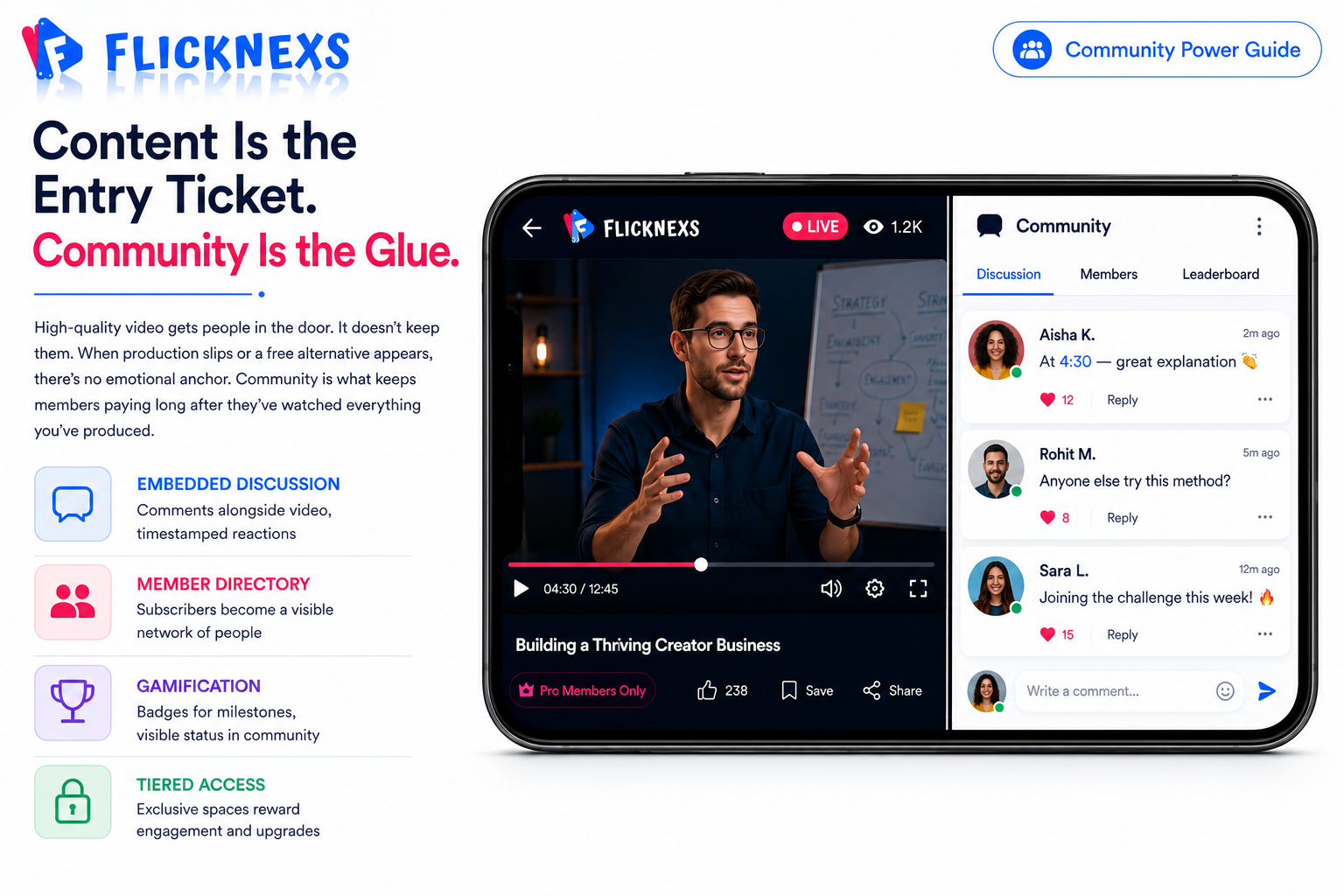
This is the most common trap for video creators and entrepreneurs. You assume that high-quality content is enough to create a loyal following. In reality, content is the entry ticket, but community is the glue that keeps people there. When you build a membership site without a community strategy, you are betting everything on your ability to constantly produce new content to justify the subscription. The moment your production schedule slips, or a viewer finds a free alternative, they leave. There is no emotional anchor holding them to your brand.
The problem often stems from the tools chosen. Many creators start with basic video hosting platforms that treat every user as a passive consumer. These platforms offer a “watch” button and a “like” button, but they lack the infrastructure for conversation. They do not provide spaces for members to discuss the video with each other, ask questions, or share their own progress. Without these interaction layers, the relationship remains strictly one-way: you speak, they listen.
Furthermore, the technical setup often isolates the video from the rest of the user journey. If your video player lives on one page and your community forum lives on a different subdomain or requires a separate login, friction kills engagement. Members forget to check the forum, or they find the login process too tedious to bother with. A thriving community requires a seamless ecosystem where video consumption and social interaction happen in the same fluid environment.
The gap between a content library and a community is the difference between a transaction and a relationship. A transaction ends when the video finishes. A relationship continues long after the screen goes dark. To fix this, you must stop thinking of your platform as a delivery mechanism and start viewing it as a digital town square. The technology you choose must support this shift, allowing you to facilitate connections between members, not just between you and your audience.
How Do You Design a Platform Architecture That Fosters Interaction?
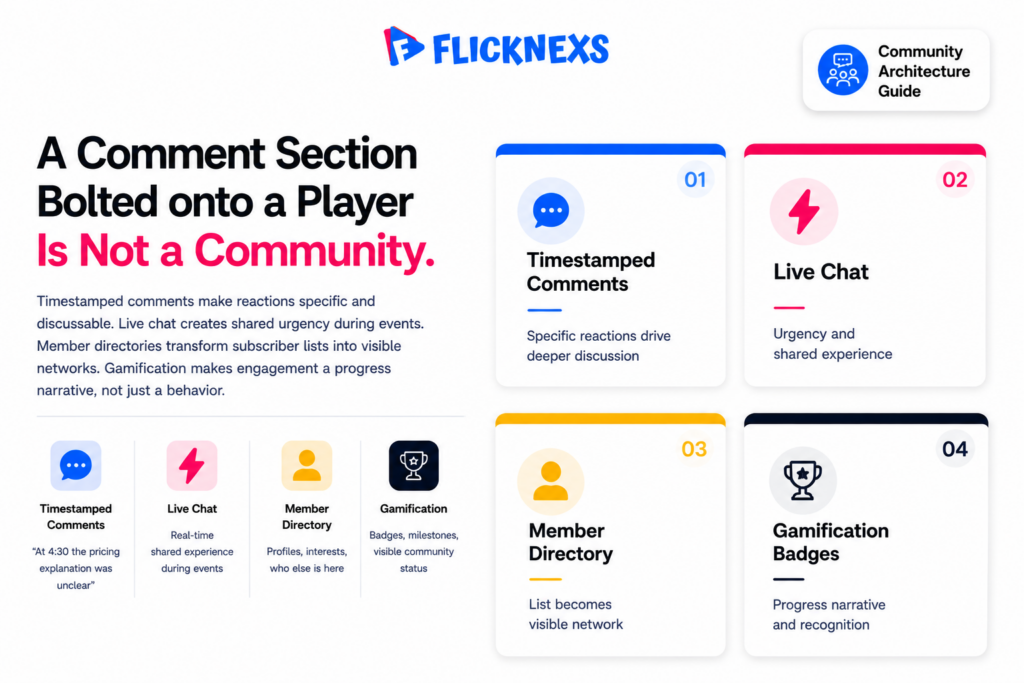
Designing a platform that encourages interaction requires a fundamental shift in how you structure your digital real estate. You cannot simply tack a comment section onto a video player and call it a community. You need a holistic architecture that weaves social features into the core of the viewing experience.
Integrating Social Features Directly Into the Video Player
The most effective way to spark conversation is to make it immediate. When a viewer has a reaction or a question, it should be easy to express it without leaving the video stream. Modern white-label OTT platforms allow you to embed discussion threads directly alongside the video player. This creates a “second screen” experience within the same browser window.
When users can see others discussing a specific moment in the video, it validates their own thoughts and encourages participation. Timestamped comments are crucial here. Instead of a generic “I liked this,” a member can say, “At 4:30, the explanation of the pricing model was unclear.” This specificity drives deeper engagement and provides you with actionable feedback.
Beyond comments, consider integrating live chat capabilities for premiere events or scheduled webinars. Real-time interaction creates a sense of urgency and shared experience. When hundreds of people are typing simultaneously during a launch, the energy shifts from passive consumption to active participation. This “fear of missing out” (FOMO) is a powerful driver for community retention.
Creating Dedicated Spaces for Peer-to-Peer Connection
While video-centric interactions are vital, a robust community needs dedicated spaces for broader discussion. These are your “rooms” or “channels.” Depending on your niche, you might have a general lounge, topic-specific channels, or even private groups for high-tier members.
These spaces should be organized logically. If you are running a fitness membership, you might have channels for “Nutrition Tips,” “Workout Modifications,” and “Success Stories.” If you are a business coach, you might have “Mastermind Groups,” “Resource Sharing,” and “Networking.” The key is to categorize these spaces so members can easily find their tribe within your larger audience.
A common mistake is to make these spaces too generic. “General Discussion” often becomes a ghost town because it is too broad. Instead, guide your members into specific conversations. Use pinned posts to start threads, ask questions, or share challenges. The more specific the prompt, the higher the likelihood of a response.
The Role of Gamification and Member Directories
To deepen the sense of belonging, you need to make your members visible to one another. A member directory is a simple yet powerful tool. It allows users to create profiles, list their interests, and see who else is in the community. This transforms a list of subscribers into a network of individuals.
Gamification takes this a step further. By awarding badges for milestones—such as “First Comment,” “10 Posts,” or “Video Marathoner”—you incentivize interaction. These visual cues signal status and achievement within the community. It taps into the human desire for recognition and progress.
When a new member logs in and sees a badge on another user’s profile, it sparks curiosity. “Who is this person? What have they achieved?” It creates a narrative of progression within the community. Over time, these gamified elements help identify your superfans and community leaders, who can then help moderate and guide new members.
What Are the Best White-Label Platforms for Building Video Communities?
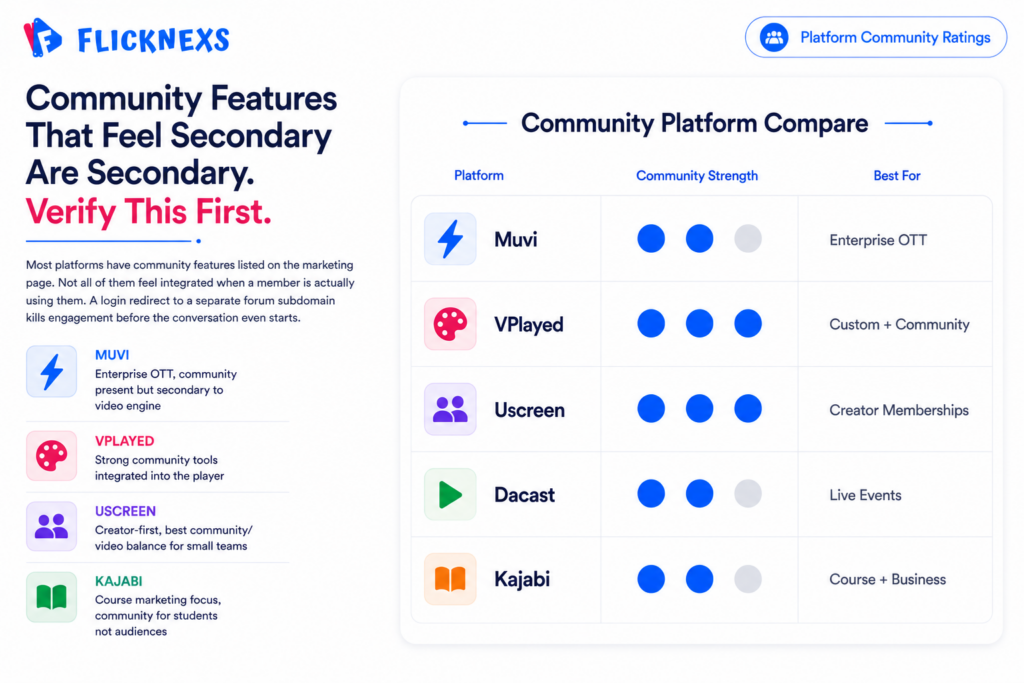
Choosing the right technology stack is the most critical decision you will make. You need a platform that balances high-quality video delivery with robust community features. While many options exist, they vary significantly in their ability to foster genuine interaction. Below is a detailed comparison of the leading white-label and SaaS platforms, analyzing their strengths and weaknesses for community building.
Muvi: The All-in-One Enterprise Suite
Muvi positions itself as a comprehensive solution for businesses looking to launch a full-scale streaming service. It offers a wide array of features, including video, audio, and live streaming, all under a white-label interface.
Overview: Muvi provides a robust backend with extensive customization options. It is designed for organizations that need to manage complex content libraries and multiple revenue streams simultaneously.
Features:
* Native mobile apps for iOS and Android.
* Built-in community features including comments and forums.
* Advanced DRM (Digital Rights Management) for content protection.
* Live streaming with chat capabilities.
Pros:
* Extremely scalable for large content inventories.
* Offers a “one-stop-shop” for video, audio, and live streaming.
* Strong security features protect premium content effectively.
Cons:
* The interface can feel cluttered for smaller communities.
* Community features are present but often feel secondary to the video delivery engine.
* Pricing can be high for early-stage creators.
Best For: Large media companies or enterprises that need a Netflix-like experience with strict content protection and a massive library.
VPlayed: The Customizable White-Label Specialist
VPlayed focuses heavily on the white-label aspect, allowing you to have complete control over the look and feel of your platform. It is particularly strong for those who want a unique brand identity without the overhead of building from scratch.
Overview: VPlayed is a flexible OTT platform that emphasizes customization. It allows you to build a branded video streaming service that feels entirely your own.
Features:
* Fully white-label solution with custom branding.
* Integrated live streaming with chat.
* Community forums and discussion boards.
* Multi-device support (Web, Mobile, TV).
Pros:
* High degree of design flexibility.
* Strong focus on community tools integrated into the player.
* No revenue share model; you keep 100% of your earnings.
Cons:
* Setup can be more complex than turnkey SaaS solutions.
* Some advanced community features may require additional configuration.
Best For: Creators and businesses who prioritize brand control and want a platform that looks and feels like their own unique product.
Uscreen: The Creator-First Ecosystem
Uscreen has carved out a strong niche among course creators and fitness instructors. It is designed specifically for those who want to sell video memberships without getting bogged down in technical details.
Overview: Uscreen combines video hosting, e-commerce, and community tools into a single, user-friendly platform. It is known for its ease of use and strong support for creator businesses.
Features:
* Integrated community hub with forums and challenges.
* Marketing automations for retention.
* Native mobile apps.
* Live streaming with interactive chat.
Pros:
* Excellent balance of video delivery and community features.
* Very intuitive interface for non-technical users.
* Strong marketing tools built-in to help grow the community.
Cons:
* Transaction fees apply on top of the monthly subscription.
* Customization options are more limited compared to fully white-label solutions.
* The interface is somewhat rigid in terms of layout changes.
Best For: Fitness coaches, educators, and course creators who want a quick launch with strong community tools and marketing support.
Dacast: The Live Streaming Powerhouse
Dacast is renowned for its live streaming capabilities, making it a top choice for events, webinars, and real-time community interaction.
Overview: Dacast focuses on professional-grade live streaming and VOD. It is often used by broadcasters and media companies that need reliable, high-quality delivery.
Features:
* High-bitrate live streaming.
* Pay-per-view and subscription models.
* Chat and Q&A tools for live events.
* Analytics dashboard for viewer engagement.
Pros:
* Superior live streaming quality and reliability.
* Robust analytics for understanding viewer behavior.
* Strong security and monetization options.
Cons:
* Community features are more basic compared to dedicated membership platforms.
* The interface is geared more towards broadcasters than community builders.
* Can be expensive for smaller operations.
Best For: Organizations that prioritize live events and real-time interaction over on-demand community discussions.
Brightcove: The Enterprise Video Platform
Brightcove is a veteran in the video hosting space, offering enterprise-level solutions for large organizations. It is less about community building and more about secure, global video distribution.
Overview: Brightcove provides a high-end video platform used by major brands. It excels in video management, security, and integration with other enterprise systems.
Features:
* Advanced video asset management.
* Global CDN for fast delivery.
* Deep integration with CRM and marketing tools.
* API-first architecture.
Pros:
* Unmatched reliability and scalability.
* Excellent security and DRM options.
* Powerful API for custom integrations.
Cons:
* Not designed as a turnkey community platform.
* Requires significant technical expertise to implement community features.
* Pricing is generally prohibitive for individual creators.
Best For: Large corporations and media enterprises that need to integrate video into a larger digital ecosystem.
Kaltura: The Open-Source Flexible Option
Kaltura offers a highly flexible, open-source video platform that can be customized to fit specific needs. It is a favorite for universities and large organizations that need total control.
Overview: Kaltura is a video platform that allows for deep customization. It is often used in education and enterprise settings where specific workflows are required.
Features:
* Open-source video platform.
* Extensive API and plugin ecosystem.
* Collaboration tools and social video features.
* Interactive video capabilities.
Pros:
* Highly customizable to fit unique workflows.
* Strong collaboration and social features.
* No vendor lock-in due to open-source nature.
Cons:
* Requires a dedicated technical team to manage and maintain.
* Implementation time is longer than SaaS solutions.
* User interface may need significant customization to feel “community-focused.”
Best For: Universities, large enterprises, and organizations with in-house technical teams that need a tailored video solution.
JW Player: The Developer-Centric Player
JW Player is primarily known for its video player, but it has expanded into a full video platform with some community capabilities. It is ideal for those who want to build a custom front-end.
Overview: JW Player provides a powerful video player with a suite of tools for monetization and analytics. It is often used by publishers and developers.
Features:
* High-performance video player.
* Ad monetization and subscription support.
* Analytics and engagement tracking.
* API for custom integrations.
Pros:
* Best-in-class video player performance.
* Flexible monetization options.
* Strong developer support and documentation.
Cons:
* Community features are limited and require custom development.
* Not a turnkey solution for building a membership site.
* Focus is on the player, not the surrounding community ecosystem.
Best For: Publishers and developers who want to build a custom video experience and have the resources to add community features via API.
Vimeo OTT: The Premium Content Hub
Vimeo OTT is designed for filmmakers and creators who want to sell their content directly to fans. It offers a clean, professional interface with solid monetization tools.
Overview: Vimeo OTT allows creators to launch their own branded streaming service. It is known for its high-quality video compression and professional aesthetic.
Features:
* Branded subscription service.
* Live streaming and VOD.
* Integrated marketing tools.
* Community features via Vimeo’s social network.
Pros:
* Professional, clean design.
* Strong video quality and compression.
* Easy to set up and manage.
Cons:
* Community features are less robust than dedicated membership platforms.
* Transaction fees can add up.
* Limited customization for the user interface.
Best For: Filmmakers and content creators who want a premium, professional look without the technical complexity.
Kajabi: The All-in-One Business Platform
Kajabi is primarily a platform for selling courses and digital products, but it includes video hosting and some community features. It is a strong contender for those who want an all-in-one business solution.
Overview: Kajabi combines website building, email marketing, and course hosting into a single platform. It is popular among coaches and consultants.
Features:
* Course hosting with video support.
* Community area with posts and discussions.
* Email marketing and automation.
* Website builder.
Pros:
* All-in-one solution for business operations.
* Strong community features for course students.
* Excellent marketing and automation tools.
Cons:
* Video player is not as advanced as dedicated OTT platforms.
* Limited customization for the video experience.
* Can be expensive for those who only need video hosting.
Best For: Coaches, consultants, and course creators who need a full business platform and do not require advanced video features like live streaming or complex DRM.
How Do You Structure Engagement Loops to Keep Members Active?
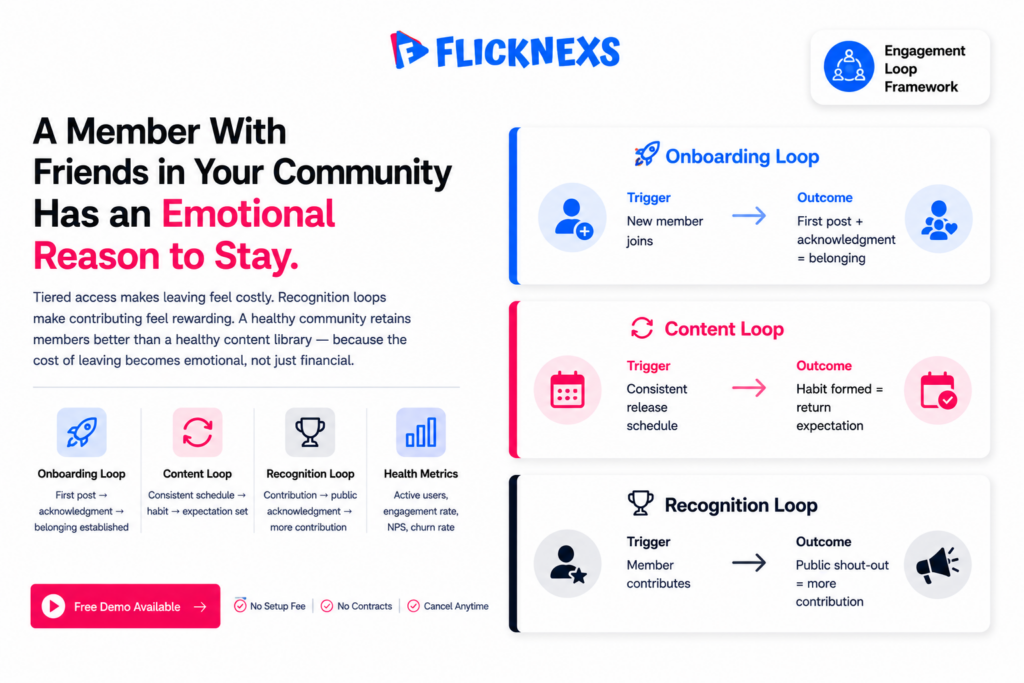
Once the platform is set up, the real work begins: keeping members engaged. Engagement is not a one-time event; it is a cycle. You need to design specific loops that encourage members to return, interact, and deepen their connection to the community.
The Onboarding Loop: First Impressions Matter
The first 48 hours are critical. If a new member signs up and feels lost, they are unlikely to return. You need a structured onboarding process that guides them through the community. This should start with a welcome video that explains the “how-to” of your platform.
After the welcome video, prompt the member to take a small action. This could be introducing themselves in a specific thread, answering a simple question, or completing a profile. The goal is to get them to “break the ice.” Once they post, have a moderator or an automated system acknowledge their contribution immediately. This positive reinforcement creates a sense of belonging right from the start.
The Content Loop: Consistency and Variety
Consistency is key to building a habit. Members should know when to expect new content. However, consistency does not mean posting the same type of content every time. You need a mix of formats to keep things fresh.
- Weekly Deep Dives: Long-form educational videos.
- Daily Q&A: Short, live sessions or text-based threads.
- Member Spotlights: Featuring a community member’s work or story.
- Challenges: Time-bound activities that encourage participation.
By varying the content, you cater to different consumption habits. Some members prefer deep dives, while others want quick updates. The variety ensures that there is always something relevant for everyone.
The Feedback Loop: Listening and Adapting
A community that feels heard is a community that stays. You must actively solicit feedback and act on it. Regular polls, surveys, and “ask me anything” sessions show members that their opinions matter.
When you implement a suggestion made by a member, publicly acknowledge it. “Thanks to Sarah for suggesting this feature; we’ve just added it!” This validates the member’s contribution and encourages others to participate. It turns the community into a co-created space where members feel ownership over the platform’s direction.
The Recognition Loop: Celebrating Wins
Humans crave recognition. Implementing a system to celebrate member milestones is essential. This could be simple “shout-outs” in a weekly newsletter, badges for consistent participation, or featuring top contributors in a dedicated section.
Recognition doesn’t always have to be big. A simple “Great point!” reply from a moderator can make a member feel valued. The key is to make the recognition visible to the rest of the community. This not only rewards the individual but also sets a standard for the type of behavior you want to encourage.
What Strategies Drive Retention Through Tiered Community Access?
Retention is the lifeblood of any membership business. The most effective way to drive retention is through tiered access. By offering different levels of membership, you create a clear path for growth and incentivize members to stay and upgrade.
Designing the Tiers
Your tiers should offer distinct value propositions. The entry-level tier should be accessible but limited. It might include access to the video library and basic forums. The mid-tier could add live Q&A sessions and downloadable resources. The top-tier should offer exclusive, high-touch benefits like 1-on-1 coaching, private networking groups, or early access to new content.
The gap between tiers must be significant enough to feel valuable but not so large that it feels unattainable. You want members to feel that upgrading is a natural next step in their journey.
The Psychology of Upgrades
Upgrades are driven by the desire for deeper connection and exclusive access. When a member feels they are part of an “inner circle,” they are less likely to churn. The top tier should feel like a club, not just a product.
Use scarcity and exclusivity to drive upgrades. Limited spots for the top tier, or time-sensitive offers, can create urgency. However, be careful not to make the lower tiers feel like “second-class” citizens. The entry tier must still provide genuine value. If the entry tier feels worthless, members will leave before they ever consider upgrading.
Retention Through Community Health
A healthy community retains members better than a healthy content library. Even if a member doesn’t watch a video for a week, if they are active in the forums and have formed friendships, they are likely to stay. This is the power of community-driven retention.
To foster this, encourage peer-to-peer relationships. Facilitate introductions between members with similar interests. Create sub-groups or “squads” where members can collaborate on projects. When members have friends in the community, the cost of leaving becomes emotional, not just financial.
How Do You Measure Success and Optimize Your Community?
You cannot improve what you do not measure. To build a thriving community, you need to track the right metrics and use that data to optimize your strategy.
Key Metrics for Community Health
- Active Users: The number of members who log in and interact within a specific period (daily, weekly, monthly).
- Engagement Rate: The percentage of members who post, comment, or react to content.
- Retention Rate: The percentage of members who renew their subscription.
- Churn Rate: The percentage of members who cancel.
- Net Promoter Score (NPS): How likely members are to recommend your community to others.
Analyzing the Data
Look for patterns in your data. Are there certain types of content that drive higher engagement? Do members who participate in the forums have a lower churn rate? Is there a specific time of day when activity peaks?
Use these insights to refine your strategy. If you notice that live Q&A sessions drive high engagement, schedule them more frequently. If you see that members who complete the onboarding flow have better retention, double down on improving that flow.
Continuous Improvement
Community building is an iterative process. What works today might not work tomorrow. Stay flexible and be willing to experiment. Try new features, test different engagement strategies, and listen to your members. The most successful communities are those that evolve with their members.
Conclusion: Turning Viewers Into a Thriving Ecosystem
Building an online community around your video content is a journey, not a destination. It requires a shift in mindset from broadcasting to facilitating. You are no longer just a content creator; you are a community leader.
The technology you choose is the foundation, but the culture you build is the house. By selecting a platform that supports interaction, designing engagement loops, and structuring tiered access, you create an environment where members feel valued and connected.
Remember, the goal is not just to sell subscriptions. The goal is to build a place where your audience belongs. When you succeed in this, your members become your biggest advocates, your retention rates soar, and your business becomes resilient to market changes.
If you are ready to move beyond a simple video library and build a true community, it is time to evaluate your platform. At Flicknexs, we provide the white-label infrastructure you need to launch a branded OTT platform that fosters genuine connection. Our solution integrates high-quality video delivery with robust community tools, giving you the power to turn passive viewers into an active, loyal community. Explore how Flicknexs can help you build the community your content deserves.
Frequently Asked Questions
Related Guides:
* How to Build a Membership Website for Video Content: The Complete Guide
* How to Turn Zoom Recordings Into a Recurring Video Membership
* How to Sell Online Courses With Video: Pricing, Drip and Delivery
* Building an Online Community Around Your Video Content
* Membership Pricing Models for Video: Tiers, Trials and Retention
* Kajabi vs Patreon vs Self-Hosted: Best Membership Platforms for Video Creators Compared
Ready to build?
If you’re planning your next OVP project, Flicknexs handles the video infrastructure end-to-end — so you can ship in weeks, not months.
- launch an OVP
- explore Flicknexs plans
More video platform guides
Continue exploring more on this topic across the Flicknexs blog.