

TL;DR
- White-label OTT platforms let you launch a branded streaming app without building backend technology.
- You control content, pricing and users, while the provider manages infrastructure and delivery.
- There is no single best platform. Fit depends on your revenue model, scale and control needs.
- Fast-launch platforms suit validation. Enterprise platforms suit long-term scale.
- Monetization choice, whether subscription, pay-per-view, ads or hybrid, should be decided first.
- Live streaming and security matter more than extra features for paid content.
- Costs scale with usage. Low entry prices often hide future expenses.
- White-label works for speed. Custom builds work for deep differentiation.
As of February 2026, the global OTT market is booming, expected to surpass $210 billion in annual revenue. Over 73% of global consumers watch video on demand and more than 70% of new OTT platforms launch using white-label technology rather than building custom infrastructure.
White-label OTT platforms provide ready-to-use streaming infrastructure, including:
- Video hosting with adaptive playback
- Web, mobile and Smart TV apps
- Security and DRM controls
- Monetization engines (SVOD, AVOD, PPV, hybrid)
- Analytics and reporting
You retain full control over branding, content and subscribers, while the provider handles infrastructure, app maintenance and global delivery.
This approach allows businesses to launch faster, reduce operational risk and control costs, making it the preferred choice for creators, media companies and enterprises entering the OTT space in 2026.
This guide ranks the top white-label OTT platforms in 2026 and shows how to choose the right provider based on revenue potential, scalability and security, not just features.
To better understand how to choose the right provider and avoid common technical mistakes, explore our complete white-label streaming platform for businesses guide.
What a White-Label OTT Platform Is (and Isn’t)
A white-label OTT platform is a prebuilt streaming system you rebrand as your own.
- You do not design streaming architecture, payment flows or device apps.
- You do control content access, pricing, branding and users.
This model trades deep technical freedom for speed, predictability and lower risk. It works best when the business model is clear and the goal is execution, not experimentation.
What a Complete White-Label OTT Platform Must Provide
A platform is incomplete if it lacks any of the following:
- Video hosting with adaptive playback
- Global CDN delivery
- Secure access control or DRM
- Subscription and pay-per-view billing
- Optional ad monetization
- Viewer and revenue analytics
- Web, mobile and Smart TV apps
- App store publishing support
- Data export or API access
Platforms that omit these elements shift operational risk back to you.
Who Uses White-Label OTT Platforms and Why
- Media companies use them to combine ads, subscriptions and PPV without rebuilding infrastructure.
- Sports and event organizers monetize live traffic spikes where failure is not tolerated.
- Education providers control access, progress and pricing rather than reach.
- Businesses use them for internal training where security and data ownership matter more than scale.
Different needs require different platforms. The best overall does not exist.
Top 10 White-Label OTT Platform Providers (2026)
These white-label OTT platforms let you launch your own branded streaming app with full control over content, pricing, and users, while the provider handles all infrastructure and delivery.
| Platform | Monetization | Apps | DRM | Best Fit |
| Flicknexs | SVOD AVOD TVOD | Web Mobile TV | Yes | Fast launch OTT brands |
| Webnexs | SVOD AVOD TVOD | Web Mobile TV | Yes | Enterprise OTT |
| Muvi | SVOD AVOD PPV | Web Mobile TV | Yes | Global OTT platforms |
| Uscreen | SVOD PPV | Web Mobile TV | Yes | Creators |
| Brightcove OTT | SVOD AVOD | Web Mobile TV | Yes | Broadcasters |
| Kaltura | Custom | Web Mobile | Yes | Education |
| JW Player OTT | SVOD AVOD | Web Mobile TV | Yes | Media firms |
| Vimeo OTT | SVOD PPV | Web Mobile TV | Yes | Solo creators |
| Dacast | PPV SVOD | Web Mobile | Yes | Live events |
| Wowza | Usage based | Web Mobile | Yes | Technical teams |
Flicknexs
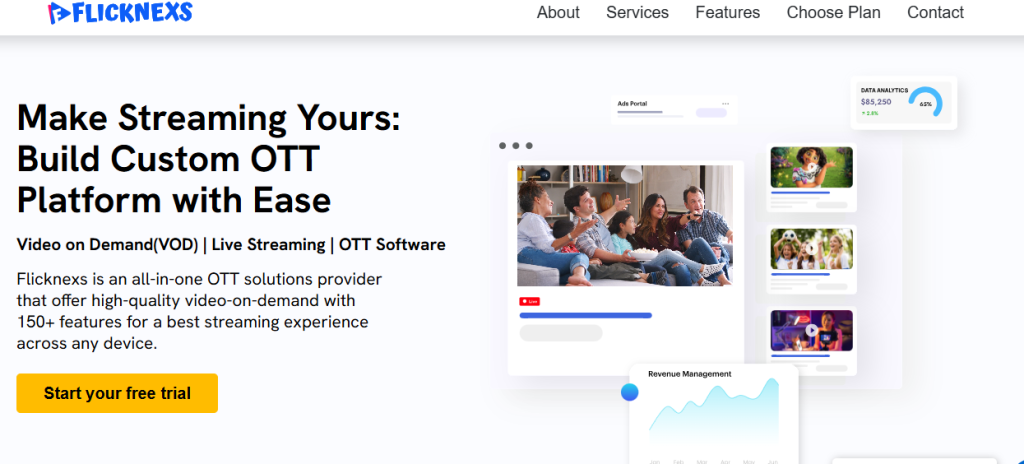
- Built for brands wanting a fast OTT launch without heavy technical work
- Supports subscriptions, ads and pay-per-view
- Works on web, mobile and TV
- Ideal for businesses prioritizing speed and branding control
Webnexs
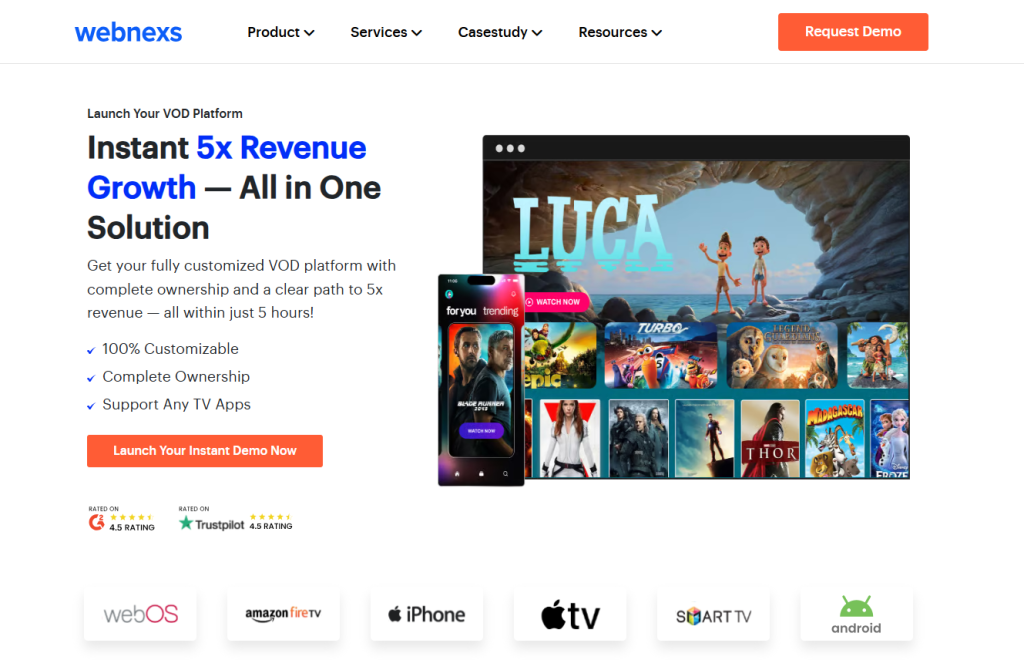
- Designed for businesses needing full control and scalability
- Supports all major monetization models
- Offers apps for web, mobile and TV
- Preferred by enterprises seeking deep customization and long-term ownership
Muvi
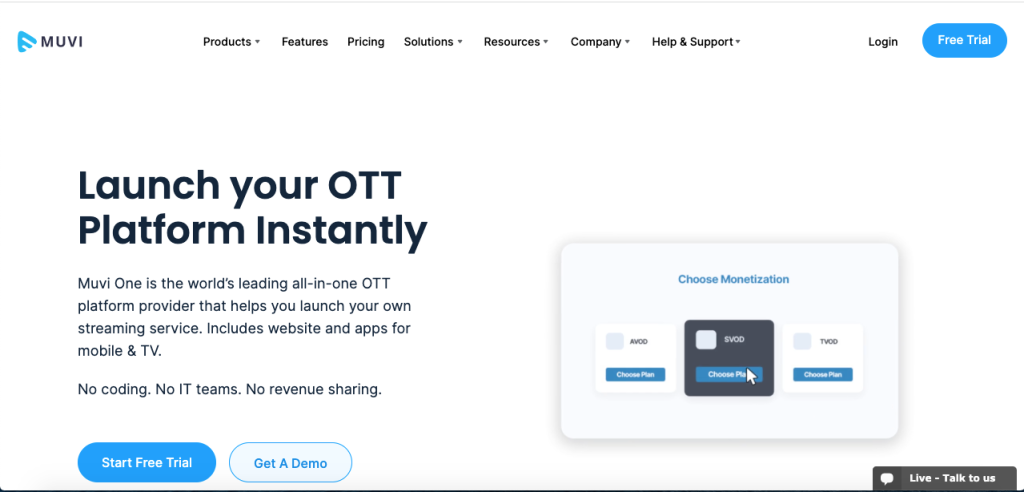
- No-code OTT platform for global streaming launches
- Supports live and on-demand streaming
- Strong DRM and multiple monetization options
- Suitable for international OTT platforms
Uscreen
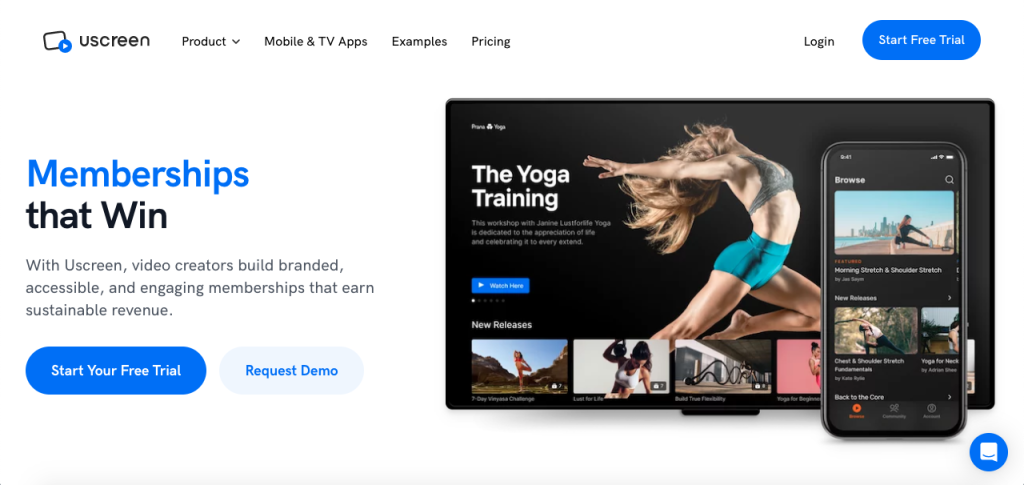
- Focused on creators and small brands
- Monetization via subscriptions and pay-per-view
- Includes community and engagement tools
- Popular among educators, fitness trainers and independent creators
Kaltura
- Widely used in education and enterprise environments
- Allows custom workflows instead of fixed monetization
- Works for learning platforms, internal video systems and tailored OTT solutions
JW Player
- Known for smooth playback and ad monetization
- Evolved from a widely used web video player
- Chosen by media firms focused on performance, revenue and optimization
Dacast

- Best for live events and real-time streaming
- Focuses on reliability and global delivery
- Ensures smooth live streaming, access control and monetization
Brightcove
- Enterprise-grade platform for broadcasters and large media organizations
- Emphasizes stability, analytics and large-scale video delivery
- Suitable for professional-level streaming and reliable infrastructure
Vimeo OTT
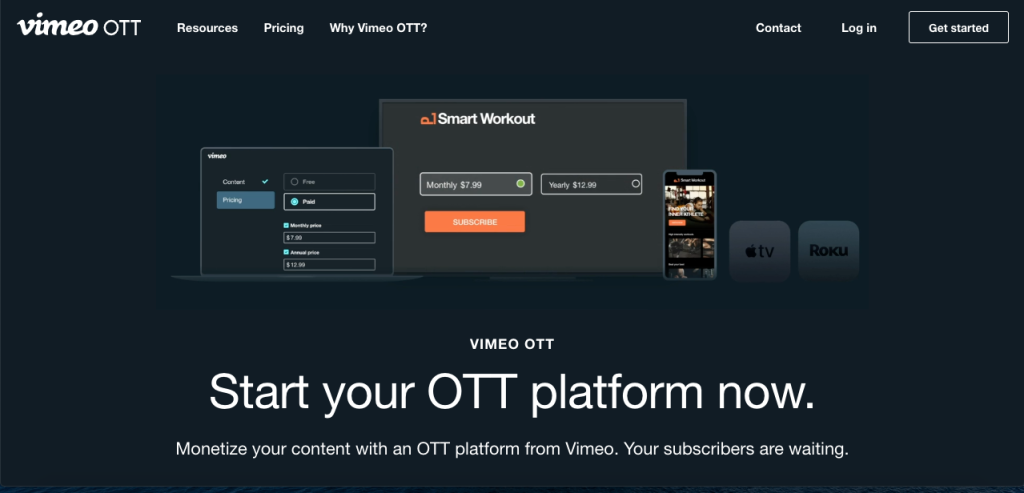
- Ideal for solo creators and small teams
- Supports subscriptions and pay-per-view
- Delivers high-quality video and clean user experience
Brid.TV
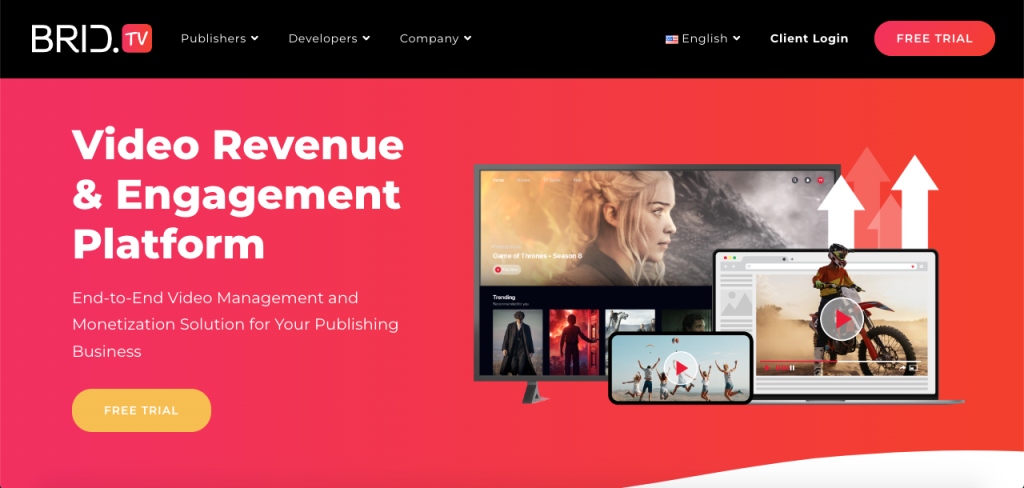
- Focused on publishers and media companies
- Specializes in AVOD monetization
- Manages video ads, fill rates and analytics
- Perfect for programmatic ad revenue and content-driven growth
Zype
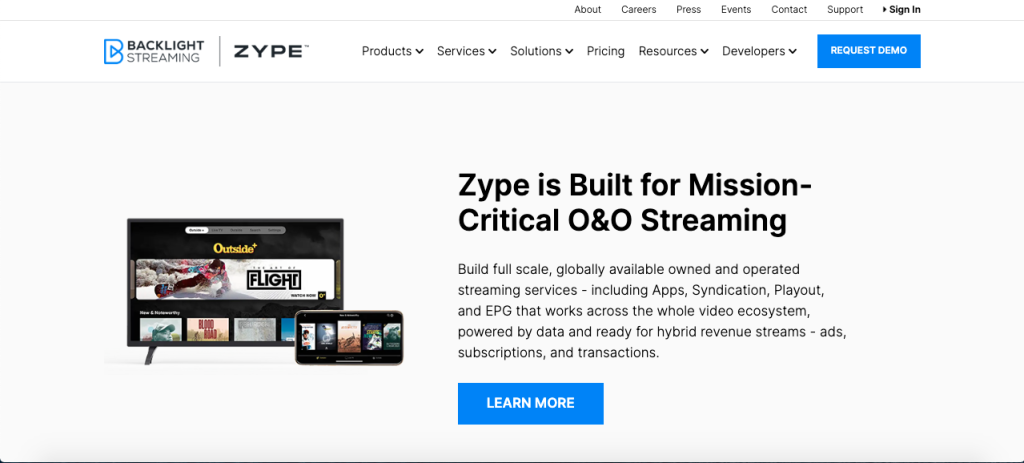
- Designed for content owners needing flexibility
- Supports subscriptions, pay-per-view and ad monetization
- Offers API access, integrations and multi-device app support
- Ideal for media brands controlling distribution and monetization
How These Platforms Differ Where it Actually Matters
Launch Speed vs Control
- Platforms like Flicknexs, Uscreen and Vimeo OTT launch quickly with minimal setup.
- Platforms like Kaltura and Wowza require technical involvement but allow deeper customization.
- Need market validation? Speed matters more than flexibility.
- Need long-term control? Early friction is unavoidable.
Monetization Flexibility
- Muvi and Webnexs support hybrid monetization natively.
- Uscreen and Vimeo OTT favor subscription-first models.
- JW Player and Wowza require external systems for full billing logic.
Revenue constraints surface later. Choose based on future needs, not launch convenience.
Scalability Reality
- Brightcove, Kaltura and Muvi handle high concurrent live traffic reliably.
- Creator-focused platforms scale content libraries well but struggle under sudden spikes.
- Live failures damage trust faster than missing features.
Security and Ownership
- Enterprise platforms provide stronger DRM and access controls by default.
- Lower-tier plans often restrict security features.
- For paid content, weak security becomes a revenue leak.
Device Coverage
- Most platforms support web and mobile.
- Smart TV support varies in quality, update cadence and device coverage.
- Always ask which TV apps are actively maintained, not just listed.
How to Choose the Right White-Label OTT Platform
Choosing a white-label OTT platform becomes easier when you understand how to choose the best OTT streaming platform for your needs based on revenue goals scale and long-term control.
Start With Revenue Logic
| Model | Required Capability |
| Subscription | Recurring billing and churn visibility |
| Pay-per-view | Time-limited access control |
| Ads | Server-side ad insertion and reporting |
| Hybrid | Flexible pricing rules |
If you are unsure which monetization approach fits your audience reviewing AVOD vs SVOD vs TVOD and how to choose the right model can prevent early revenue mistakes.
Monetization mismatch is the most common failure point.
Validate Scale Before Trusting Claims
Ask directly:
- Maximum concurrent viewers
- Live spike handling
- Automatic vs manual scaling
Marketing pages rarely reveal real limits.
Confirm Data Exit Paths
Before committing, verify:
- User export access
- Video migration options
- Billing data availability
Vendor lock-in is easy to enter and expensive to exit.
Realistic Cost to Launch a White-Label OTT App
To understand how pricing differs between white-label solutions and custom builds it helps to review how much does OTT platform development cost in real-world scenarios.
| Cost Item | Typical Range |
| Platform license | $500 – $5,000/month |
| App development | $5,000 – $40,000 one-time |
| CDN usage | Variable |
| DRM | Usage-based |
| App publishing | $500 – $3,000 |
| Custom features | Varies |
Low starting prices often shift cost to usage later.
White-Label OTT vs Custom Build
| Factor | White Label | Custom |
| Launch time | Fast | Slow |
| Upfront cost | Lower | Higher |
| Control | Medium | Full |
| Maintenance | Vendor | Internal team |
| Flexibility | Limited | Unlimited |
White-label prioritizes execution.
Custom builds prioritize differentiation.
When White-Label OTT Is the Wrong Choice
Avoid white-label platforms if you require:
- Custom recommendation engines
- Experimental streaming workflows
- Proprietary backend logic
White-label platforms optimize reuse, not invention.
Realistic Launch Timeline
| Stage | Time |
| Platform setup | 1–2 weeks |
| Branding | 1–3 weeks |
| App build | 3–6 weeks |
| Store approvals | 1–3 weeks |
Claims of instant launch usually imply limited scope.
Final Decision Checklist
Choose a platform based on:
- Revenue model alignment
- Expected viewer load
- Security requirements
- Data ownership
- Exit flexibility
- Total cost over time
Feature volume does not predict success. Fit does.




Leave a Reply